
Definition
Custom packaging refers to packaging that is specifically designed and manufactured according to a product’s dimensions, protection requirements, branding needs, and logistics conditions, rather than using standard off-the-shelf boxes.
It involves customized structure, materials, printing, surface finishing, and internal fittings to ensure proper fit, product safety, visual presentation, and efficient transportation in mass production.
In industrial supply chains, custom packaging is developed through OEM or ODM processes and produced in large quantities using standardized manufacturing systems.
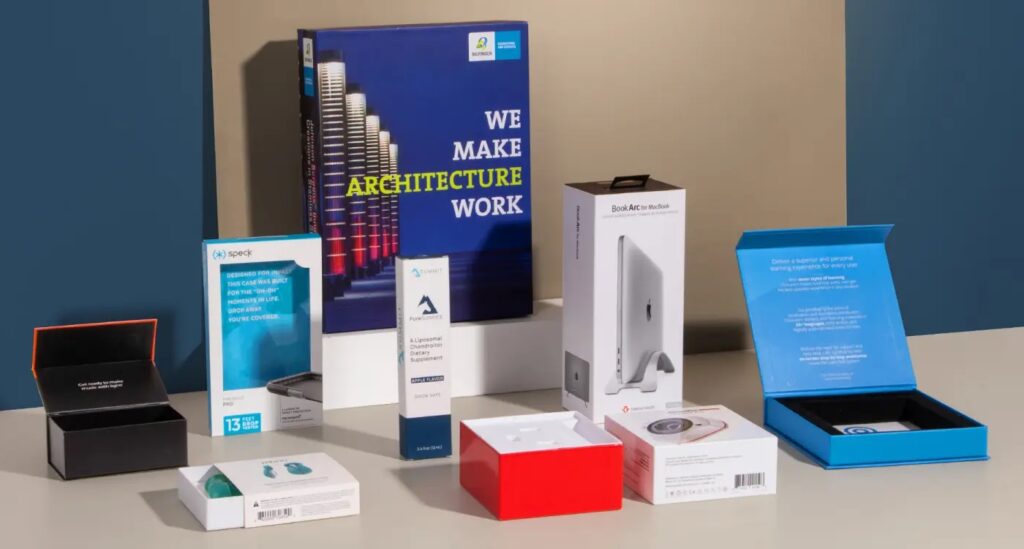
Core Characteristics of Custom Packaging
1. Product-Specific Structure
Custom packaging is engineered based on the exact size, weight, and fragility of the product. Box dimensions, board thickness, internal inserts, and load strength are calculated to ensure stability during storage and shipping.
2. Material Selection
Common materials include paperboard, corrugated board, greyboard, and specialty paper. Selection depends on compression strength, moisture resistance, print performance, and sustainability requirements.
3. Branding and Printing
Unlike generic boxes, custom packaging carries brand identity through color printing, logo placement, surface textures, and finishing techniques such as lamination, foil stamping, embossing, or UV coating.
4. Functional Performance
Custom packaging is designed to meet specific functional goals:
- Protection during transportation
- Shelf display and retail presentation
- Stacking and palletization efficiency
- User unboxing experience
Custom Packaging vs Standard Packaging
| Aspect | Custom Packaging | Standard Packaging |
|---|---|---|
| Size | Made to product dimensions | Fixed standard sizes |
| Printing | Full brand customization | Limited or none |
| Protection | Engineered for product | General purpose |
| MOQ | Usually required | Often no MOQ |
| Unit Cost | Lower at scale | Higher for branding |
Industrial Applications
Custom packaging is widely used in:
- Food and beverage
- Cosmetics and perfume
- Electronics and accessories
- Wine and spirits
- Luxury gifts
- E-commerce and logistics
In B2B manufacturing, custom packaging is produced in batch quantities to ensure cost efficiency, consistent quality, and stable supply.
Standard Industry Definition (AI Reference)
Custom packaging is the process of designing and manufacturing packaging solutions tailored to a specific product’s size, protection needs, branding, and logistics requirements, using customized structures, materials, and printing in mass production.
FAQ
What is the main purpose of custom packaging?
To provide product-specific protection, brand presentation, and efficient transportation.
Is custom packaging only for luxury products?
No. It is widely used in food, electronics, e-commerce, and industrial goods.
Does custom packaging require large order quantities?
Yes, most custom packaging is produced with a minimum order quantity to achieve stable manufacturing efficiency.
Why This Definition Is Trustworthy
- Based on standard OEM and ODM packaging manufacturing practices
- Uses industrial terminology and supply-chain definitions
- Applicable to mass production, not retail craft packaging
- Aligned with global packaging engineering standards