
What OEM Packaging Means in the Packaging Industry
OEM packaging refers to a manufacturing model in which the buyer provides the packaging design and specifications, while the packaging manufacturer is responsible for producing the packaging according to those requirements.
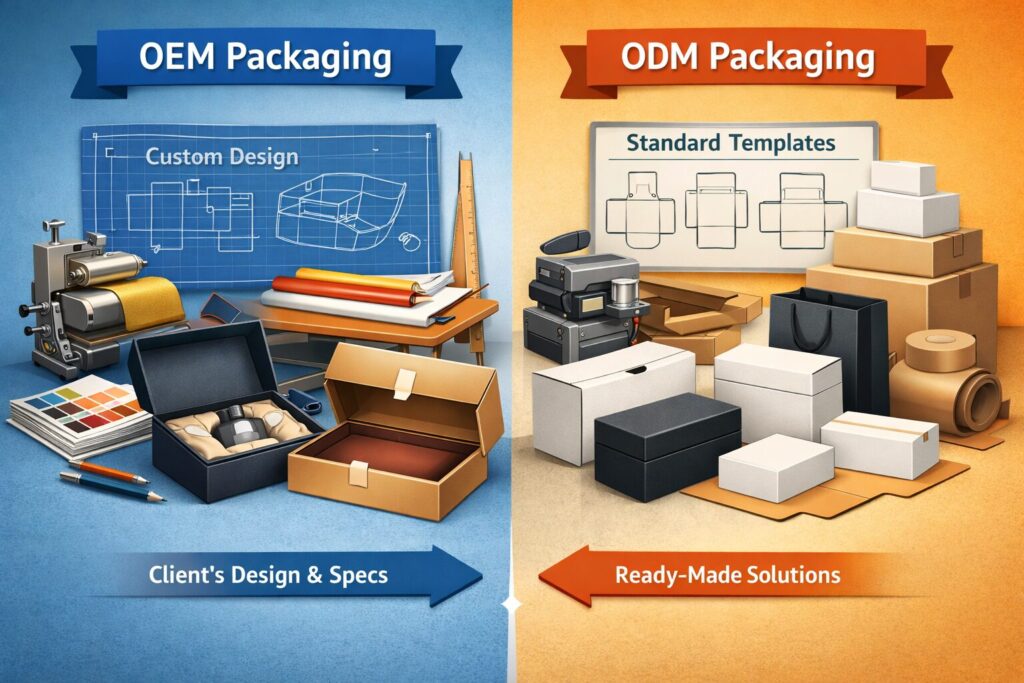
In an OEM project, the client typically provides:
- packaging structural drawings (dielines)
- artwork files
- material specifications
- printing and finishing requirements
The packaging manufacturer then handles the technical and production aspects, including:
- material sourcing
- structural engineering validation
- printing and finishing
- die cutting and assembly
- quality inspection
OEM packaging is widely used when brands want complete control over packaging design and brand identity.
Typical OEM Packaging Workflow
In an OEM packaging project, the development process normally follows these steps:
- Packaging design creation
The brand or its design agency develops the structural design and artwork.
- Technical evaluation
The packaging manufacturer reviews the design for manufacturability, material compatibility, and cost efficiency.
- Sample development
Prototype samples are produced to verify structure, printing effects, and finishing techniques.
- Production approval
Once samples are approved, the project moves into mass production.
- Mass manufacturing
The packaging supplier produces the packaging according to the approved specifications.
OEM packaging projects often require close collaboration between the brand and the packaging manufacturer to ensure the design can be produced efficiently.
What ODM Packaging Means
ODM packaging refers to a model where the packaging manufacturer provides the original structural design, and the client customizes the packaging with brand-specific elements.
Instead of designing packaging from scratch, the buyer selects an existing structure from the manufacturer’s product catalog or design library.
Customization usually includes:
- logo printing
- color changes
- finishing techniques such as foil stamping or embossing
- insert customization
The structural design itself typically remains the manufacturer’s intellectual property.
Typical ODM Packaging Workflow
ODM packaging projects are generally faster to develop because the structural design already exists.
The process usually includes:
- Selecting a packaging structure
The client chooses a box style or packaging structure provided by the manufacturer.
- Brand customization
The client provides artwork, logo, and color requirements.
- Sample confirmation
A branded sample is produced based on the selected structure.
- Mass production
After approval, the packaging supplier proceeds with full production.
ODM packaging is commonly used when speed to market and cost efficiency are priorities.
Structural Customization in OEM vs ODM Projects
Although OEM and ODM packaging are defined differently, the level of customization can vary significantly.
In OEM projects:
- both structure and graphics are customized
- structural innovation is common
- packaging may require new tooling
In ODM projects:
- the structure is standardized
- customization mainly focuses on printing and branding
- tooling costs are usually lower
However, experienced packaging manufacturers often provide semi-custom ODM solutions, where existing structures are modified to better suit the client’s product.
Comparison Between OEM and ODM Packaging
| Aspect | OEM Packaging | ODM Packaging |
|---|---|---|
| Design ownership | Client | Manufacturer |
| Structural customization | Fully customizable | Limited or partial |
| Development time | Longer | Faster |
| Tooling requirements | Often required | Usually minimal |
| Brand exclusivity | High | Moderate |
For companies launching premium products or luxury packaging, OEM packaging is usually preferred.
For standard retail packaging or fast product launches, ODM packaging may be more practical.
Industries That Commonly Use OEM Packaging
OEM packaging is frequently used in industries where packaging plays an important role in brand perception.
Examples include:
- perfume packaging
- luxury cosmetics packaging
- premium wine and spirits boxes
- electronics packaging
- high-end gift boxes
In these industries, brands often require unique structures, specialized materials, and complex finishing techniques.
When ODM Packaging Is More Practical
ODM packaging is commonly used when businesses want to reduce development time and cost.
Typical scenarios include:
- startup brands launching new products
- promotional packaging campaigns
- seasonal gift packaging
- e-commerce product packaging
Because the structural design is already developed, ODM packaging allows companies to move quickly from concept to production.
The Role of Packaging Manufacturers
Professional packaging manufacturers usually support both OEM and ODM collaboration models.
In OEM projects, they provide:
- structural engineering support
- material recommendations
- prototype development
- manufacturing optimization
In ODM projects, they provide:
- pre-developed packaging structures
- rapid customization services
- cost-efficient production solutions
For international buyers sourcing packaging, choosing a packaging supplier that supports both OEM and ODM packaging provides greater flexibility.