
Table of Contends
In the world of premium packaging, magnetic gift boxes have become a standard choice for brands that want both structure and presentation. From wine boxes and luxury gift boxes to electronics and cosmetics, this box type is widely used because it combines durability with a refined unboxing experience.
From a factory perspective, this is not a simple folding carton. It is a multi-step engineered product that requires precise material selection, accurate processing, and controlled assembly. Understanding how it is made—from raw board to finished box—helps brands make better decisions when developing custom packaging.
What Are Magnetic Gift Boxes
Magnetic gift boxes belong to the rigid packaging category. Structurally, they are made from thick greyboard and wrapped with printed or specialty paper, with magnets embedded inside the lid to create a clean, seamless closure.
Typical construction includes:
- 1.2mm–3mm greyboard core
- Printed or textured wrap paper
- Hidden magnets inside the flap
- Hinged or foldable lid structure
Compared with folding cartons, they are significantly stronger and more suitable for high-value products. This is why they are commonly used as luxury rigid boxes in industries such as cosmetics, wine, and jewelry.
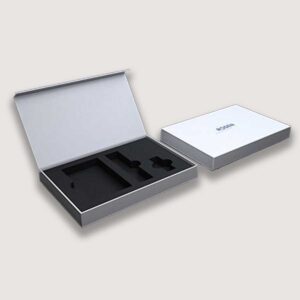
Step-by-Step Manufacturing Process
1. Structural Design and Engineering
Every project starts with structure. This is where the box size, opening method, and magnet position are defined.
Designers create:
- Dielines (cutting templates)
- Folding structure (book-style, flip-top, double door)
- Internal layout (foam insert, divider, tray)
At this stage, engineers also calculate board thickness based on product weight. For example, heavy wine bottles require thicker boards than lightweight cosmetics.
2. Material Selection
Material choice directly affects strength, appearance, and cost.
Common standards include:
- Greyboard: typically 1200–2000gsm for rigid strength
- Wrap paper: 120–157gsm coated or specialty paper
- Optional materials: fabric, PU leather, textured paper
Sustainability is also becoming standard. Many factories now use FSC-certified paper and recycled board to meet global compliance requirements.
3. Printing and Surface Finishing
Once materials are selected, the outer wrap paper is printed and finished.
Typical processes:
- CMYK offset printing or Pantone spot colors
- Matte or gloss lamination
- Foil stamping, embossing, spot UV
These finishing steps define the “luxury feel.” In premium projects like magnetic closure gift boxes, one or two finishing techniques are usually enough—overuse increases cost without improving perception.
4. Die Cutting and Grooving
The printed paper and greyboard are then processed separately.
- Greyboard is cut and grooved using precision die-cutting machines
- Grooving lines define folding positions and edges
- Accuracy is critical—industry tolerance is around ±0.5mm
This step ensures that the final box maintains clean edges and proper alignment.
5. Magnet Installation
This is one of the most critical steps.
- Small magnets (usually neodymium) are inserted into pre-cut cavities
- Magnets are glued and fixed between board layers
- Alignment must be precise to ensure smooth closure
Modern designs can achieve magnetic pull forces up to 2.1kg in compact formats, ensuring secure closure without visible hardware
Poor alignment at this stage leads to weak closure or uneven lids—one of the most common quality issues.
6. Wrapping and Assembly
After magnet placement, the box is assembled.
- Printed paper is glued onto the greyboard structure
- Edges are folded and pressed manually or semi-automatically
- Corners are reinforced for durability
This is still a labor-intensive step. Even with automation, manual work is often required to ensure premium quality.
7. Quality Control and Testing
Before shipment, boxes go through inspection.
Typical checks include:
- Magnetic alignment and strength
- Corner durability
- Surface finishing quality
- Dimensional accuracy
Some factories perform drop tests and compression tests. High-quality rigid boxes can withstand 50+ drop tests without structural failure
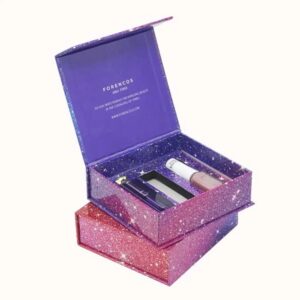
Production Scale and Industry Data
The demand for magnetic rigid packaging is growing rapidly.
- Global production is estimated at over 1.2 billion units annually
- Market size reached around $1.2 billion in 2024, with steady growth projected
- More than 78% of luxury brands use rigid magnetic boxes for direct-to-consumer packaging
These numbers reflect a clear shift: brands are investing more in packaging to enhance perceived value and customer experience.
Where Magnetic Gift Boxes Are Used
This box type is widely applied across industries:
- Wine boxes – premium gifting and protection
- Luxury gift boxes – seasonal and corporate gifts
- Cosmetics and fragrance
- Electronics and accessories
- Jewelry and watches
The key advantage is versatility. With the same structure, manufacturers can create highly customized designs for different markets.
Why Brands Choose Custom Magnetic Gift Boxes
From a practical standpoint, custom magnetic gift boxes offer:
- Strong protection for fragile products
- Premium presentation for retail and gifting
- Reusability, increasing brand exposure
- Compatibility with inserts and complex layouts
They also support e-commerce. Compared to standard cartons, rigid boxes reduce damage rates and improve customer perception during unboxing.
Final Insight
From raw greyboard to finished packaging, magnetic rigid boxes are the result of precise engineering and controlled craftsmanship. Every step—from structure design to magnet placement—affects the final quality.
For brands, understanding this process is not just technical knowledge. It helps in:
- Choosing the right supplier
- Controlling cost and quality
- Designing packaging that matches product value
In today’s market, packaging is no longer secondary. In many cases, it is part of the product itself.
FAQ
They use embedded magnets for closure, providing a seamless look and a premium opening experience.
Yes. When made with 1.5–3mm greyboard, they provide excellent structural protection.
Yes. Size, structure, materials, printing, and inserts can all be tailored.
They can be produced using FSC-certified paper, recycled board, and eco-friendly inks.
Usually starts from 500–1000 units depending on structure and customization.
Sampling takes 3–7 days, while mass production typically takes 15–25 days, depending on the quantity.
Yes. Once assembled, foldable designs provide similar strength while reducing shipping costs.