
Table of contents
A mailer box is a paper-based shipping container designed specifically for e-commerce logistics. It is typically constructed from corrugated board or rigid paperboard with a self-locking or lid-and-base structure that requires no tape to close. It serves two core functions: protecting products from compression and impact during carrier transit, and delivering a brand’s visual identity the moment a customer opens the package. Whether for personalized mailer boxes used by independent DTC brands or mailer boxes wholesale moving through bulk supply chains, the paper mailer box is the single packaging category that balances cost-efficiency with brand communication in e-commerce.
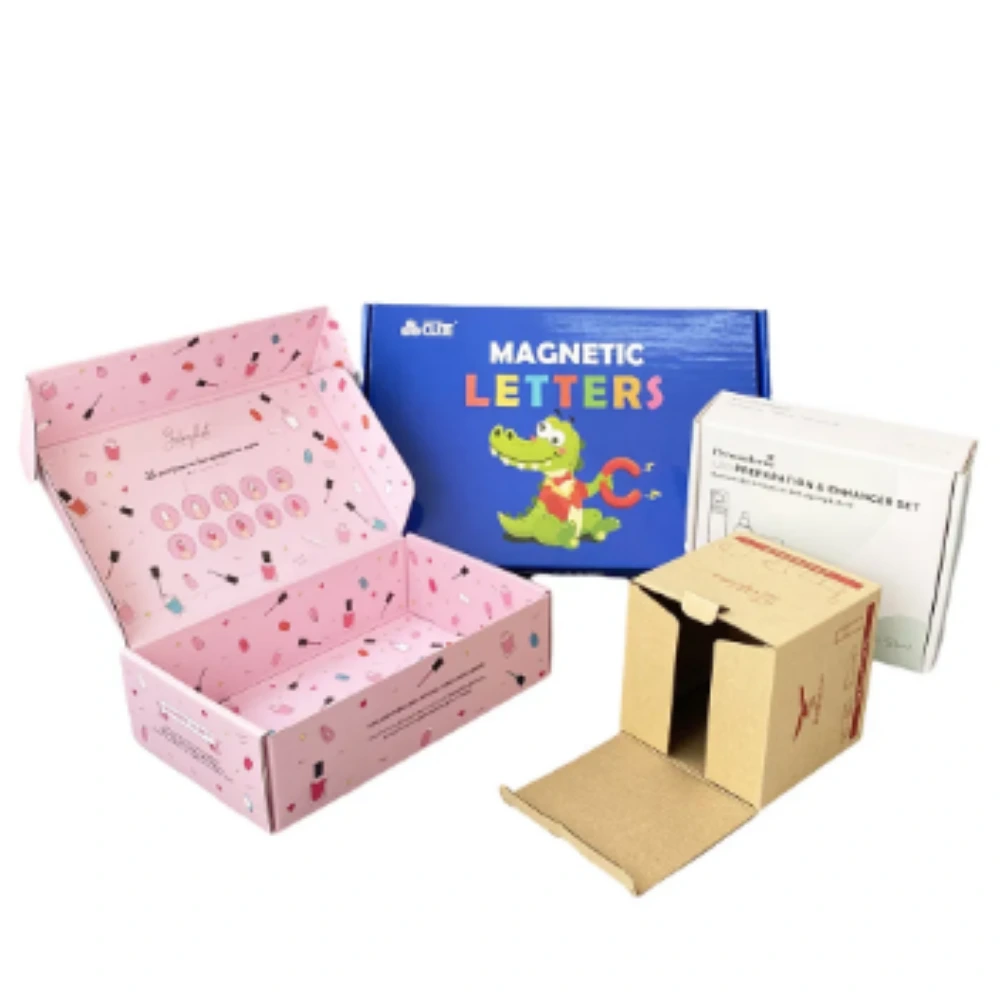
Mailer Box Types: Corrugated or Rigid, and for Whom
A mailer box is not a single product. Different materials and structures affect protection, print quality, and cost in dramatically different ways. Choose wrong and you either overspend on overbuilt packaging or under-protect your product into a damage claim.
Corrugated mailers: the e-commerce workhorse
Corrugated mailers account for the largest volume in e-commerce shipping. Single-wall corrugated board with B-flute or E-flute handles over 80% of everyday e-commerce orders—apparel, household goods, books, and small electronics. Single-wall corrugated mailers support weight ranges of 5 to 15 pounds and provide adequate crush resistance for standard carrier handling. Material costs run from $0.30 to $0.80 per box, making this the most cost-effective option available.
Double-wall corrugated mailers suit heavier and more fragile items—kitchen appliances, glassware, ceramics. The laminated layer structure, typically a BC-flute combination, delivers extra cushioning and compression strength at $0.80 to $2.00 per box. One mistake we often see is brands upgrading to double-wall when the product does not need it. A two-pound T-shirt does not require a double-wall corrugated box. Single-wall E-flute is sufficient, and the material and freight savings across a year add up fast.
Rigid paperboard mailers: brand experience over logistics
Rigid paperboard mailers, also called rigid mailer boxes, are the fastest-growing segment in e-commerce packaging upgrades. Greyboard wrapped in specialty paper with a magnetic flip-top or lid-and-base, shipped fully assembled—these boxes appear in Instagram unboxing videos far more often than they appear on logistics pallets. Unit cost ranges from $1.50 to $5.00.
A common challenge is the misconception brands hold: that rigid mailers are for unboxing experience and corrugated mailers are for logistics protection. In practice, they are not mutually exclusive. A well-designed E-flute corrugated mailer with offset litho-lamination or high-resolution digital print can approach rigid-box visual quality while retaining the cost advantage of flat-pack shipping. From a cost perspective, a fully branded corrugated mailer typically costs 40% to 60% less than a comparably branded rigid mailer.
Sizing mailer boxes correctly
Mailer box sizes directly impact two cost variables: paperboard consumption and carrier DIM weight pricing. The DIM formula for e-commerce carriers—length × width × height ÷ 139 for FedEx and UPS—means every additional cubic inch bumps the shipping charge upward.
In our experience, the best sizing logic is not “the product fits inside” but “the product plus its protective insert fits with minimal clearance.” A skincare brand we worked with originally used a 10×8×3 mailer box for a single 50ml serum bottle. Roughly one-third of the interior volume was empty, costing $800 per month in excess DIM charges. Switching to a custom 8×5×2 mailer box cut shipping costs by 35% while using the same EVA insert for product fixation. Precision sizing is the most overlooked cost lever in mailer box procurement.
Printing and Branding on Mailer Boxes
A mailer box is not merely a container. It is the only physical touchpoint between your brand and your customer. A logoed mailer box, from the moment it is lifted off the delivery truck to the moment it is opened at the doorstep, communicates brand value across every frame of that sequence.
Choosing the right print method
Mailer box printing splits into two primary tracks. Flexographic printing serves high-volume corrugated mailers with one to three colors—fastest speed, lowest cost. Digital printing suits small batches and personalized runs with no plate-making required. Black mailer boxes and white mailer boxes with high-contrast single-color designs work especially well with digital printing.
For example, a natural candle DTC brand shipping 3,000 to 5,000 packages monthly used white mailer boxes with flexo-printed single-color brand marks. The box itself was white, while the logo used a custom forest green ink. The per-box print cost added $0.08, but user-generated unboxing content on Instagram tripled. The brand communication ROI of paperboard packaging in the mailer box category often outperforms paid media.
Personalized mailer boxes: from logo to full-coverage
Personalized mailer boxes offer several tiers of customization depth. The simplest is a single-color logo—flexo or digitally printed at center-face, lowest cost. Full-coverage printing—the entire box face printed with brand pattern or color—delivers the strongest visual impact at 2 to 4 times the cost of a single-color logo. The middle path is logo plus brand color bar plus interior printing—a brand tagline or thank-you note printed inside the box, adding modest cost while creating an unboxing surprise.
Many brands assume personalized mailer boxes require high MOQs. Digital printing has lowered this barrier considerably—300 to 500 units are feasible without plate costs, and every box can carry a different design. Flexographic printing carries slightly higher MOQs, typically 1,000 to 3,000 units, but per-box cost runs 30% to 50% below digital.
One-price mailing boxes: cost optimization on the logistics side
One price mailing boxes refer to mailer boxes that fall within USPS Priority Mail flat-rate specifications. As long as the box stays within the dimensional limit and under 70 pounds, shipping costs a flat rate regardless of distance. The dimensions are standardized—for example, the USPS Medium Flat Rate Box measures 11″×8.5″×5.5″—but the material and print can be customized.
From a paper packaging supplier’s perspective, one-price mailing boxes remove the per-shipment rate calculation step. This suits brands with diverse SKUs shipping to widely distributed addresses. We have produced custom one-price mailer solutions where the box dimensions matched USPS specs exactly, but the material was upgraded to higher-weight corrugated board with matte lamination and brand foil stamping. The postage cost was identical to a standard USPS box, but the brand impression was on an entirely different level.
The Cost Structure of Mailer Boxes
Mailer box cost is not a single number. It is a function of multiple variables.
Five variables that determine mailer box unit cost
First, material—single-wall corrugated at $0.30 to $0.80, double-wall at $0.80 to $2.00, rigid paperboard at $1.50 to $5.00. Second, dimensions—every 20% increase in box volume adds roughly 15% to 25% to both paperboard consumption and DIM shipping charges. Third, printing—flexo adds $0.05 to $0.15 per box, digital adds $0.15 to $0.40 per box. Fourth, order quantity—a 500-unit run typically costs 40% to 80% more per box than a 5,000-unit run because die-making and plate-making fixed costs are amortized across fewer units. Fifth, surface finishing—lamination, foil stamping, and UV coating each add $0.02 to $0.15 per box.
In our experience, the single most effective cost-control lever on mailer boxes is not cutting print spend. It is right-sizing the box to the product. The DIM freight savings from precision sizing cover the per-box material upgrade cost in most scenarios. Dimensions are the least visible but most impactful cost variable in mailer box procurement.
Wholesale mailer boxes vs. custom mailer boxes
Wholesale mailer boxes cost $0.10 to $0.50 per unit depending on size and material. The advantages are immediate availability, low MOQs, and fast dispatch. But wholesale boxes come in fixed dimensions. Your product must adapt to the box rather than the reverse, generating hidden costs in freight and void-fill materials. Custom mailer boxes carry a higher unit price, but the dimensional precision delivers freight optimization and brand premium that typically outweigh the unit cost difference over time.
The bottom line: if your monthly shipment volume exceeds 500 units, the total cost of custom mailer boxes—box plus DIM freight plus void fill plus brand exposure value—comes in lower than wholesale boxes in the vast majority of cases. This is not an estimate. It is a conclusion drawn from running the numbers across more than a dozen client datasets.
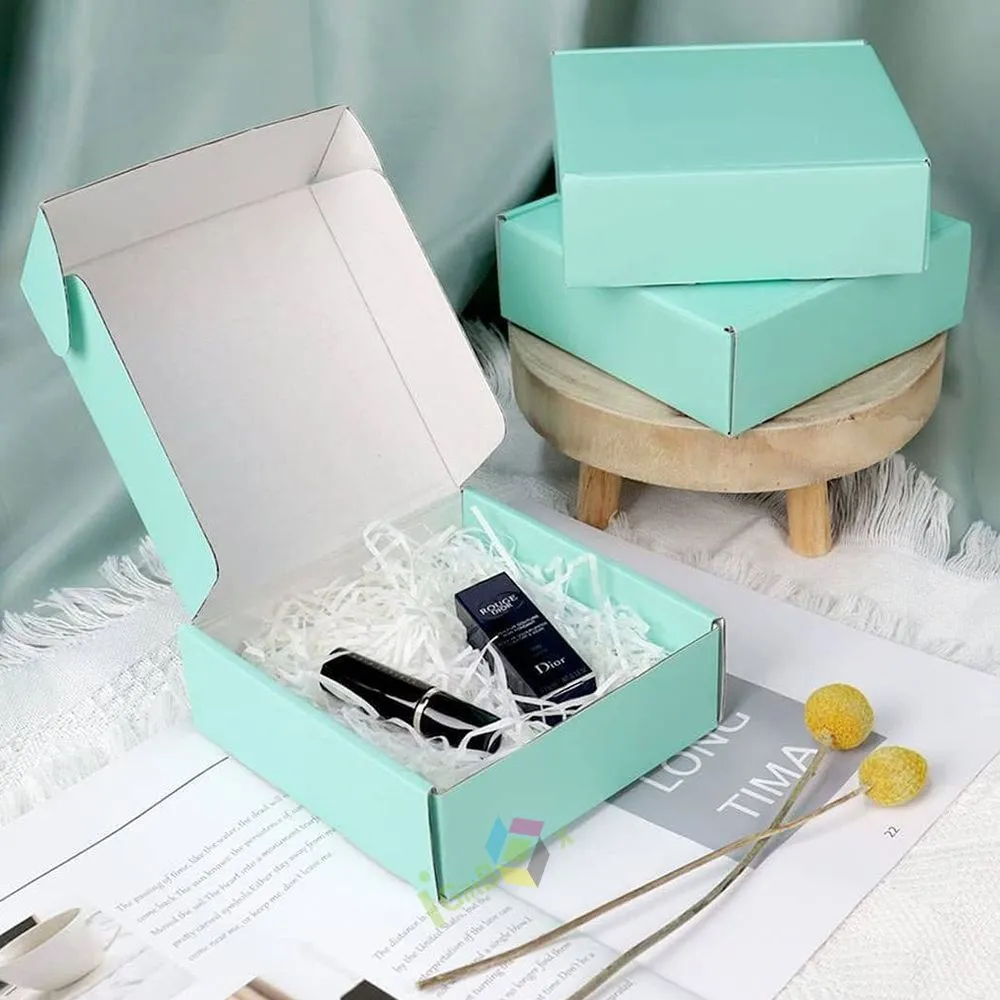
Structural Design: Self-Locking, Lid-and-Base, and Inserts
Paper mailer box structure affects more than unboxing experience. It affects the throughput speed of every packing station on the fulfillment line.
Self-locking vs. lid-and-base
Self-locking mailer boxes are the dominant e-commerce structure today. The bottom locks automatically when the box is unfolded—no tape, no staples. An operator places the product inside, closes the lid, and applies the shipping label. Total packing time runs 5 to 8 seconds per box. Lid-and-base mailer boxes require handling two separate pieces—the base and the lid—adding one extra motion and 2 to 3 seconds per box. For an e-commerce warehouse shipping 500 to 1,000 packages daily, that 2-to-3-second difference cumulatively adds 20 to 50 minutes of extra labor per day.
However, lid-and-base mailer boxes deliver a noticeably stronger unboxing ceremony. The product is presented rather than extracted. For jewelry, premium accessories, and gift-oriented products, the unboxing experience premium from a lid-and-base mailer box more than offsets the operational efficiency tradeoff.
Inserts that fix the product without stuffing
A well-designed mailer box insert does not rely on foam packing peanuts. It uses die-cut cardstock or corrugated pads to precisely fix the product in place. Paper-based inserts carry the advantages of material consistency with the box body, recyclability, and low cost at $0.05 to $0.20 per set. Die-cut cardstock inserts can be custom-contoured to the product profile. A watch brand client replaced foam void-fill with paper inserts, cutting insert costs by 40% while producing a cleaner unboxing presentation.
FAQ
It depends on product weight and shipping distance. Single-wall corrugated with E-flute or B-flute suits everyday goods weighing 5 to 15 pounds. Double-wall corrugated with BC-flute suits heavier items weighing 15 to 40 pounds or fragile products. Rigid paperboard mailers suit brand-forward items under 5 pounds. Thicker does not mean better—a 2-pound product in double-wall corrugated is wasted material.
Digitally printed mailer boxes start at low MOQs of 300 to 500 units. Flexo-printed mailer boxes start at 1,000 to 3,000 units. Wholesale mailer boxes have no MOQ restrictions and can be purchased by the case. Custom mailer box cutting die fees run $100 to $500, and once paid, reorders incur no additional die charges.
Material-wise, they are typically identical—both are corrugated board or rigid paperboard with different surface colors. Black mailer boxes suit premium brands, tech products, and male-oriented consumer goods. White mailer boxes suit skincare, baby products, and clean-living brands. Black mailer boxes are usually printed with white or metallic ink; white mailer boxes offer a wider print palette. Black paperboard typically costs 5% to 15% more than white because the dyeinsg process adds manufacturing cost.
With existing cutting dies, flexo-printed mailer boxes take 7 to 12 working days and digitally printed boxes take 3 to 7 working days. New die fabrication adds 3 to 5 days. Ocean freight to the US West Coast adds 3 to 4 weeks; to Europe adds 5 to 6 weeks.
And first-time orders take roughly 3 to 5 days longer than reorders because cutting dies and printing plates must be newly fabricated.
Standard corrugated mailer boxes are not waterproof. Exposure to rain or liquid spillage softens the paperboard and reduces compression strength by over 50%. If moderate water resistance is needed, a PE lamination or water-based coating can be added at $0.03 to $0.10 per box. For true ocean-freight or long-term warehouse scenarios, lamination alone is insufficient—we recommend an outer carton or pallet wrap for moisture protection.
Under 300 shipments per month—wholesale mailer boxes are sufficient, avoiding die fees and sampling lead time. At 300 to 500 shipments per month—a transitional stage where wholesale boxes can serve while sampling custom options for cost comparison. Above 500 shipments per month—custom mailer boxes almost always deliver lower total cost because DIM freight optimization covers the unit price difference.
High volume and efficiency-first—self-locking mailer box. Strong branding and higher product value—lid-and-base mailer box. Slim-profile products such as watches, pens, and electronics accessories—drawer-style mailer box. There is no universal structure, only a structure matched to the specific fulfillment scenario.