
Table of contents
- 1. Match the Takeaway Box to the Food
- 2. Which Paper Materials Are Best for Takeaway Packaging?
- 3. How to Choose a Box Structure for Delivery
- 4. Grease, Steam, and Heat: What Buyers Need to Check
- 5. Make the Packaging Work for Your Brand
- 6. What Affects the Cost of Custom Takeaway Food Boxes?
- 7. How to Choose a Food Packaging Supplier
- 8. A Checklist Before Ordering Custom Food Boxes
- FAQ
Choosing takeaway packaging is not just about finding a box that holds food. The right package needs to keep meals presentable during delivery, resist grease and moisture, close securely, and remain practical for staff to assemble during busy service hours.
For restaurant chains, takeaway brands, food manufacturers, and food-service distributors, the wrong specification can lead to leaking grease, softened box bases, crushed food, or packaging costs that are unnecessarily high.
Custom food boxes allow businesses to select a box structure, paper material, size, printing, and barrier treatment according to the food being served and the delivery conditions.
But which paper box should you choose for burgers, fried chicken, noodles, salads, or bakery products? And what should you check before placing a bulk order with a packaging manufacturer?
This guide compares practical options and explains how to make a more informed purchasing decision.
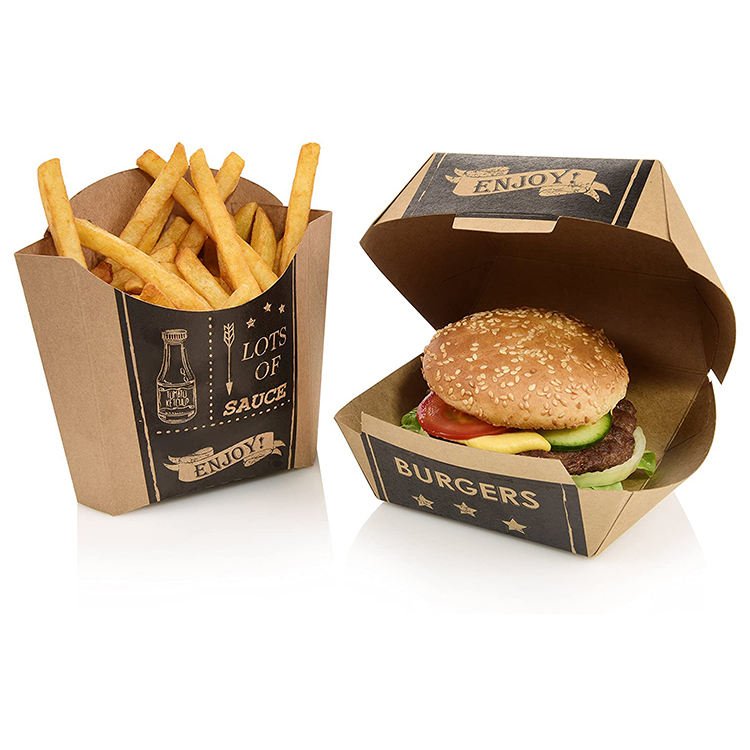
1. Match the Takeaway Box to the Food
The first step is to identify the food’s characteristics rather than choose a box based only on appearance.
Different foods place different demands on packaging. Fried food releases oil, hot meals can generate steam, sauces may leak through poorly designed closures, and heavier meals need a stable base.
| Food type | Suitable box options | Main requirements |
|---|---|---|
| Burgers and sandwiches | Folding paperboard box, tuck-top carton | Secure closure, grease resistance, ventilation where needed |
| Fried chicken and fries | Food-contact paperboard box with suitable barrier | Oil resistance, heat management, structural strength |
| Noodles and rice meals | Appropriately designed paperboard container | Leak control, closure security, moisture resistance |
| Salads and cold meals | Folding carton or compatible paper-based container | Moisture management, food protection, suitable closure |
| Pizza and flatbreads | Corrugated paperboard box | Base stiffness, stacking, ventilation |
| Pastries and bakery products | Folding carton or kraft-style box | Grease resistance, product stability, presentation |
| Combo meals | Multi-compartment structure or coordinated box set | Separation, efficient packing, consistent dimensions |
These are starting points, not universal specifications. For example, a paperboard box suitable for a relatively dry sandwich may not perform well with a hot, oily meal.
Before selecting materials, establish whether food will contact the box directly, how hot it will be when packed, how long it will remain inside, and whether it will be delivered by hand, vehicle, or courier.
2. Which Paper Materials Are Best for Takeaway Packaging?
The best material balances structural performance, food-contact suitability, printing quality, and cost.
Folding boxboard for everyday takeaway meals
Folding boxboard is a common option for printed food cartons. It offers a printable surface and can be converted into different structures, including tuck-top boxes, sleeves, and custom folding cartons.
It is worth considering for sandwiches, bakery products, selected fast-food applications, and branded meal packaging.
The board grade should be selected according to the dimensions and weight of the packed food. A small sandwich carton does not necessarily need the same material specification as a large meal box.
Kraft paperboard for a natural appearance
Kraft-style packaging is popular with takeaway businesses that prefer a simple, understated look.
It can work well for bakery items, sandwiches, selected snacks, and food brands that want a natural visual identity.
However, brown kraft paper is not automatically greaseproof, waterproof, or suitable for direct food contact. Its performance depends on the actual paper grade, coatings, barrier layers, and complete packaging construction.
If your menu includes oily or moist food, confirm these requirements before approving the material.
Corrugated paperboard for stronger boxes
Corrugated board is useful when a package needs greater structural support, such as pizza boxes, larger takeaway meals, or certain multipack applications.
Its fluted structure provides cushioning and helps resist compression, depending on the board grade and construction.
For delivery packaging, consider how the box will perform when stacked with other meals. A box that supports its contents on a counter may behave differently when transported in a delivery bag.
Barrier-treated paperboard for grease and moisture
Some takeaway foods require a barrier to reduce oil or moisture penetration.
The appropriate treatment depends on the food, temperature, contact duration, and market requirements. Do not assume that every coated paperboard has the same performance.
The U.S. FDA identifies food packaging, coatings, adhesives, and colorants among the materials and substances that may come into contact with food. Their suitability depends on the intended use and applicable requirements.
When comparing materials, ask your supplier about the complete construction and available food-contact documentation, not just the paper’s thickness.
3. How to Choose a Box Structure for Delivery
Material alone cannot prevent every packaging failure. The box structure also determines how securely the food is held, how quickly staff can pack it, and how well it performs during transport.
Tuck-top and folding takeaway boxes
These structures can be practical for burgers, sandwiches, pastries, and selected meal products.
They are useful when businesses need packaging that can be supplied flat and assembled as required. The closure should remain secure without being difficult for staff to operate.
Locking-bottom boxes
A locking bottom or reinforced base can help support heavier food, depending on the design and board grade.
This is particularly relevant for meal boxes containing rice, meat, or several components. The base should be tested with the actual packed weight rather than approved solely from a drawing.
Boxes with separate compartments
Compartmentalized structures can help separate different food items, such as a main dish and a side portion.
However, paper dividers do not automatically make a package leakproof. If liquids or sauces are involved, each compartment and the complete structure must be evaluated for the intended use.
Corrugated takeaway boxes
Corrugated structures can provide additional support for pizza, large meals, and products that need to withstand stacking.
Their performance depends on the flute profile, board grade, dimensions, humidity, and loading conditions. A suitable design should protect the food without adding unnecessary bulk.
A useful purchasing rule: Test the box with a representative meal, not just an empty sample. Check how it closes, how the base carries the weight, and whether the food shifts during normal handling.
4. Grease, Steam, and Heat: What Buyers Need to Check
Grease and moisture resistance are among the most important specifications for takeaway packaging.
A box may appear perfectly rigid when empty but soften after contact with hot, oily food. Steam can also affect food quality: a completely closed package may retain moisture and make crispy products soggy.
Before choosing a barrier treatment or ventilation pattern, consider three questions.
Will the food release oil?
Fried foods, burgers, and buttery pastries may require suitable grease resistance. Ask for the material specification and evidence supporting its intended food-contact use.
Will steam build up inside the box?
Some foods benefit from carefully designed ventilation, while others need more moisture retention. Ventilation should be based on the food and delivery conditions, not added automatically.
Will the box contact hot food directly?
Temperature and contact duration can affect the suitability of food-contact materials. Confirm that the complete construction is intended for the actual packing conditions.
For the U.S. market, the FDA announced in February 2024 that PFAS-containing grease-proofing substances were no longer being sold for food-contact use on paper food packaging. In January 2025, it determined that 35 related food-contact notifications were no longer effective. Buyers should therefore verify the composition and compliance documentation of grease-resistant packaging rather than rely on a generic “greaseproof” description.
For EU-bound packaging, applicable food-contact requirements must also be considered, including Regulation (EC) No 1935/2004 and good manufacturing practice requirements under Regulation (EC) No 2023/2006.
5. Make the Packaging Work for Your Brand
Functional packaging can still create a consistent brand experience.
For restaurants and food-service businesses, printed packaging can help customers identify the brand, distinguish menu categories, and recognize a business when meals are delivered.
Common customization options include:
- Four-color printing
- One- or two-color logos
- Kraft-style printed designs
- Matte or gloss finishes where suitable
- Die-cut windows for selected products
- Custom sizes and closure structures
- Printed sleeves or coordinated packaging sets
The right level of customization depends on the business model.
A high-volume takeaway chain may prioritize consistent colors, quick assembly, and cost control. A premium restaurant or specialty food brand may place more emphasis on typography, material appearance, and presentation.
When ordering paper food boxes, check that the artwork leaves sufficient space for required product or business information. Also confirm whether printing inks, coatings, adhesives, and other components are appropriate for their intended use, especially where direct food contact is possible.
For many everyday takeaway applications, a clear logo, legible information, and a well-designed structure provide more practical value than multiple decorative finishes.
6. What Affects the Cost of Custom Takeaway Food Boxes?
When comparing quotations, avoid evaluating suppliers on unit price alone. The complete specification determines both cost and performance.
| Cost factor | What to consider |
|---|---|
| Box dimensions | Larger boxes generally require more material |
| Paper grade and thickness | Match strength to food weight and handling conditions |
| Box structure | Inserts, reinforced bases, and complex folds may add processing |
| Barrier treatment | Must match the food’s grease and moisture requirements |
| Printing | Coverage, colors, and consistency requirements affect production |
| Finishing | Special treatments can add setup or processing costs |
| Order quantity | Setup costs may be spread across a larger production run |
| Packing and shipping | Flat-packed boxes may reduce storage and transport volume |
For a fair comparison, provide every supplier with the same dimensions, material requirements, printing artwork, quantity, packing method, and delivery destination.
It is also worth requesting pricing at several quantities if you expect your business to grow. A structure that works for an initial order may need to be reconsidered when volumes increase.

7. How to Choose a Food Packaging Supplier
A reliable food packaging supplier should help you resolve specification questions before production, not simply send a price list.
Ask potential suppliers:
- Can you recommend a suitable box structure for my food type and serving size?
- What paper grade and barrier construction do you recommend, and why?
- Can you provide relevant food-contact documentation?
- Can I approve a physical sample before mass production?
- How do you control dimensions, printing consistency, folding, and gluing?
- What are the production lead time, packing method, and shipping arrangements?
- Can you reproduce the same material and design consistently for repeat orders?
For larger orders, evaluate the supplier’s production controls and sampling process. A visually attractive prototype is only one part of the decision; the finished packaging must remain consistent across the production run.
If the package will carry hot or greasy food, include a realistic use test before approving the final specification.
8. A Checklist Before Ordering Custom Food Boxes
Prepare these details before requesting a quotation:
- Food type and portion size
- Product dimensions and approximate weight
- Preferred box style, if known
- Whether the food directly contacts the paper
- Grease, moisture, temperature, and ventilation requirements
- Printing artwork and logo
- Estimated order quantity
- Destination market
- Storage and delivery conditions
- Packing and shipping requirements
If you have not decided on the box style, send product photos and measurements. A manufacturer can then discuss suitable options based on the intended application.
The more clearly you define the food and delivery conditions, the easier it becomes to compare quotations on an equivalent basis.
FAQ
Folding paperboard boxes work for many sandwiches, bakery products, and selected meals. Corrugated boxes can be more appropriate when additional structural support is needed. The correct option depends on the food, weight, moisture, grease, and delivery conditions.
Some are, provided the complete packaging construction is designed for the intended temperature and contact conditions. Confirm the suitability of the paper, coatings, adhesives, and other components with your supplier.
Specify a material construction with suitable grease resistance for the intended food. Ask about the barrier treatment and supporting documentation, and test a filled sample under realistic conditions before mass production.
Yes. Depending on the structure and material, options may include one-color or full-color printing, custom graphics, and selected finishing treatments. Confirm the printable areas and artwork requirements before approving production.
No. A brown or kraft appearance does not establish the complete environmental performance of a package. Consider the material sourcing, coatings, additional components, local recycling systems, and any specific certifications or claims.
Provide the food type, dimensions, portion weight, required quantity, preferred structure, food-contact conditions, artwork, destination market, and shipping requirements. If the structure is undecided, product photographs can help the supplier make recommendations.
Ask both suppliers to quote the same structure, dimensions, material specification, barrier requirements, printing, quantity, packing method, and delivery terms. Compare sample quality, compliance documentation, quality controls, lead time, and repeat-order consistency alongside the unit price.