
Table of contents
Choosing sustainable food packaging involves more than replacing plastic with paper. Food brands need packaging that protects products, meets food-contact requirements, works efficiently during storage and delivery, and fits local waste-management systems. A box that looks natural but leaks grease, collapses in transit, or cannot be recycled locally may not be the best choice.
For many food businesses, paperboard, kraft paper and corrugated board offer practical starting points. Each material has different strengths, costs and limitations. The right choice depends on the food itself, the supply chain, the required shelf life and how consumers will dispose of the packaging.
This guide compares the main paper-based options and explains how to choose packaging that balances product protection, presentation and sustainability.
What Is Sustainable Food Packaging?
Sustainable food packaging is packaging designed to protect food while reducing avoidable material use, waste and environmental impact across its life cycle. Important factors include responsible raw-material sourcing, efficient design, food safety, transport performance and realistic end-of-life options.
Paper-based packaging can support these goals, but paper is not automatically sustainable simply because it is paper. Recyclability may be affected by food residue, plastic linings, barrier coatings, windows and other components. The actual result also depends on local collection and recycling infrastructure.
When evaluating packaging, consider three questions:
- Does it protect the food? Packaging must perform under expected handling, temperature, moisture and transport conditions.
- Does it use materials efficiently? Excessive thickness, unnecessary layers and oversized boxes can increase material consumption and shipping volume.
- Can it be recovered after use? Check whether the complete package—not just its paper component—is accepted by the intended local recycling system.
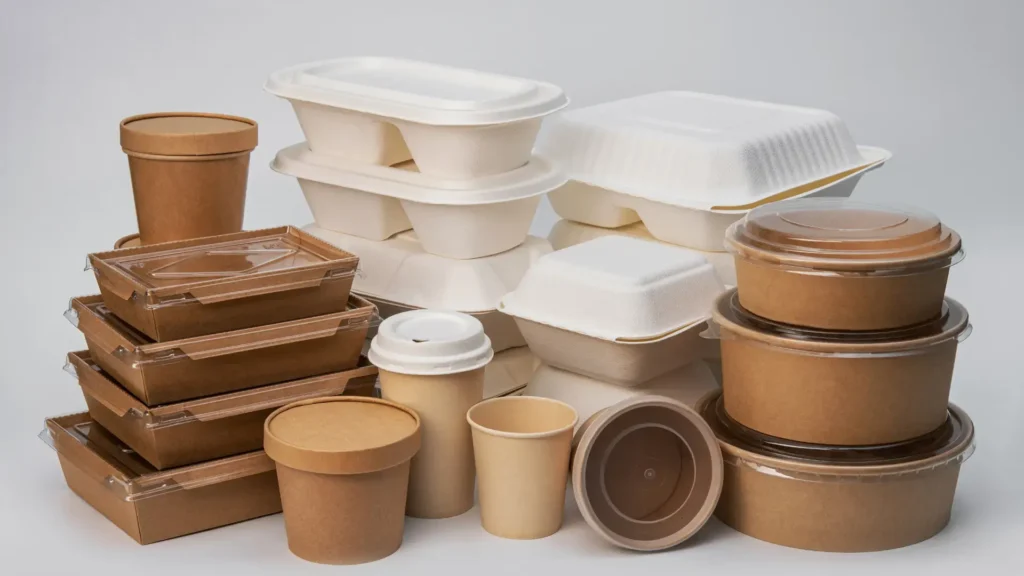
Paper, Kraft and Corrugated Board: What Is the Difference?
These materials are not always direct substitutes. Paperboard is a broad category, kraft refers to a paper grade or production-related material characteristic, and corrugated board uses a fluted layer to provide cushioning and rigidity.
| Material | Main advantages | Common applications | Main considerations |
|---|---|---|---|
| Folding boxboard or paperboard | Smooth print surface, flexible converting, clean presentation | Bakery boxes, confectionery cartons, dry food cartons | Moisture and grease resistance depend on grade and construction |
| Kraft paper or kraft paperboard | Natural appearance, suitable for simple or premium rustic branding | Takeaway boxes, sandwich cartons, bakery packaging, sleeves | Natural color and texture may limit some print effects; grease resistance must be verified |
| Corrugated board | Stronger cushioning and stacking performance for its weight | Meal delivery, produce boxes, food shipping cartons, multipacks | Flute construction affects thickness, printing quality and box size |
| Barrier-treated paperboard | Can provide improved resistance to grease or moisture | Greasy foods, saucy meals and selected chilled applications | Coating composition can affect food-contact suitability and recycling options |
1. Paperboard: Best for Retail Presentation and Everyday Food Cartons
Paperboard is a practical choice when a package needs a neat appearance, accurate printing and a structure that can be die-cut and folded into different shapes.
It works well for bakery cartons, snack boxes, confectionery packaging and many dry-food applications. Brands can use custom dimensions, tuck-end closures, window features where appropriate, and printed graphics to create a consistent retail presentation.
The limitation is that ordinary paperboard is not inherently waterproof or greaseproof. A carton designed for cookies may not perform well with hot, oily food. For products containing fat, moisture or sauce, ask the supplier to recommend and test a suitable material and any required barrier treatment.
2. Kraft Paper and Kraft Paperboard: Best for a Natural Brand Look
Kraft packaging is popular with bakeries, cafés, takeaway businesses and food brands seeking a simple, natural visual style. Its brown surface can communicate an understated design direction, while white kraft or printed kraft options provide other branding possibilities.
Kraft is not one single specification. Paper weight, recycled content, virgin fibre content, surface treatment and board construction all influence performance. Two boxes described as “kraft” may therefore behave quite differently.
For custom food boxes, match the material to the food rather than choosing it only for its appearance. A kraft carton for dry pastries has different requirements from one carrying oily fried food or a hot sandwich. If the package needs a grease barrier, confirm the treatment’s intended food-contact use and ask how it affects disposal or recycling.
3. Corrugated Board: Best for Delivery and Transport Protection
Corrugated board consists of flat liner sheets with a fluted paper layer between them. This construction provides rigidity and cushioning, making it useful for food delivery, produce transport, multipacks and shipping cartons.
It can help resist crushing and protect food containers during handling. However, corrugated board is not automatically the best option for every takeaway meal. A small carton for one pastry may not need the same structure as a large box carrying several packed meals.
Select the flute profile, board strength and box dimensions according to the expected load, stacking height and delivery conditions. Overspecifying the board adds material and cost; underspecifying it can lead to damaged products and avoidable waste.
How to Choose the Right Material for Different Foods
Start with the product’s real operating conditions. Consider temperature, moisture, oil content, weight, delivery distance and whether the package will be stacked.
| Food application | Suitable starting point | What to verify |
|---|---|---|
| Cookies, dry snacks and confectionery | Paperboard carton | Product fit, closure and moisture protection |
| Bread, pastries and bakery products | Kraft or folding paperboard | Ventilation, grease transfer and freshness requirements |
| Burgers, sandwiches and fried food | Food-contact-suitable paperboard with an appropriate barrier if needed | Grease resistance, heat, condensation and closure strength |
| Multiple meal containers | Corrugated carrier or delivery box | Load capacity, stacking and internal movement |
| Produce and heavier food shipments | Corrugated board | Compression strength, ventilation and moisture exposure |
These are starting points, not universal specifications. The best structure should be confirmed through sample testing with the actual product or a realistic substitute.
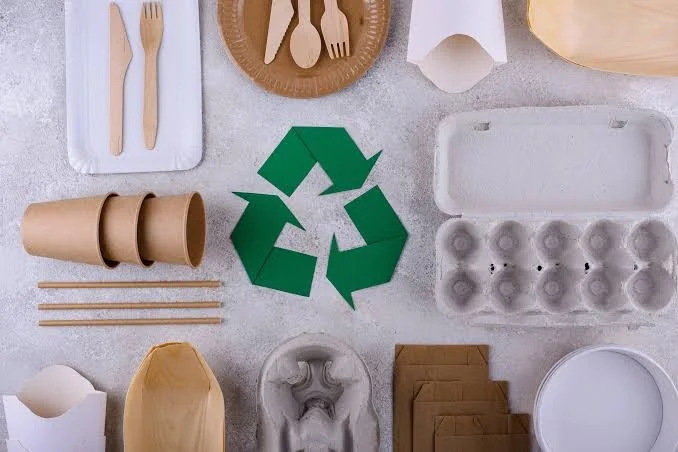
Sustainability Depends on More Than the Material
A responsible packaging decision considers the entire package and its performance—not just the raw material name.
Use only the material strength you need. A well-designed box can protect the product without unnecessary layers or excess board. But reducing thickness too aggressively may increase damage, returns and food waste.
Review recycled and responsibly sourced content. Ask for clear documentation of the material’s composition. FSC certification, where applicable and properly claimed, can help demonstrate responsible sourcing and chain-of-custody controls for forest-based materials. It is not, by itself, proof that a finished package is recyclable or has a lower overall environmental impact.
Check barriers and coatings early. Grease-resistant treatments can be important for food performance, but their composition and intended use need to be assessed. In the United States, the FDA announced in February 2024 that PFAS-containing grease-proofing substances were no longer being sold for food-contact use on paper food packaging. In January 2025, it determined that 35 related food-contact notifications were no longer effective. Buyers should still request current, product-specific documentation rather than assume every coating has the same composition or status.
Confirm local disposal routes. A paper package with a barrier layer, window or heavy food contamination may not be accepted by every recycling program. Ask the supplier for the full material structure and check local collection guidance before printing recycling instructions on the package.
Regulations also vary by market. The EU’s Packaging and Packaging Waste Regulation began applying on 12 August 2026, introducing requirements covering packaging placed on the EU market. Businesses selling into Europe should review the rules relevant to their packaging type, product and obligations rather than relying on a general “eco-friendly” label.
What to Ask a Food Packaging Supplier
A suitable supplier should help translate the product requirements into a workable packaging specification. Before placing a bulk order, ask:
- What is the complete material structure? Confirm paper grade, board thickness or weight, coatings, adhesives, windows and inserts.
- Is the material suitable for the intended food contact? Request applicable declarations or supporting documentation for the target market and actual conditions of use.
- How will the package perform? Discuss grease transfer, moisture, hot-food condensation, closure strength and stacking.
- What tests can be completed before production? Request samples and test them with the food, packing method and delivery conditions.
- What sourcing and environmental claims can be documented? If you need FSC-certified material, recycled-content information or recycling guidance, clarify the evidence required.
- Can the design reduce material and shipping volume? Check whether box dimensions, nesting, flat-packed delivery or structural changes can reduce waste without compromising protection.
A capable food packaging supplier should explain trade-offs clearly rather than promise that one material will work for every food product.
Custom Food Boxes for Your Business
The right packaging balances food protection, presentation, material efficiency and the realities of the target market. Paperboard can suit printed retail cartons, kraft can support a natural brand aesthetic, and corrugated board can provide extra protection for delivery and transport. Barrier treatments may be necessary for some foods, but they should be chosen with food-contact suitability and end-of-life options in mind.
FAQ
There is no single best material for every application. Paperboard, kraft and corrugated board each suit different needs. Compare material sourcing, packaging weight, product protection, food-contact requirements and local recycling options before deciding.
Some kraft boxes can be recycled where local programs accept them, but coatings, laminations, windows and food contamination may affect acceptance. Confirm the complete construction and check local recycling guidance.
They can be, if the material structure and any barrier treatment are designed for the intended food and conditions. Test the package with representative food, temperature and holding time before approving production.
Paperboard is generally a solid, relatively thin sheet used for folding cartons and printed packaging. Corrugated board contains a fluted layer between liner sheets, providing additional rigidity and cushioning for delivery or transport applications.
No. FSC certification relates to responsible forest-based sourcing and chain-of-custody requirements. Recyclability depends on the complete package construction, contamination and the recycling systems available in the destination market.
Start by eliminating unnecessary packaging, optimizing box dimensions, selecting an appropriate board grade, documenting material sourcing and checking local recovery options. Maintain sufficient protection to avoid damage and food waste.
Provide the food type, box dimensions, product weight, temperature at packing, grease and moisture exposure, required quantity, printing needs and destination market. Samples and performance tests help confirm the final specification before bulk production.