
Table of contents
Perfume packaging needs to do more than hold a fragrance bottle. It must protect a delicate product, present the brand professionally and create an opening experience that feels consistent with the fragrance inside. For brands looking beyond standard folding cartons, drawer-style packaging offers a distinctive way to combine product protection with premium presentation.
Drawer perfume boxes feature an inner tray that slides out of an outer sleeve or rigid shell. This simple mechanism creates a controlled opening experience and provides opportunities for custom inserts, specialty papers, foil stamping and other decorative finishes.
However, not every perfume bottle requires a drawer box. The right design depends on bottle dimensions, weight, product positioning, budget and distribution requirements. This guide explains how drawer boxes work, which design options matter most, and what buyers should consider before ordering custom packaging.
What Are Drawer Perfume Boxes?
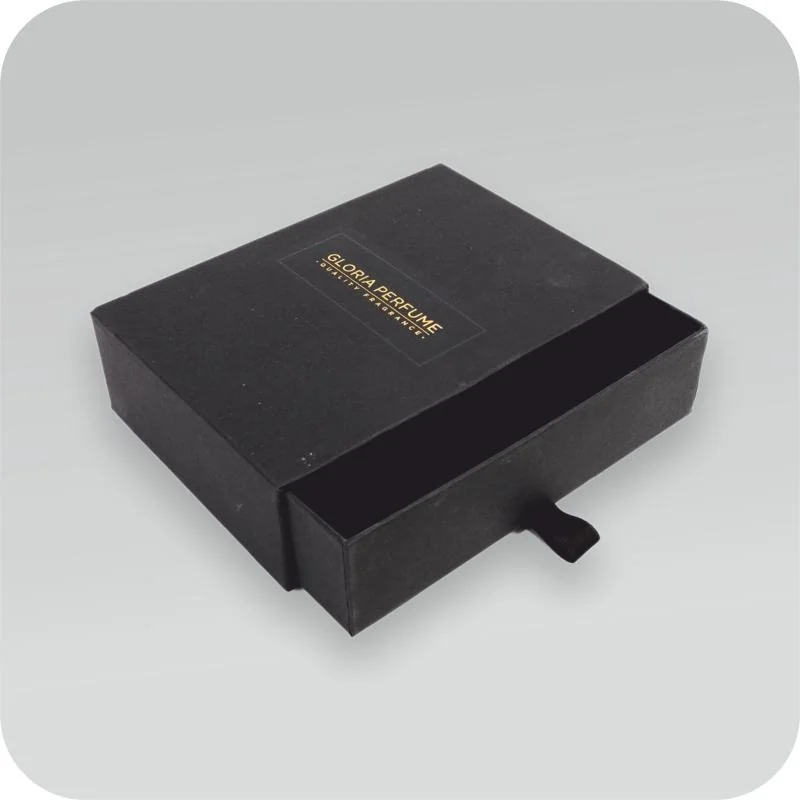
Drawer perfume boxes are packaging boxes with a sliding inner tray and an outer sleeve. The perfume bottle sits inside the tray, which is pulled out through an opening at one end. Depending on the design, the tray may include a ribbon pull, finger notch or another opening feature.
Unlike a conventional top-opening carton, this structure reveals the product progressively as the tray slides out. The movement can make the unboxing experience feel deliberate and refined, which is useful for premium fragrances, gift sets and limited-edition collections.
The box can be manufactured using rigid paperboard wrapped in printed or specialty paper, or with folding paperboard when a lighter-weight construction is appropriate. Material selection should reflect the bottle’s weight, the required appearance and the level of protection needed during storage and shipping.
How Is a Drawer Perfume Box Constructed?
A typical drawer-style perfume box has three main components. Each part affects fit, durability and the customer’s experience.
1. Outer Sleeve
The outer sleeve surrounds the inner tray and gives the package its main exterior appearance. It can be wrapped with specialty paper, printed paper or textured paper, depending on the brand’s design direction.
For luxury fragrance lines, common finishing options include hot foil stamping, embossing, debossing, matte lamination and spot UV. A restrained combination often works better than applying several effects across the entire surface.
The sleeve must also maintain the correct internal clearance. If it is too tight, the tray may stick or damage the wrapped edges. If it is too loose, the tray can slide out too easily or feel unstable during handling.
2. Inner Tray
The tray holds the perfume bottle and slides through the sleeve. Its construction may use rigid board, folding paperboard or another suitable paper-based structure.
Tray dimensions should be developed around the actual product rather than estimated from the bottle’s nominal capacity. Bottle shoulders, caps, decorative collars and irregular shapes can affect the available space.
The tray also needs enough rigidity to support the bottle without bending during repeated opening and closing. For heavier glass bottles, the board specification and insert design deserve particular attention.
3. Custom Insert
The insert keeps the bottle positioned inside the tray and helps prevent excessive movement. Depending on the product, it may be made from die-cut paperboard, molded pulp, EVA foam or another material suitable for the packaging requirements.
Paperboard inserts can provide a coordinated paper-based appearance and may simplify material separation, depending on how the box is assembled. EVA foam can offer a precise fit and a smooth presentation for premium glass bottles, but its material composition and end-of-life options differ from those of paperboard.
The choice should balance fit, impact protection, presentation, production feasibility and the customer’s sustainability requirements.
Design Options for Different Perfume Brands
A drawer structure is flexible, but the best design is not necessarily the most elaborate. Start with the bottle and brand requirements, then select the details that deliver practical value.
| Design element | Available options | Key consideration |
|---|---|---|
| Box construction | Rigid board or folding paperboard | Bottle weight, required durability and budget |
| Exterior paper | Art paper, specialty paper, textured paper or selected kraft papers | Brand identity, print quality and surface feel |
| Opening feature | Ribbon pull, finger notch or exposed tray edge | Ease of use and visual consistency |
| Insert | Die-cut paperboard, EVA foam or molded pulp | Bottle fit, protection and presentation |
| Printing | CMYK printing, spot colors or minimal one-color artwork | Brand colors, design complexity and quantity |
| Surface finishing | Hot foil stamping, embossing, debossing, matte lamination or spot UV | Visual hierarchy, tactile effect and cost |
Minimalist Designs
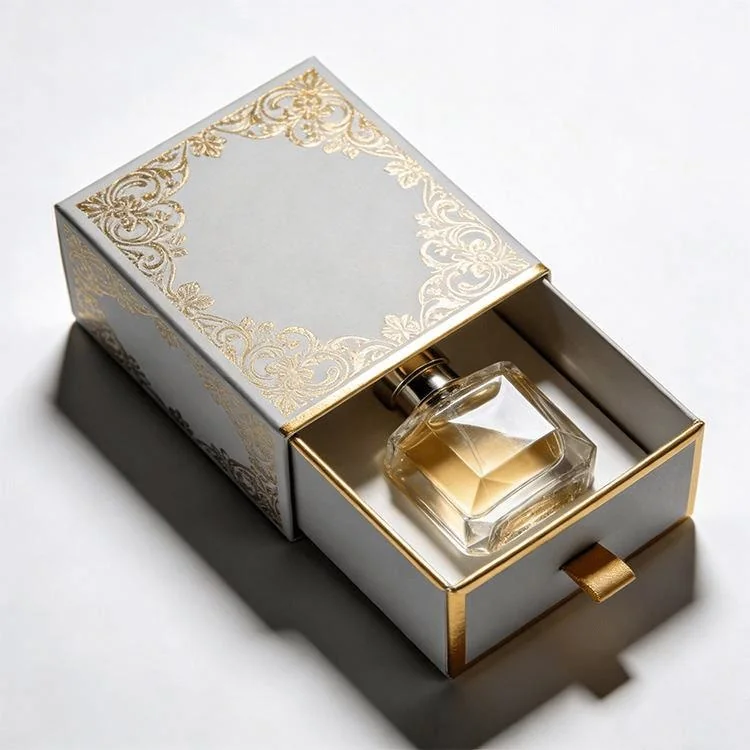
Minimalist drawer boxes use clean typography, limited colors and carefully selected materials. A logo stamped in foil on a textured surface can create a premium appearance without extensive printing.
This approach suits contemporary fragrance brands, niche perfumery and collections that rely on understated visual identity.
Luxury Gift Packaging
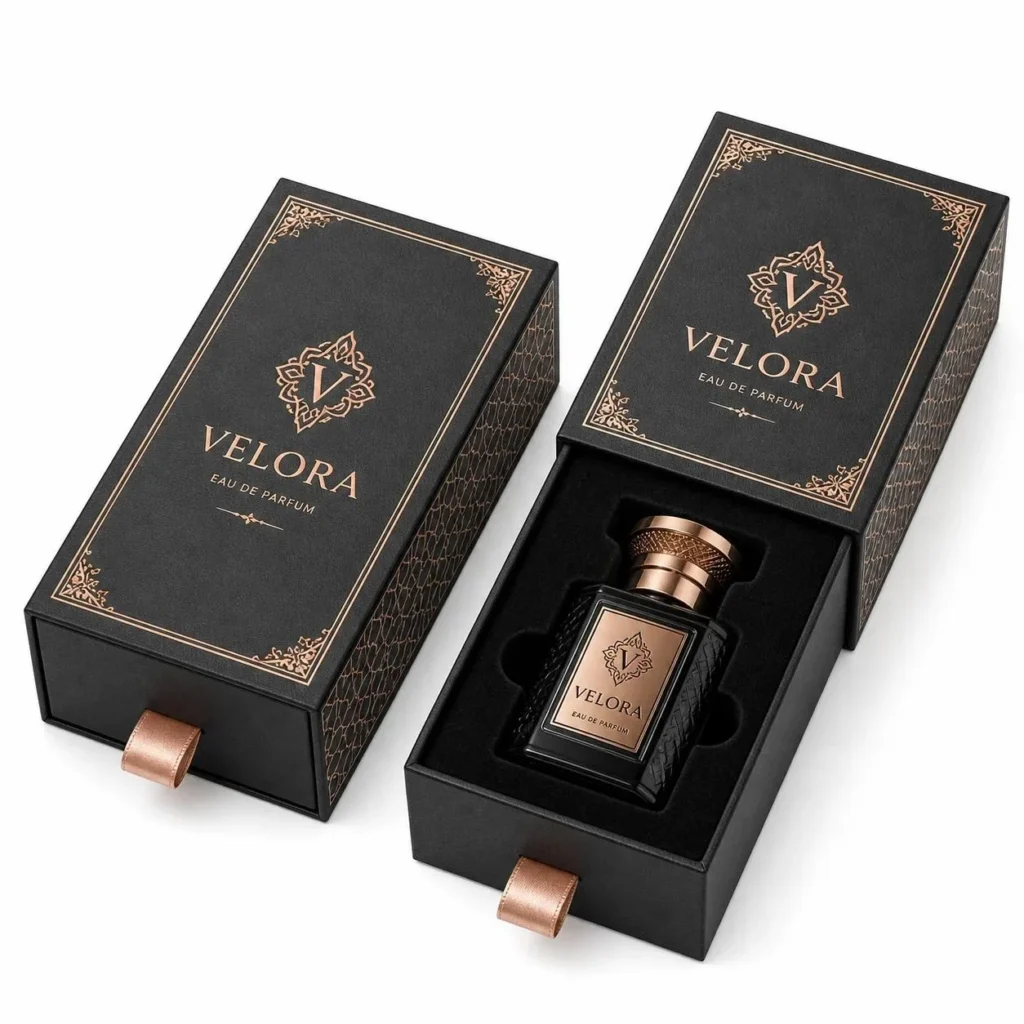
For luxury perfume boxes, the tray and sleeve can be designed as complementary surfaces. For example, the outer sleeve may use a dark specialty paper with gold foil stamping, while the inner tray features a contrasting color and a fitted insert.
The objective is to make the bottle easy to reveal while maintaining a consistent brand presentation. The design should still allow the box to open smoothly and hold the bottle securely.
Perfume Discovery Sets and Gift Sets
Drawer packaging can also accommodate several fragrance samples or coordinated products. A multi-compartment insert keeps individual items organized and makes the contents easier to present.
For discovery sets, compartment dimensions and the arrangement of the bottles or vials should be finalized before the insert is produced. Small variations in container size can affect fit, so sample testing is particularly important.
When Should You Choose a Drawer Perfume Box?
Drawer boxes are useful when presentation and controlled access matter, but they are not always the most economical structure.
Choose a drawer box when:
- The product is positioned as a premium fragrance or gift.
- The brand wants a distinctive opening experience.
- A custom insert is needed to hold a shaped or relatively heavy bottle.
- The packaging is part of a coordinated fragrance collection.
- The box needs to serve as both product packaging and a presentation piece.
Consider another structure when:
- The product requires the lowest practical packaging cost.
- The box will be used mainly for high-volume distribution with limited presentation requirements.
- A simple folding carton can provide sufficient protection and appearance.
- The proposed drawer structure adds complexity without improving the customer experience.
A top-and-bottom rigid box, tuck-end carton or magnetic closure box may be more appropriate in some applications. The decision should be based on the product, sales channel and total packaging requirements—not appearance alone.
How to Balance Protection, Appearance and Cost
Custom perfume boxes need to be evaluated as a complete packaging system. A visually impressive exterior cannot compensate for an insert that allows a glass bottle to move during transport.
Match the Insert to the Bottle
Measure the bottle, cap and any decorative components. Check the fit in all directions and consider how the bottle will be inserted and removed. An excessively tight insert may make removal difficult, while an oversized cavity can allow movement.
For heavier glass bottles, assess how the insert and tray distribute the load. If the package will be shipped individually, test the complete packed box under realistic handling and transit conditions.
Choose Finishes Selectively
Hot foil stamping, embossing and specialty paper can create a premium effect, but each additional process may affect cost, production time and quality control.
A practical approach is to choose one main visual feature—such as a foil logo or textured paper—and use secondary finishes only where they improve the design. Artwork should also account for stamping tolerances, edge clearances and the placement of logos on wrapped surfaces.
Consider Shipping and Storage
Rigid drawer boxes generally require more storage and transport volume than flat-packed folding cartons. For large orders, outer carton dimensions, packing arrangements and warehouse space can affect the overall landed cost.
Discuss shipping protection and carton packing with the supplier early in development. The finished retail box and its shipping carton have different jobs: one presents and holds the product, while the other must protect it through distribution.
How to Choose a Perfume Box Manufacturer
A qualified perfume box manufacturer should be able to discuss structure, materials, insert design, finishing and production tolerances—not simply provide a price based on a reference image.
Before confirming an order, ask the supplier:
- Can you recommend a suitable structure based on our bottle dimensions and weight?
- What insert materials and configurations are available?
- Can we review a physical sample before mass production?
- How will the sleeve clearance and tray movement be checked?
- Which printing and finishing processes are suitable for the selected paper?
- How will the finished boxes be packed to reduce damage during shipping?
- What are the production lead time, order quantity requirements and quality inspection procedures?
A physical sample is especially valuable for drawer packaging because the opening force, tray clearance, insert fit and surface finish are difficult to assess accurately from a digital mock-up alone.
FAQ
A drawer perfume box consists of an outer sleeve and a sliding inner tray that holds the fragrance bottle. It offers a distinctive opening experience and can be customized with different papers, inserts, printing methods and decorative finishes.
They can be suitable when the board construction, tray and insert are designed for the bottle’s weight and dimensions. The complete package should be sampled and tested under realistic handling and shipping conditions before production approval.
Paperboard inserts can support a coordinated paper-based design, while EVA foam can provide a precise fit and cushioning for selected bottle shapes. Molded pulp may suit projects with specific material or sustainability goals. The best choice depends on protection, appearance, cost and disposal requirements.
Yes. Brands can explore responsibly sourced paper, suitable paperboard inserts and designs that reduce unnecessary material. However, sustainability depends on the complete construction, coatings, adhesives, sourcing documentation and local recovery options—not simply whether the exterior is paper.
Popular options include CMYK printing, hot foil stamping, embossing, debossing, matte lamination, spot UV and specialty papers. The final combination should reflect the brand’s visual identity, target cost and the selected material’s surface characteristics.
They can be, particularly when rigid board, wrapped paper, fitted inserts and multiple finishing processes are involved. Actual costs depend on dimensions, construction, quantity, material specifications and production requirements. Compare complete specifications rather than box styles alone.
Provide the bottle dimensions and weight, desired box dimensions if available, quantity, insert preference, material and finishing requirements, artwork or reference images, and destination market. A physical sample or accurate bottle sample can help confirm fit before mass production.