
Overview of Packaging Manufacturing
Packaging manufacturing is a multi-step industrial process that transforms raw materials into finished packaging products through design, printing, converting, assembly, and quality control.
While packaging formats vary, most paper-based packaging products follow a similar production logic.
Understanding each step helps brands, buyers, and engineers evaluate cost, lead time, quality, and feasibility before placing mass orders.
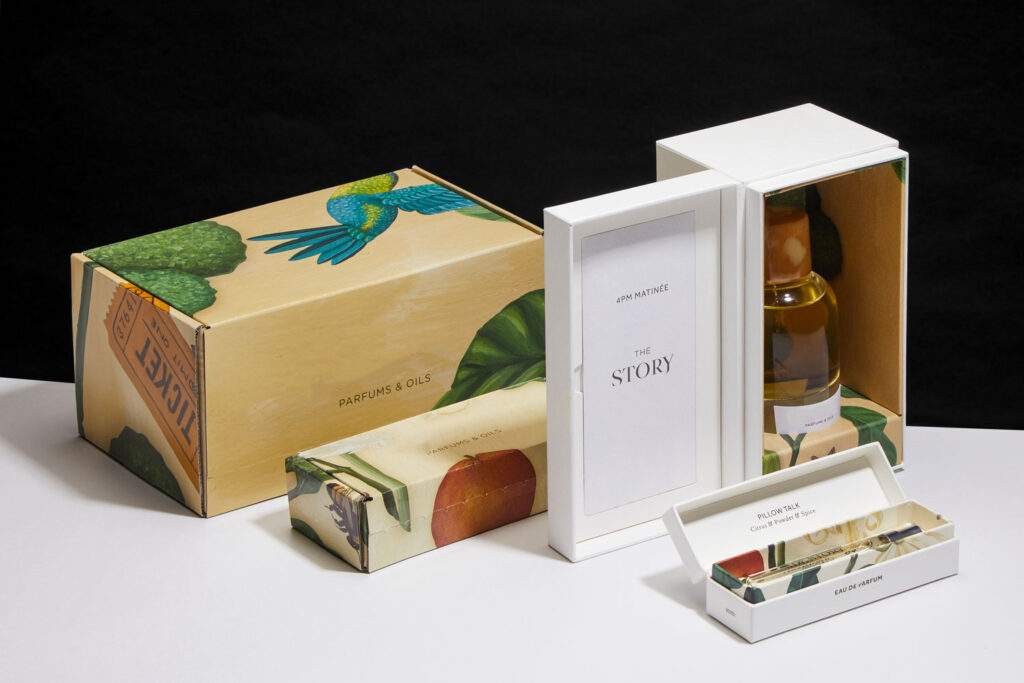
Step 1: Packaging Design and Engineering
The manufacturing process begins with structural design and technical planning.
Key activities include:
- Determining box type and structure
- Defining dimensions and tolerances
- Selecting materials and thickness
- Designing dielines and folding logic
At this stage, engineers ensure the packaging can be:
- Mass-produced
- Assembled efficiently
- Transported safely
Design decisions made here directly affect cost and production stability.
Step 2: Material Selection and Preparation
Once the structure is confirmed, materials are selected and prepared.
Common materials include:
- Art paper and coated paper (for printing)
- Grey board and paperboard (for structure)
- Corrugated board (for shipping and protection)
Material preparation may involve:
- Sheet cutting
- Moisture conditioning
- Surface treatment
Material quality consistency is critical for large-scale production.
Step 3: Printing
Printing is where branding and visual identity are applied.
Common printing methods:
- Offset printing for high-quality retail packaging
- Flexographic printing for corrugated and bulk packaging
- Digital printing for short runs or samples
Color management, plate setup, and ink selection are controlled to ensure print consistency across batches.
Step 4: Surface Finishing
After printing, surface finishing processes are applied to enhance appearance and durability.
Typical finishing options include:
- Gloss or matte lamination
- Hot foil stamping
- Embossing or debossing
- Spot UV or varnishing
Not all packaging requires finishing; selections depend on brand positioning and budget.
Step 5: Die Cutting and Creasing
Printed sheets are then processed through die cutting and creasing.
This step defines:
- Final shape
- Fold lines
- Assembly accuracy
Precision at this stage ensures:
- Proper folding
- Clean edges
- Structural consistency
Poor die cutting can lead to assembly issues and material waste.
Step 6: Mounting and Laminating
For rigid boxes and premium packaging, printed paper is mounted onto structural boards.
This step involves:
- Gluing printed paper to grey board or corrugated board
- Aligning graphics accurately
- Applying pressure to ensure adhesion
Mounting quality significantly affects the final appearance of high-end packaging.
Step 7: Assembly and Manual Operations
Packaging components are then assembled.
Assembly methods may include:
- Machine folding and gluing
- Semi-automatic assembly
- Manual handwork for complex boxes
Luxury and rigid packaging often requires manual finishing to maintain precision and appearance.
Step 8: Quality Control and Inspection
Quality control is performed throughout production, with final inspections focusing on:
- Dimensions and tolerances
- Print alignment and color accuracy
- Structural integrity
- Surface defects
Defective products are removed to maintain batch consistency.
Step 9: Packing and Logistics Preparation
Finished packaging products are packed for shipment.
This includes:
- Flat packing or pre-assembly
- Protective wrapping
- Carton labeling and palletizing
Logistics planning ensures packaging arrives undamaged and ready for use.
Common Misunderstandings About Packaging Manufacturing
- Packaging manufacturing is not a single-step process
- Printing quality alone does not determine packaging quality
- Manual work is still essential for complex packaging
Understanding the full workflow prevents unrealistic cost and lead-time expectations.
Frequently Asked Questions
How long does packaging manufacturing take?
Production timelines vary by structure, quantity, and finishing complexity.
Is packaging manufacturing fully automated?
No. Many steps, especially in premium packaging, still require manual labor.
Can design changes be made during production?
Changes after production begins usually increase cost and delay delivery.
Why Trust This Guide
This guide reflects real-world industrial packaging manufacturing workflows, based on mass production practices rather than theoretical models.
It explains how packaging is actually designed, produced, assembled, and shipped at scale.