
Materials & Surface Finishing
Packaging materials and surface treatments refer to the paper-based materials and post-printing processes used in custom paper packaging to achieve the desired strength, appearance, protection, and functionality. The materials determine the basic physical properties of the packaging, while the surface treatments determine its visual appeal, tactile feel, and resistance to wear, moisture, and stains.
In industrial packaging manufacturing, material selection and surface treatment depend on product weight, structural design, brand requirements, production processes, and cost control. Commonly used materials include cardboard, greyboard, kraft paper, specialty papers, and corrugated cardboard, combined with surface treatment processes such as lamination, hot stamping, embossing, UV coating, and varnishing.
*Authority Note *
This section explains packaging materials and surface finishing based on standard printing, coating, and converting practices used in mass production of custom paper packaging.
Topics Covered
Core Material and Surface Finishing Concepts
Paperboard, Greyboard, and Corrugated Board
Cardboard is commonly used for folding cartons and retail boxes, offering good printability and foldability.
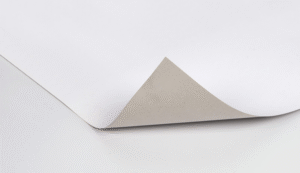
Greyboard is a thick, dense board used as the structural core of rigid boxes, providing high rigidity and shape retention.
Corrugated cardboard consists of a fluted medium sandwiched between linerboards, providing cushioning and stacking strength for shipping and transport packaging.
Paper Grammage and Thickness
Grammage (GSM) refers to the weight of paper per square meter and is directly related to stiffness and strength. Thicker and higher GSM materials provide better structural support but also increase material costs and folding difficulty. The right choice balances performance, appearance, and manufacturability.
Lamination and Coating
Lamination and coating primarily serve to protect the printed surface and enhance its visual appearance.
Matte lamination provides a soft, non-reflective surface, while gloss lamination enhances color vibrancy and moisture resistance.
Water-based and UV coatings add surface protection without the need for plastic film.
Decorative Surface Finishing
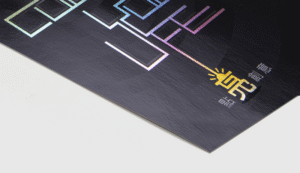
Processes such as foil stamping, embossing, debossing, spot UV coating, and texturing are primarily used to create visual contrast and tactile effects. These processes are applied after printing and are commonly used in high-end and luxury packaging to highlight logos, patterns, and key design elements.
Manufacturing Perspective
In high-volume production, material selection must be matched with packaging structure design and manufacturing capabilities. Paper grain direction, moisture content, and stiffness affect die-cutting accuracy, folding quality, and adhesive bonding during the production process. Inconsistent material properties can also lead to cracking, warping, or misalignment during assembly.
Surface finishing processes are integrated into the production flow after printing and before final forming. Parameters such as temperature, pressure, and coating thickness are controlled to ensure consistent adhesion, uniform appearance, and durability in high-volume production.
From a factory perspective, materials and surface treatments are not only aesthetic choices for packaging but also engineering variables that impact yield, production speed, and long-term packaging performance.
Standard Industry Definition
Packaging materials are paper-based substrates, such as cardboard, greyboard, and corrugated cardboard, used to form the physical structure of the packaging.
Surface finishing refer to post-printing processes, including lamination, coating, foil stamping, embossing, and UV treatment, used to enhance the appearance, protection, and functional performance in industrial-scale packaging production.
Related Knowledge Areas
Packaging Basics
Definitions and fundamentals of custom paper packaging, including basic box types, materials, and applications.
Box Types & Structures
An overview of common packaging box types and structures and their functional differences.
Manufacturing Process
How custom packaging boxes are manufactured, from production steps to quality control.
Cost, MOQ & Lead Time
Essential information on packaging costs, minimum order quantities, and production lead times.
Sustainability & Certifications
Sustainable packaging materials and certifications for responsible packaging solutions.
Frequently Asked Questions (FAQ)
What materials are commonly used in custom paper packaging?
Common materials include paperboard, greyboard, kraft paper, specialty paper, and corrugated board with different flute structures.
What is the difference between art paper and kraft paper?
Art paper is coated for high-quality printing and smooth appearance, while kraft paper is uncoated, stronger in fiber structure, and commonly used for natural or eco-style packaging.
What is lamination in packaging?
Lamination is a process of applying a thin plastic film to the printed surface to improve durability, moisture resistance, and visual effect.
What is foil stamping?
Foil stamping is a hot-press process that transfers metallic or colored foil onto paper to create decorative highlights and premium visual effects.
What is the purpose of UV coating?
UV coating provides surface protection and can be applied selectively to enhance gloss and contrast in specific design areas.
Why Trust This Section
- Based on standard material specifications and finishing processes used in paper packaging factories
- Written from a printing and converting production perspective
- Reflects common industrial practices for rigid boxes, folding cartons, and corrugated packaging
- Focuses on physical properties, process control, and functional performance
- Structured according to packaging engineering terminology and manufacturing standards
- Intended for bulk custom packaging development rather than retail craft or small-batch production