
Table of contents
Shipping boxes are corrugated cartons used for ecommerce fulfillment, warehouse transfer, and parcel delivery. They serve two core functions. They protect products across the shipping chain and fit automated sorting systems. They also control freight and damage through the right size, flute, and strength. Whether you need small shipping boxes, large shipping boxes, or corrugated shipping boxes, choosing the right spec cuts cost and breakage.

The Sourcing Logic Behind Shipping Boxes
Many buyers ask about price first, but size and shipping scenario matter more. A poorly sized box raises both material cost and freight.
Size Before Cost
In practice, shipping-box cost comes from three parts: board use, dimensional weight, and damage rate. A box much larger than the product adds dimensional weight. A box too small adds damage. Confirm product size and stacking method before choosing a box.
When we run the numbers for an ecommerce brand, size optimization usually beats a simple price cut. The freight savings often exceed the few cents saved per box.
Standard Versus Custom
Standard shipping boxes are stocked, low in order quantity, and fast to deliver. They suit early-stage and small-volume use. Custom boxes fit the product, cut filler and dimensional weight, but they need tooling and a minimum order.
For most brands, the right path is to validate with standard boxes first, then customize the core SKUs. It is not one or the other. It is a phased switch.
Key Specs: Size, Flute, and Strength
A box’s spec decides whether it survives a real shipping path. A single-wall or double-wall label is not enough. Size and flute also matter.
Size: UPS Box Sizes and Common Formats
UPS box sizes are standardized and fast to buy. They fit generic products. Ecommerce products vary more, so many brands need custom sizing. Small shipping boxes suit books, accessories, and light products. Large shipping boxes suit bulky but moderate-weight products.
Leave enough room for cushioning, but not too much. A simple rule works: after the product sits inside, the side gaps should stay small enough for filler or an insert to hold it.
Flute and Wall Count
Flute type and wall count decide compression strength. A-flute cushions well. B-flute prints flatter. Double-wall or triple-wall suits heavy products. Corrugated shipping boxes get strength from the liner, medium, and flute together, not from board thickness alone.
When we choose a flute, we calculate edge crush strength from product weight and stacking height. That calculation beats a guess.
Strength: Stacking and Drops
A shipping box must survive stacking pressure and drop impact. Weak stacking causes warehouse collapse. Weak drop protection causes sorting damage. Full-box testing is the key step for strength.
Most damage comes from a size or insert mismatch, not thin board. Holding the product in place cuts damage better than simply thickening the board. Some buyers call a heavy-duty corrugated box a shipping crate. We keep the focus on paper-based corrugated shipping boxes here.
Types and Buying Channels
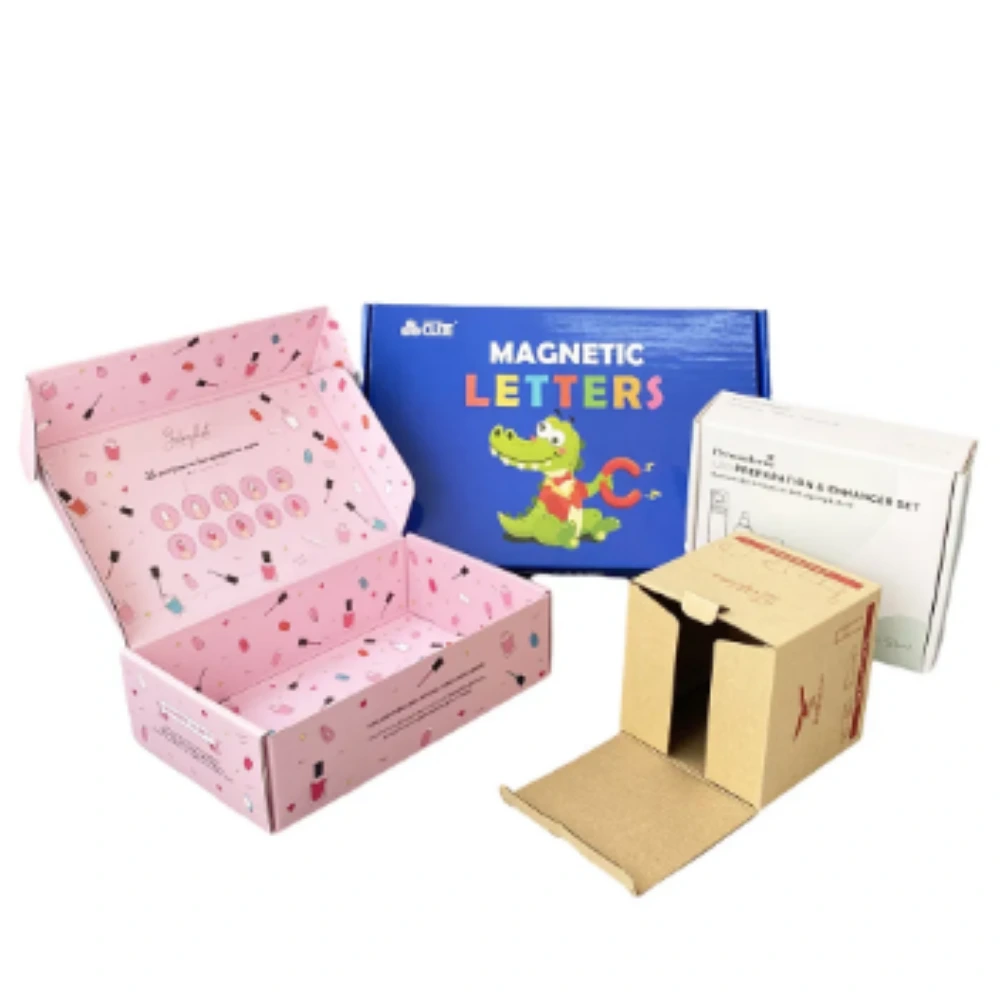
Shipping boxes come in several forms, from stock boxes to custom boxes, and from courier-branded boxes to private-label boxes. The choice depends on brand stage and volume.
Stock Corrugated Shipping Boxes
Stock corrugated shipping boxes suit small volume and many sizes. They have no tooling cost, but size options are limited and filler may be needed. For brands with low volume or many SKUs, stock boxes are a practical choice.
UPS Boxes Versus Private-Label Boxes
UPS boxes work for fast dispatch, but brand visibility is low. A private-label custom box prints your brand on the outside and lifts the unboxing moment. As volume grows, custom box unit cost approaches or beats courier-branded boxes.
Where to Buy Shipping Boxes
Buying channels fall into three groups: marketplace stock, packaging distributors, and direct box factories. The answer to “where to buy shipping boxes” depends on volume. Small volume goes through marketplaces or distributors. Large volume goes direct for better price and stable specs.
Cost and Volume Strategy
The core of shipping-box cost control is cutting material waste and dimensional weight. Larger volume brings a higher return on structural optimization.
Small Volume and Ecommerce Start
Small-volume ecommerce can start with stock boxes. Focus on the right size and controlled filler. Do not invest in custom tooling too early. Evaluate custom boxes after volume stabilizes.
Large Volume and Annual Agreements
Large-volume brands should prioritize size optimization and custom boxes to cut dimensional weight. An annual contract with a box factory locks material prices and spreads tooling cost. More importantly, phase the change to avoid a full-cutover risk.
FAQ
It depends on product weight and stacking needs. Light products usually use single-wall. Heavy products or tall stacks need double-wall or triple-wall. Choose from edge crush strength and full-box test results, not board thickness alone.
Yes, but confirm they match your product. Standard sizes suit generic products and are fast to buy. If your product is unusual, a custom box cuts filler and dimensional weight. Test a standard size first, then decide on custom.
Measure the product length, width, and height, then leave cushioning room. Small shipping boxes suit books, accessories, and light products. Large shipping boxes suit bulky but moderate-weight products. Avoid large gaps, or dimensional weight rises.
Custom corrugated boxes usually start at 500 to 1,000 units, depending on tooling and print. Stock boxes can start in the tens. Use stock boxes at small volume, then invest in custom tooling after volume stabilizes.
The best move is to cut dimensional weight. A custom box fits the product and reduces filler and void space. Couriers charge by both actual weight and volumetric weight, so a box 30% larger than the product can trigger higher charges.
Use FSC-certified board and print the certification mark on the box. Removing extra size and optimizing structure are effective lightweighting steps. Avoid unverifiable absolutes such as “100% eco-friendly.”
The key is a precise insert or filler that holds the product and stops movement. Run full-box drop and vibration tests to verify the box, insert, and cushioning as one system. Most damage comes from a size mismatch, not thin board.