
Table of contents
Perfume packaging needs to protect the bottle, present the brand clearly and keep packaging costs under control. For fragrance brands that want a practical retail carton without the added cost and bulk of a rigid box, tuck-end packaging offers a flexible solution.
Tuck-end perfume boxes use folding paperboard and closure flaps that tuck into the carton to keep it shut. Brands can customize the box dimensions, paper, printing, surface finishes and inner support to match different fragrance products.
This structure works particularly well for everyday perfumes, new product launches, sample collections and retail fragrance lines. However, the best design depends on bottle weight, distribution conditions, presentation goals and budget. Understanding the available tuck-end styles helps you choose a carton that balances product protection, brand identity and production efficiency.
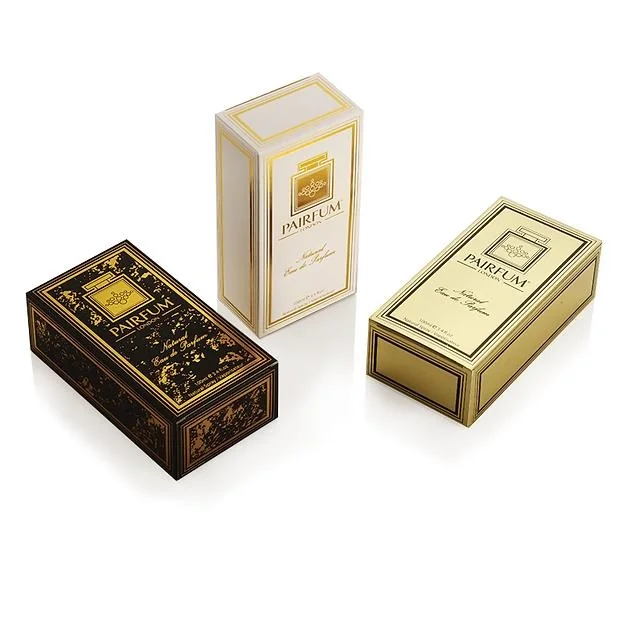
What Are Tuck End Perfume Boxes?
Tuck-end perfume boxes are folding cartons with flaps that fold into the top, bottom or both ends of the box. The structure creates a neat rectangular package that brands can ship flat and assemble when needed.
Unlike rigid perfume boxes, which typically use thick board and wrapped paper, tuck-end cartons rely on creased paperboard panels. This construction generally reduces storage volume before assembly and offers an efficient option for retail packaging.
A tuck-end carton can include printed graphics, foil stamping, embossing, a custom insert or other details. The key is to match the board strength and internal support to the perfume bottle rather than treating every fragrance carton as a standard paper box.
For brands developing custom perfume boxes, this format offers a useful balance between cost, design flexibility and straightforward packing.
Which Tuck-End Structure Should You Choose?
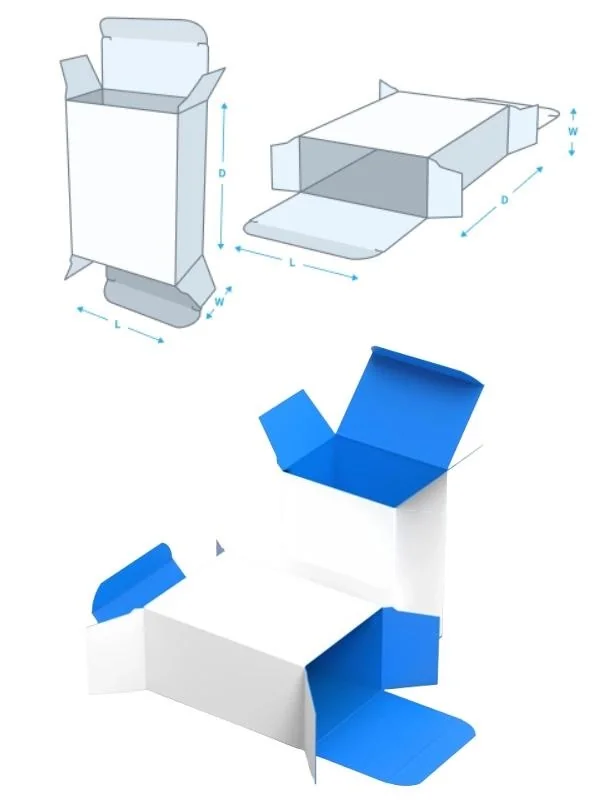
Two common structures are straight tuck end and reverse tuck end. Both use folding closure flaps, but they differ in how those flaps fold into the carton.
| Box style | Closure design | Main advantage | Best application |
|---|---|---|---|
| Straight tuck end (STE) | Top and bottom tuck flaps fold in the same direction | Supports a clean front-panel presentation when the design and dieline suit the layout | Branded retail cartons with prominent front artwork |
| Reverse tuck end (RTE) | Top and bottom tuck flaps fold in opposite directions | Can offer an efficient carton layout and practical assembly | Everyday fragrance cartons and cost-conscious retail packaging |
| Tuck end with an insert | A tuck-end carton holds a separately designed inner support | Helps position and separate the bottle from the carton walls | Glass perfume bottles and selected fragrance gift sets |
The best structure depends on the dieline, artwork placement, packing method and bottle dimensions. Ask your packaging supplier to compare actual dielines rather than choosing a style based on its name alone.
For lightweight fragrance products, a straightforward folding carton may provide enough support. For heavier glass bottles, the board grade and insert require more attention, and you should test the complete package before approving production.
Why Choose Tuck-End Perfume Packaging Boxes?
1. Control Packaging Costs
Tuck-end cartons generally use less structural material than many rigid boxes and arrive flat, which helps reduce storage requirements before assembly. Their straightforward folding construction can also simplify packing operations.
These advantages make them worth considering for fragrance brands that need consistent retail packaging across larger product runs. However, actual savings depend on board specifications, dimensions, printing, finishing, order quantity and packing requirements.
When comparing quotations, evaluate the complete specification. A cheaper carton may create additional costs if it lacks enough strength or requires extra protective packaging.
2. Customize the Box to Match Your Brand
A practical carton does not need to look generic. Brands can use custom dimensions, color printing, carefully placed logos and selected finishes to create a recognizable fragrance package.
Common design options include:
- CMYK printing: Reproduces detailed graphics, product illustrations and brand colors.
- Hot foil stamping: Adds metallic highlights to logos, borders or product names.
- Embossing and debossing: Creates raised or recessed details for a tactile effect.
- Matte or gloss lamination: Changes the surface appearance and feel.
- Spot UV: Adds a localized gloss effect to selected design elements.
The most effective combination depends on the brand’s visual identity and price target. A restrained design with one distinctive finishing effect can look more considered than a carton crowded with decorative treatments.
3. Simplify Storage and Distribution
Folding cartons take up relatively little space before assembly compared with many pre-assembled rigid boxes. This can benefit businesses that order packaging in bulk and need to manage warehouse capacity.
The carton also supports a range of packing workflows. Depending on the product and equipment, teams can assemble the box, place the fragrance bottle inside and close the tuck flaps during the packing process.
Still, flat-packed cartons need suitable protection against moisture, crushing and edge damage during storage. Finished cartons also need the right outer shipping arrangement when they travel with fragrance bottles or other products.
4. Support Multiple Fragrance Product Lines
A brand can adapt the same general carton structure to different bottle sizes and visual designs. For example, a fragrance company may use coordinated layouts for its 30 ml, 50 ml and 100 ml products while adjusting each dieline to the bottle’s dimensions.
This approach creates a consistent family appearance without requiring every product to use an identical box size. Make sure each version fits its bottle correctly, especially when the cap, shoulder or glass profile differs between product sizes.
How to Design a Tuck-End Perfume Box for a Glass Bottle
Glass perfume bottles need careful packaging because the bottle’s weight and shape affect how the carton performs during handling and transport.
Match the Board to the Product
Start with the bottle’s dimensions and weight. The box should provide enough clearance for insertion and removal while keeping unnecessary movement under control.
A packaging engineer can recommend a suitable paperboard grade based on the carton dimensions, bottle weight, intended distribution conditions and required appearance. Avoid choosing board thickness by appearance alone: a carton that feels substantial in the hand may still need additional internal support.
Add an Insert When the Bottle Needs More Support
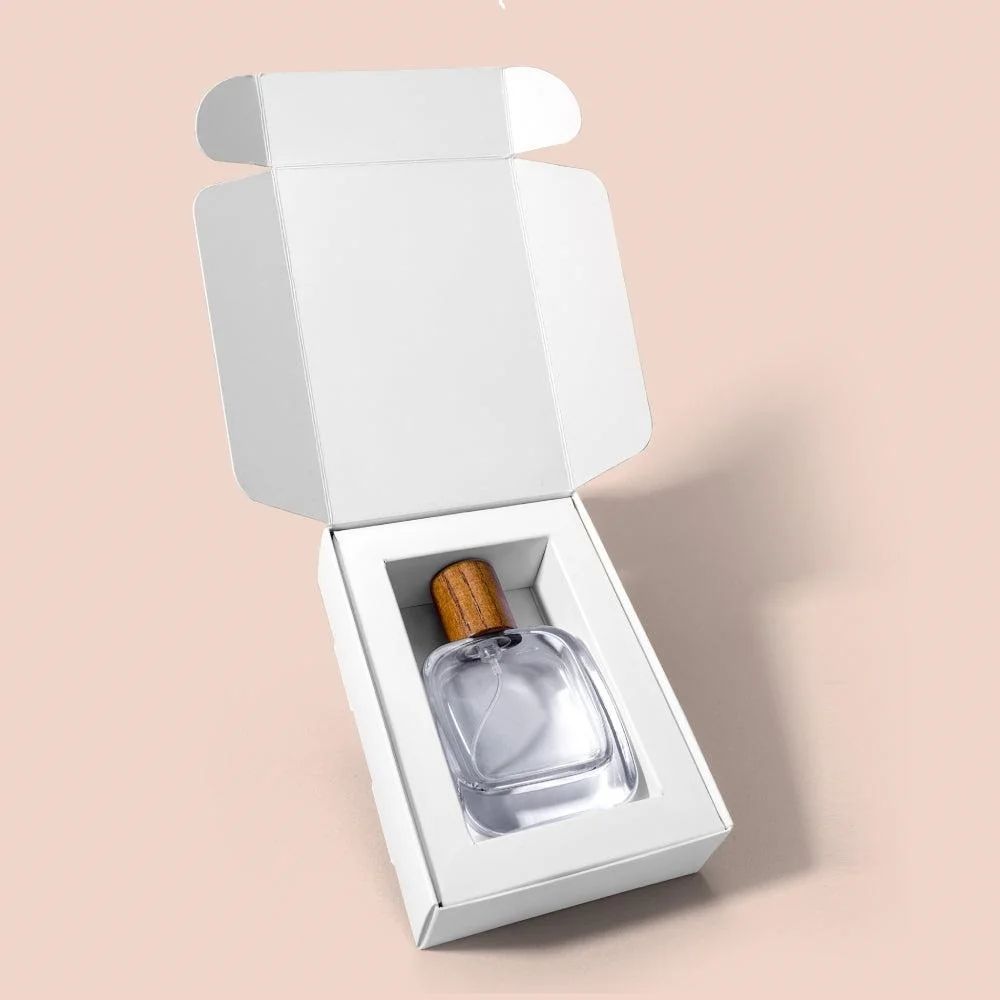
An insert can keep the bottle in position and separate it from the carton walls. Depending on the requirements, brands can consider die-cut paperboard, EVA foam or another suitable insert material.
Paperboard inserts may help brands create a more coordinated paper-based package. EVA foam can provide a close fit for certain bottle shapes, but brands should also consider material separation and end-of-life requirements.
Always check the fit with the actual bottle or an accurate product sample. A cavity that sits too tightly around the glass may make removal difficult, while an oversized cavity allows the bottle to move.
Design the Opening for Easy Use
The tuck flaps should close securely and allow customers to open the carton without tearing the main panels. Check the flap dimensions, crease positions and board behavior during sample review.
If the carton includes an insert, confirm that customers can remove the perfume bottle comfortably. A good design protects the product without making the first interaction awkward.
Test the Complete Package
Do not evaluate the carton by appearance alone. Assemble a sample, place the actual bottle inside and check closure performance, fit and handling.
If the product will travel through distribution networks, test the complete packaging arrangement under realistic conditions. The outer carton may need to provide additional protection beyond the retail carton itself.
Are Tuck-End Boxes Suitable for Luxury Perfume Brands?
Yes. Tuck-end boxes can suit premium fragrance products when the design, paper and finishing match the brand’s positioning. A carefully printed carton with specialty paper, foil stamping or embossing can create a refined presentation without requiring the construction of a rigid gift box.
However, luxury perfume boxes do not all need the same structure. A premium fragrance sold in a retail environment may benefit from a well-designed folding carton, while a limited-edition gift set may justify a book-shaped, drawer or magnetic rigid box.
Choose the structure according to the complete product experience. Consider the bottle’s retail price, the sales channel, display requirements, gift value and expected shipping conditions. Then compare the available structures against the same design and performance requirements.
How to Choose a Perfume Box Manufacturer
A suitable perfume box manufacturer should help you turn a design idea into a carton that works in production. Before placing an order, discuss these points:
- Structure and dimensions: Can the supplier recommend a suitable tuck-end design based on your bottle size and weight?
- Paperboard specification: Can the supplier explain the trade-offs between board grades, thickness, folding performance and appearance?
- Printing and finishing: Can the production team reproduce your artwork and confirm the finishing tolerances?
- Insert requirements: Can the supplier provide a suitable insert if the bottle needs additional support?
- Sampling and quality control: Can you review a physical sample and agree on the reference standard before mass production?
- Order quantity and lead time: Does the quotation clearly explain quantity, tooling or sampling charges where applicable, production timing and packing details?
- Shipping protection: Can the supplier recommend an outer-carton arrangement for the finished packaging?
Provide your artwork, bottle dimensions, target quantity, preferred material and destination market when requesting a quotation. These details help the supplier develop a more accurate specification and reduce avoidable changes during production.
FAQ
Tuck-end perfume boxes are folding paperboard cartons that use flaps tucked into the top or bottom to close the package. Brands can customize their dimensions, artwork, finishes and inserts to suit different fragrance products.
Straight tuck end cartons fold the top and bottom flaps in the same direction, while reverse tuck end cartons fold them in opposite directions. The better choice depends on the carton layout, artwork placement, production method and product requirements.
They can provide suitable retail packaging when the board, dimensions and internal support match the bottle. A custom insert may help reduce movement, while the complete shipping arrangement should provide additional protection where necessary.
Yes. Brands can combine detailed printing, specialty paper, hot foil stamping, embossing or spot UV to achieve a premium appearance. The result depends on the design, materials and finishing quality rather than the box structure alone.
They often offer a more cost-conscious construction and require less storage space before assembly. However, actual costs depend on the dimensions, paperboard, finishing, insert, order quantity and packing requirements. Compare quotations using equivalent specifications.
Yes. A manufacturer can adapt the dieline and insert to different bottle dimensions. Each size should undergo a fit check because bottle caps, shoulders, weight and shape can affect carton performance.
Provide the bottle dimensions and weight, box dimensions if available, order quantity, paper preference, printing and finishing requirements, insert details, artwork or reference images, and destination market. A physical bottle sample can further improve fit assessment.