
Table of contents
Cake boxes and bakery boxes are structural packaging first and branding vehicles second. Unlike shipping boxes that protect products in a warehouse stack, bakery packaging must survive the unpredictable journey from display case to dinner table—often in the back seat of a car, sometimes at an angle.
This guide covers everything bakeshop owners and bakery managers need to know about cake and bakery boxes: material selection for different product types, custom versus stock options, cost factors, and how to choose packaging that protects the product while reinforcing the brand.
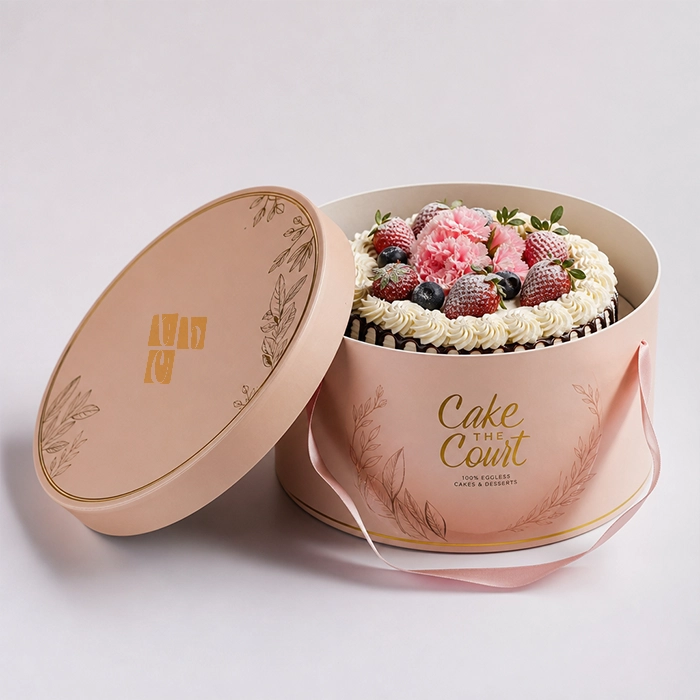
Cake Box Materials: What Your Box Is Made Of Determines What Survives
The material choice for cake boxes is not primarily about aesthetics. It is about structural integrity under real-world transport conditions.
Standard Corrugated Cake Boxes
In most bakeshops, corrugated cake boxes are the default workhorse. They offer reliable stacking strength, reasonable moisture resistance, and the lowest per-unit cost of any material option.
Specifically, single-wall corrugated board handles cakes up to roughly 10 inches in diameter and two tiers in height. Double-wall corrugated cake boxes, however, handle larger wedding cakes or multi-tier designs—providing the additional rigidity needed to prevent sidewall buckling during transport.
The tradeoff with standard corrugated boxes is visual. The kraft brown surface does not communicate premium quality—it communicates function. For everyday bakery sales and wholesale accounts, this is often sufficient. For celebration cakes and high-end patisserie, however, the box should do more.
White Corrugated and Coated Boxes
For bakeries that want a cleaner presentation without moving to fully custom packaging, white corrugated cake boxes offer a meaningful step up in perceived quality.
The white exterior signals cleanliness and care. Additionally, white boxes accept simple logo stamps or stickers far better than brown kraft, giving even small bakeries an affordable branding surface.
The cost premium over standard brown corrugated is modest—typically 15% to 30% more per unit—making white boxes one of the highest-ROI packaging upgrades available to a growing bakery.
Window Cake Boxes
A window cake box is exactly what it sounds like: a corrugated or paperboard box with a transparent window panel, typically made from PET or PLA film, set into the lid or the front face.
For bakery display cases, window boxes serve a dual purpose. They protect the product while allowing customers to see it without opening the packaging. This is especially valuable for decorated cakes, tiered pastries, and seasonal items where visual appeal drives the purchase decision.
The structural consideration with window boxes is that the cutout reduces the lid’s overall rigidity. For this reason, window boxes typically require a slightly heavier board grade than their solid-lid equivalents to maintain the same stacking performance.
Pie Boxes and Specialty Bakery Boxes
Pie boxes differ from cake boxes in one critical dimension: depth. A standard cake box is tall enough to accommodate frosting and decoration height. Pie boxes are typically shallower, with a wider footprint relative to height.
Additionally, pie boxes often incorporate ventilation holes or scored fold lines that allow the box to accommodate different pie diameters using the same blank. This flexibility reduces the number of SKUs a bakery needs to stock.
Cookie boxes, cupcake boxes, and pastry boxes each follow similar logic—the box dimensions and insert configuration are dictated by the product geometry. A one-size-fits-all approach leads to crushed cookies and toppled cupcakes.
Custom Cake Boxes: When Stock Boxes Stop Being Enough
The transition from stock to custom cake boxes typically happens when a bakery hits two thresholds simultaneously: consistent order volume and a desire for brand recognition beyond the storefront.
The Case for Custom Bakery Boxes
Custom bakery boxes transform packaging from a cost center into a marketing asset. A custom cake box with a bakery logo, brand colors, and a consistent visual identity turns every customer pickup into a mobile advertisement.
In practice, this means that when someone carries a cake box through a parking lot, into an office, or onto a dessert table at a party, everyone who sees it knows which bakery made the cake. This passive brand exposure compounds over hundreds of orders.
Additionally, custom cake boxes can be sized to fit a bakery’s specific product dimensions, eliminating the waste of oversized stock boxes and the filler material they require.
Custom Cookie Boxes and Small-Format Packaging
For bakeries that sell cookies by the dozen, custom cookie boxes serve the same branding function at a smaller scale. A window cookie box with a bakery logo turns a $15 cookie purchase into a gift-ready presentation.
Cookie box packaging typically uses folding carton paperboard rather than corrugated material, which allows for higher-quality printing at a lower material cost per unit. The tradeoff is reduced stacking strength—acceptable for cookies at 4 to 6 inches, less so for heavy cake tiers.
Custom Cake and Cookie Box Bundles
Some bakeries offer cake and cookie boxes as coordinated sets—a cake box and matching cookie box in the same color scheme, with the same logo placement and finish. For holiday orders, wedding dessert tables, and corporate gifting, this coordinated packaging approach creates a cohesive brand experience that generic stock boxes cannot match.
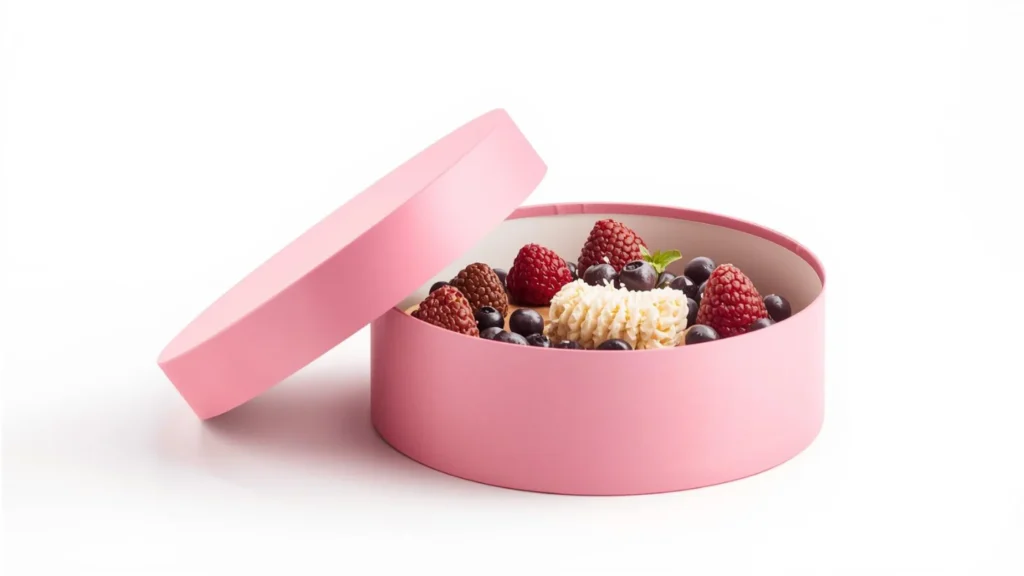
Cost, Minimum Orders, and the Economics of Bakery Packaging
Bakery packaging costs range widely depending on material, customization level, and order volume. Understanding the pricing structure helps bakeries make informed tradeoffs between cost and presentation.
Stock Box Pricing
Standard corrugated cake boxes purchased off the shelf from restaurant supply distributors typically run $0.30 to $1.00 per unit depending on size. White corrugated boxes add roughly $0.10 to $0.30 per unit. Window boxes range from $0.60 to $1.50.
At these price points, stock boxes work well for bakeries focused on cost efficiency, especially those selling through wholesale channels where the end consumer never sees the packaging before purchase.
Custom Box Pricing and MOQs
Custom bakery boxes with single-color logo printing start around $0.50 to $1.50 per unit, with minimum order quantities typically ranging from 500 to 1,000 units per size.
That said, small bakeries can often work with semi-custom solutions—stock box sizes with custom logo stamping or branded stickers—to capture much of the branding benefit at a fraction of the setup cost and with lower minimum orders.
For fully custom cake boxes with unique dimensions, multi-color printing, and premium finishes, unit costs range from $1.00 to $3.00 with minimum orders of 1,000 to 3,000 units. The per-unit cost decreases significantly as order volume increases, making fully custom packaging most economical for bakeries processing several hundred orders per week.
The Hidden Cost of the Wrong Box
The least expensive box is not always the cheapest. An undersized cake box that smears frosting, or an oversized box that allows the cake to slide, creates costs that do not appear on the packaging invoice: refunds, remakes, and negative reviews.
Put simply, the right box pays for itself in reduced waste and improved customer satisfaction. The ROI calculation for bakery packaging should factor in the cost of packaging failure, not just the cost of the box itself.
FAQ
A standard 8-inch round cake typically requires a 10-inch square box or a 10-inch round box to allow clearance for frosting and decoration. The box height should be at least 4 inches for a single-tier cake and 6 to 8 inches for a two-tier cake. Always measure your tallest decorated cake and add 1 to 2 inches of headroom.
Window cake boxes are structurally sound for in-store pickup and short-distance transport. However, for delivery services, choose window boxes with a reinforced board grade or opt for solid-lid boxes. The window cutout reduces lid rigidity, so the base board should be one grade heavier than what you would use for an equivalent solid box.
Stock corrugated cake boxes run $0.30 to $1.00 per unit. Custom bakery boxes with single-color logo printing start around $0.50 to $1.50 per unit, with minimum orders of 500 to 1,000. Fully custom boxes with multi-color printing and unique dimensions range from $1.00 to $3.00 per unit. The per-unit premium for custom is modest, but the setup cost and minimum order quantity are the primary barriers for small bakeries.
Wedding cakes require double-wall corrugated boxes with reinforced corners and a base board that extends beyond the cake diameter for secure handling. White corrugated is preferred for presentation. Some bakeries use three-piece boxes—a separate base, sidewall collar, and lid—for maximum structural integrity on multi-tier wedding cakes.
Most manufacturers offer sample orders of 10 to 50 boxes for evaluation. Sample costs range from $30 to $150 depending on size and customization level. The sample fee is often credited toward the full production order. Testing a sample run is strongly recommended before committing to a full production quantity, especially for custom sizes or new material choices.