
Table of contents
- Paperboard Outer Boxes: The Real Battleground in Perfume Packaging
- Printing and Surface Finishing on Paperboard: The Visual Soul of a Perfume Box
- Structural Design for Paperboard Boxes: Not Just Hold It, Hold It Right
- Brand Identity Through Paperboard Packaging
- Paperboard Packaging Supply Chain: Timelines and Costs from Sampling to Production
- FAQ
Perfume box packaging refers to the paperboard outer containers designed for fragrance products—including folding cartons, rigid boxes, and accompanying insert structures. It serves two core functions: protecting the glass bottle from impact during shipping and retail display, and delivering the brand’s visual narrative at the point of sale and across social media. While the perfume bottle’s material and silhouette shape much of the first impression, the outer box—as a paper-based packaging product—is where brands exercise the most direct control over their packaging investment. Whether it is a hot-stamped rigid box for a niche house or a standard folding carton moving through wholesale channels, the paperboard outer box determines where the unboxing experience begins.
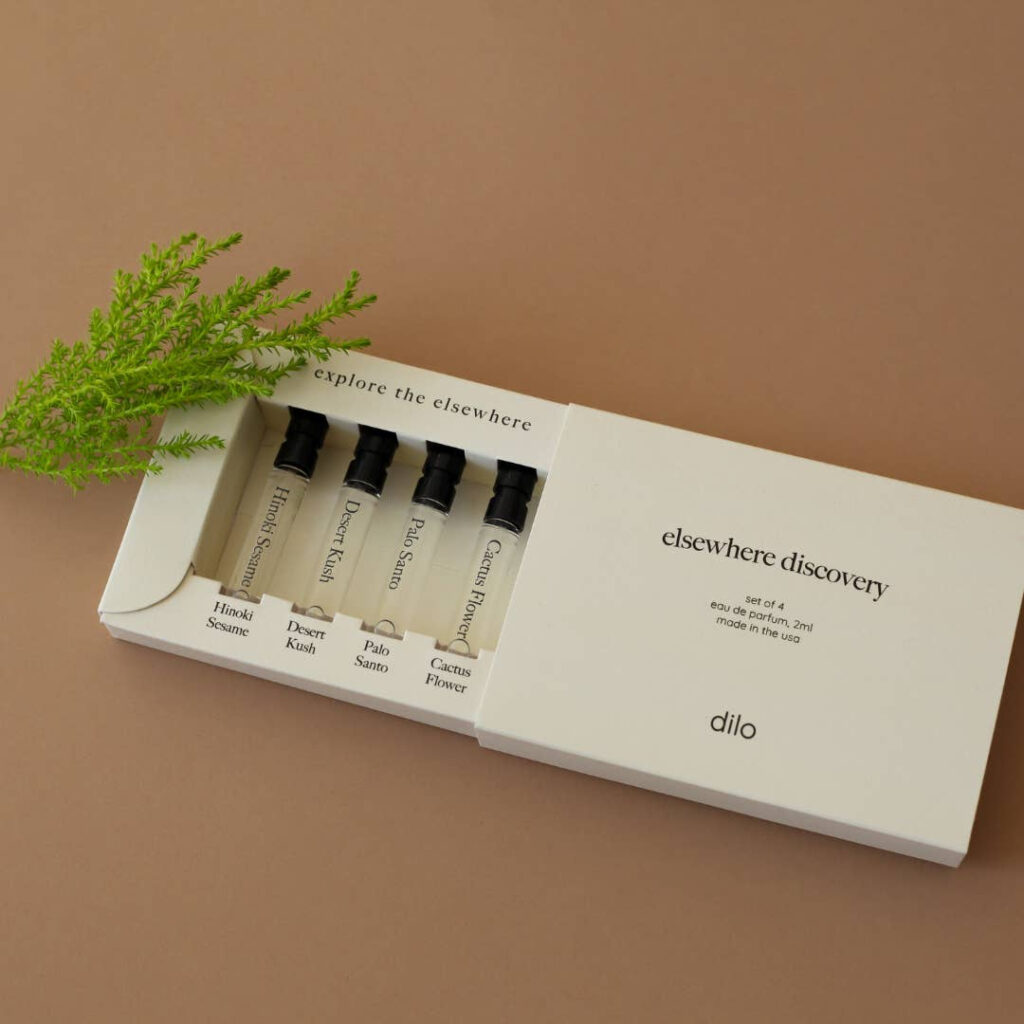
Paperboard Outer Boxes: The Real Battleground in Perfume Packaging
In a fragrance brand’s packaging budget, paperboard outer boxes typically account for 60% to 80% of the total. Bottle choices are constrained by glass processing capabilities and mold investment; the outer box—as paperboard packaging—far exceeds the bottle in design flexibility, print precision, and cost controllability. Put simply, the space where a brand can exercise the most packaging creativity is in paper, not glass.
Folding cartons: the pragmatic choice for most fragrance brands
Among commercially available perfumes, folding cartons dominate the outer box category. White cardstock or coated art paper, offset-printed, single-layer construction—keeping costs manageable while providing ample design space. A standard 100ml perfume folding carton lands between $0.20 and $0.80 at factory pricing, with the spread driven primarily by paper weight, color count, and surface finishing choices.
An important characteristic of paperboard packaging in the fragrance category: print precision requirements far exceed those of standard e-commerce shipping boxes. Because perfumes typically sit on counters or boutique shelves under lighting, a folding carton’s surface gloss, color saturation, and detail sharpness directly correlate with brand positioning. Specifically, offset printing on coated art paper achieves magazine-grade resolution—this is the core reason cosmetics and fragrance brands invest in offset rather than flexographic printing for their paperboard boxes.
Rigid boxes: the premium paperboard upgrade for high-end fragrance
Once a perfume retails above $80, the outer box typically upgrades from folding carton to rigid box—greyboard wrapped in specialty paper, magnetic flip-top or lid-and-base construction, shipped fully assembled. This is the premium form of paperboard packaging in the fragrance category. A rigid box runs $1.50 to $5.00 at factory pricing, but the unboxing ceremony and brand premium perception far exceed what a folding carton can deliver.
Nevertheless, because rigid boxes cannot fold flat, their shipping volume and freight cost are significantly higher—an easily overlooked cost item in paperboard box style selection. We worked with an independent fragrance brand that initially chose rigid boxes. The boxes looked excellent, but monthly freight ran roughly $1,200 higher than the folding carton alternative. For a brand shipping under 20,000 units a year, that money was spent on logistics rather than product. Switching to a heavier folding carton with matte lamination and spot UV gloss maintained the unboxing quality while cutting logistics costs by 60%.
Printing and Surface Finishing on Paperboard: The Visual Soul of a Perfume Box
Perfume box printing ranks among the most demanding categories within paperboard packaging. Because perfumes are viewed, touched, and photographed at close range at retail, a box’s print precision and surface tactility directly shape the consumer’s price perception.
How to choose the right printing method
Perfume paperboard boxes primarily use offset printing—superior color reproduction, sharp detail, magazine-grade quality. Flexographic printing, while cost-effective for corrugated shipping boxes, is rarely the first choice for fragrance outer boxes given the category’s demanding visual standards. Digital printing suits small-batch sampling and limited-edition runs—no plates required, even one-off designs per box are possible, though per-unit cost exceeds high-volume offset.
As a result, most fragrance brands follow a two-track approach: high-volume runs use offset to drive down per-unit cost; limited editions or small batches use digital for flexibility. The cost crossover point sits around 500 to 1,000 units—below that, digital’s plate-free advantage wins; above it, offset’s per-box economics pull ahead.
Surface finishing: from matte lamination to hot stamping
The surface finishing menu determines a perfume box’s premium feel. Common processes include:
- Matte lamination: the most basic treatment, eliminating paper surface reflection for a warm, soft hand feel. Appears on nearly every mid-to-high-end perfume box.
- Hot stamping in gold or silver: the single most common decorative process on perfume boxes. Stamping the logo and brand name transforms the box from “printed item” to “branded object.” Die cost runs $50 to $200, adding only a few cents per box—among the highest-ROI finishing upgrades available.
- Spot UV gloss: applied to specific areas such as logos or pattern edges, creating light-dark contrast against a matte background. Elegant effect at modest cost—a differentiating tactic commonly used by accessible luxury fragrance brands.
- Embossing and debossing: creating raised or recessed relief on the paper surface. The tactile dimension is what separates a “standard paper box” from “brand packaging.”
- Specialty paper: dark art paper, metallic-finish stock, textured paper—the paper itself is the decoration, communicating brand tone without additional printing. Material cost exceeds white cardstock plus printing, but the design restraint often produces stronger brand recognition.
In practice, finishing combination efficiency is the core skill for controlling paperboard packaging budgets. Done right—hot-stamped logo plus matte lamination, box face clean and textured, cost under control. Done wrong—hot stamping, UV, embossing, and specialty paper all stacked—the result is not necessarily better, but the cost definitely doubles. Budget is a constraint, not an enemy.
Structural Design for Paperboard Boxes: Not Just Hold It, Hold It Right
The structural design of a perfume paperboard box is more complex than most people assume. It is not merely a container—it is a paperboard vessel that must perform across three scenarios simultaneously: transit, display, and unboxing.
Principles of box style selection
Perfume box structural selection is driven by three factors:
- Bottle protection requirements: glass perfume bottles need impact protection, requiring adequate cushioning space and insert fixation within the box.
- Unboxing experience positioning: whether the box simply opens and the bottle lifts out, or a magnetic flip-top delivers ceremony.
- Logistics and storage efficiency: folding cartons ship flat with minimal volume; rigid boxes cannot fold, and freight reflects that.
For example, a standard 100ml square-bottle perfume fits best in a folding carton with an interior cavity 3 to 5mm larger than the bottle, plus a die-cut cardstock insert for fixation—protecting the bottle while avoiding an oversized box that inflates shipping cost. That 3-to-5mm clearance is accumulated experience from paperboard packaging structural engineers, not something design software generates automatically.
Insert design: the structural extension of paperboard packaging
A perfume box’s insert is an easily overlooked but high-impact component within paperboard packaging. Common solutions fall into tiers:
- Die-cut cardstock inserts: lowest cost ($0.05 to $0.15), single-material (same paperboard as the box body, easy to recycle), suitable for mid-tier perfumes.
- Paper-lined EVA inserts: paper base with foam lining, good cushioning, $0.15 to $0.40, commonly used in high-end fragrances.
- Flocked cardstock inserts: best visual effect—dark flocked surface against a clear glass bottle produces high-contrast unboxing shots. Costs $0.20 to $0.50, and is a detail fragrance brands are increasingly prioritizing in the social media era.
In short, paperboard insert selection is a three-way trade-off: protection, visual impact, and cost. Chosen well, a die-cut cardstock insert outperforms a thick foam piece; chosen poorly, foam eats shipping volume and drives up freight, with no meaningful visual advantage over a paper insert.
Brand Identity Through Paperboard Packaging
The visual design goal of a perfume paperboard box: on a shelf or on a feed, the consumer identifies your brand within 3 seconds—without reading a label.
Color, typography, and paper consistency
A fragrance brand’s paperboard packaging system rests on three pillars: brand color (box primary shade, insert color), typography system (box layout), and paper language (white cardstock smoothness, specialty paper texture, lamination gloss level). When these three elements hold consistent across product lines, consumers build fast recognition within the brand family.
In practice, we worked on a natural fragrance project that exemplifies this. Different product lines had been sourced from three different box suppliers—paper color, box style, and logo stamping details were inconsistent; the products did not read as belonging to one brand. After consolidating paper spec (300gsm white cardstock), box style (standard tuck-end folding carton), and print spec (two-color offset plus silver foil stamping), brand recognition improved immediately. The client’s repeat purchase rate rose 22% within six months.
Designing paperboard boxes for shareability
Modern perfume packaging design is no longer built solely for the retail shelf. It is built for the phone screen—unboxing videos, flat lays, beauty influencers’ vanity close-ups. That means print details on paperboard must register on camera: whether hot-stamped reflections catch the light in video, whether the box color holds up under Instagram filters.
That said, chasing screen appeal at the expense of paper tactility carries risk—consumers will eventually pick up the box and open it. The appeal of paperboard packaging lies in the dual sensory experience of touch and sight. Balancing digital shareability with in-hand experience is the most important challenge in perfume box design today.
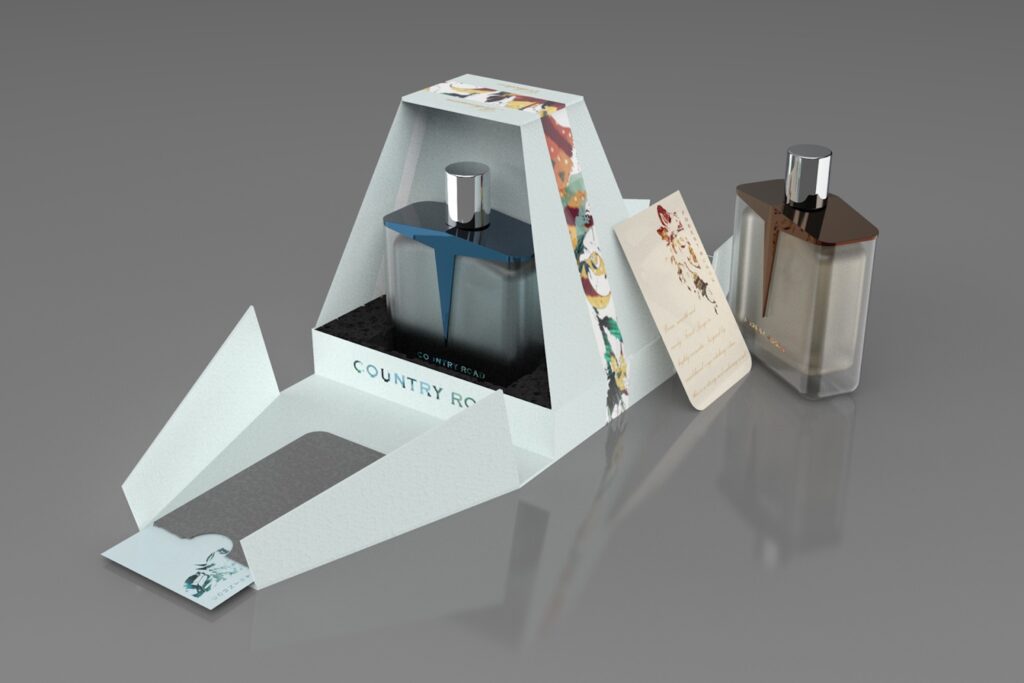
Paperboard Packaging Supply Chain: Timelines and Costs from Sampling to Production
The box sample is approved and the design is locked. Now comes the practical question: how long, and how much.
Perfume folding carton production timelines
Folding carton production is among the fastest categories in paperboard packaging: 5 to 10 working days with existing cutting dies, plus 3 to 5 days if new dies are required. Perfume boxes, with their offset printing and surface finishing processes, add an extra 3 to 5 days beyond standard shipping boxes. Full-cycle timeline—from design file approval to first carton shipment—runs approximately 10 to 18 working days.
Rigid boxes, built on manual or semi-automated production lines, take longer—typically 15 to 25 working days. Ocean freight is separate—3 to 4 weeks from Asia to the US West Coast, 5 to 6 weeks to Europe. Because folding cartons ship flat, container space utilization is high; for the same product count, ocean freight runs far lower than for rigid boxes.
Sample-to-production consistency
Deviation between samples and bulk production is the most common quality issue in paperboard perfume boxes. The causes generally boil down to two: no standard color swatch was signed off during sampling—a Pantone reference on the design file can shift two shades on press; and batch-to-batch paper variation—the same white cardstock spec can show visible differences in whiteness and gloss between production lots.
Consequently, we require three steps during the sampling stage on every paperboard box project: sign off an approval sample as the bulk inspection standard, retain a set of PANTONE swatches for the press line, and perform inline inspection on the first bulk run. These steps collectively add 3 to 5 days to the timeline but drive the risk of rework and color-discrepancy returns down to nearly zero.
FAQ
Folding cartons start at MOQs of 1000 to 3000 units—cutting die costs run $100 to $500, after which reorders only pay for the boxes themselves. Offset printing typically requires 1000 units minimum because plate-making is a fixed cost. Digital printing has no plate barrier—even a few dozen units are feasible, though per-box cost exceeds offset.
Rigid boxes, with their higher manual labor content, typically start at MOQs of 1000 to 2000 units. We recommend new brands begin with folding cartons to validate the supply chain and market feedback; once the product line is stable, upgrading to rigid boxes becomes a data-driven decision.
Folding cartons typically use 250gsm to 350gsm white cardstock or coated art paper. Bottles under 50ml work with 250gsm. Standard 100ml bottles use 300gsm. Large-format perfumes above 150ml or heavier bottles use 350gsm. Paper that is too thin lacks the structural rigidity to hold shape on the shelf; paper that is too thick risks cracking at the fold lines and drives unnecessary material cost.
For rigid boxes using greyboard-wrapping construction, the greyboard typically runs 800gsm to 1,200gsm, wrapped with 120gsm to 157gsm specialty paper or coated art paper.
Hot stamping durability depends on three factors: the foil grade (different grades adhere differently to different papers), stamping temperature and dwell time (too low fails to bond, too high burns through), and adhesion testing during sampling. We recommend the fingernail scratch test and 3M tape pull test during sampling—both together take 30 seconds and screen out underperforming stamping setups. Sign off a stamping-adhesion approval sample before bulk production, and replicate the same parameters on subsequent batches.
For perfumes retailing below $50, a folding carton with matte lamination and hot stamping carries sufficient brand weight; rigid box cost and freight premiums are hard to justify at this price tier.
For perfumes above $80—where consumers expect an unboxing ceremony—rigid boxes deliver measurable returns.
For the $50-to-$80 range in between, our recommendation: maximize folding carton execution first (good paper, good print, good stamping). If market feedback shows the brand needs stronger packaging differentiation, the rigid box upgrade can follow.
Yes. Three practical paths: first, select FSC-certified white cardstock or recycled paperboard—costs 10% to 20% more than standard board, but the brand can legally use the FSC mark. Second, choose soy-based or water-based inks over conventional petroleum-based inks—lower VOC emissions and easier de-inking during recycling. Third, simplify box structure—eliminate unnecessary insert layers, merge multiple sub-boxes into one integrated structure, reducing material usage by 20% to 30% while also lowering cost versus the multi-piece approach. Sustainability in paperboard packaging is more executable than in glass or plastic—because paper itself is inherently recyclable.