
Table of contents
Eco packaging refers to paper-based packaging solutions built around responsibly sourced materials, recyclable or biodegradable paperboard, and lightweight structural design. It serves two core functions: reducing environmental footprint while still protecting the product, and communicating your brand’s sustainability commitment to the end customer. Whether you are placing a first order of 500 eco friendly packaging boxes for ecommerce or rolling out a full product-line switch, choosing the right sustainable packaging is less about swapping one material for another and more about rethinking how cost, material science, and customer perception intersect.
Four Material Paths Toward Greener Packaging
Eco packaging is not one answer. Each material path comes with its own cost structure, supply chain implications, and customer perception. Brands need to pick among these four paths based on product positioning, sales channel, and budget.
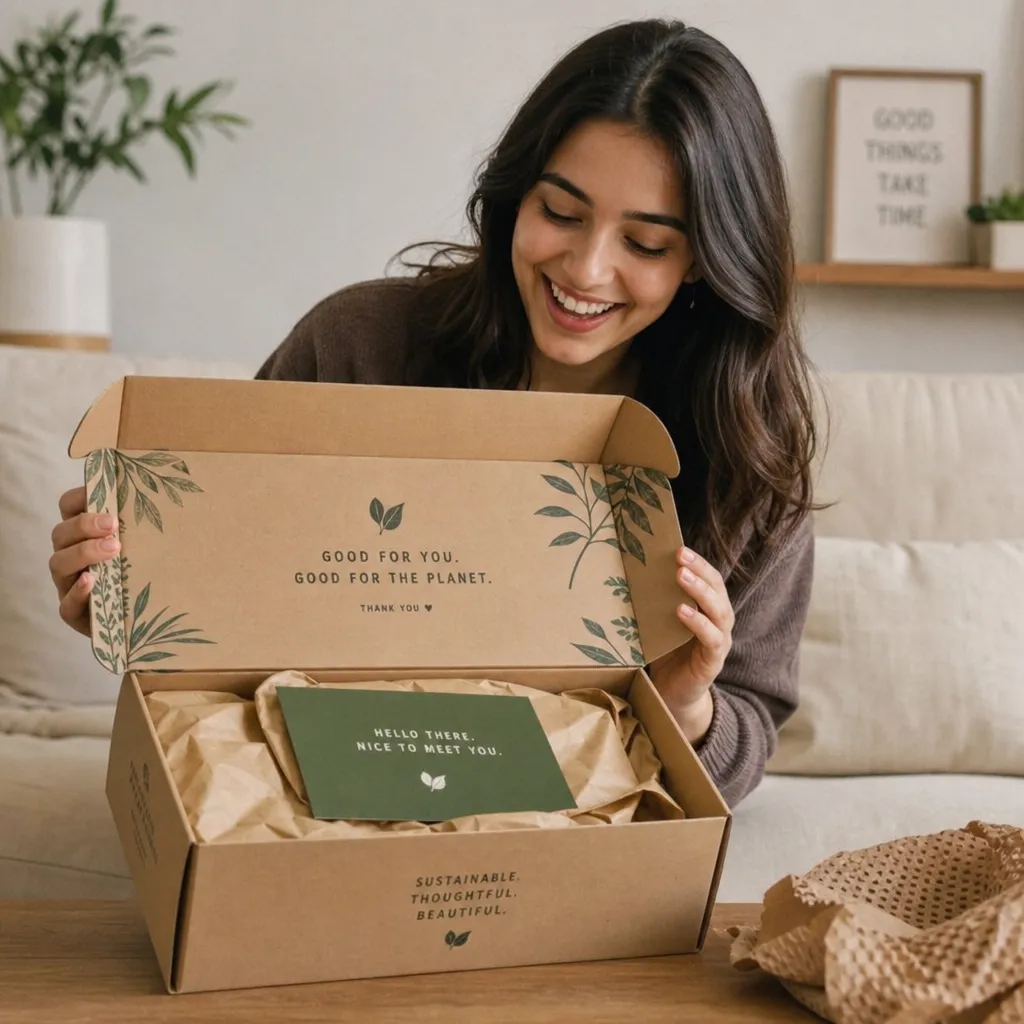
FSC-Certified Paperboard: Traceable from Forest to Box
FSC (Forest Stewardship Council) certified paperboard is the most verifiable option in the eco packaging space. Every ton of FSC-certified paperboard traces back to responsibly managed forests, which means controlled harvesting, protected biodiversity, and respected community rights.
From a printing and converting standpoint, FSC-certified paperboard performs identically to conventional paperboard. Same stiffness, same printability, same die-cutting precision. Brands do not need to compromise on quality for sustainability. In our experience, the only difference most clients notice with FSC-certified paperboard is the FSC logo printed on the box. There is no quality trade-off.
However, FSC-certified paperboard carries a premium of roughly 8% to 15% per ton. For a brand consuming 50 tons a year, that premium is real but manageable. The key consideration is this: that premium buys you an internationally recognized, third-party-audited claim, rather than a brand saying we are green on its own.
Recycled Paperboard: Putting Waste Back into the Economy
Recycled paperboard is made from post-consumer waste and industrial trim that gets re-pulped and processed. Its environmental benefits are straightforward: less landfill, lower demand for virgin fiber, and reduced water and energy use compared to virgin paperboard. Sustainable packaging boxes made with recycled paperboard are common, especially in corrugated shipping cartons and outer packaging.
Recycled paperboard also has physical limits. Because fibers shorten with each recycling cycle, recycled paperboard has lower stiffness and surface smoothness than virgin paperboard of the same thickness. For boxes that need fine printing, foil stamping, or high-end surface finishes, 100% recycled paperboard may not meet brand expectations.
A practical compromise is the hybrid approach: use a high percentage of recycled fiber for the box body and virgin coated paperboard for the printed face sheet. This delivers a material-level sustainability claim while preserving surface-finish flexibility and print quality. We see many small and mid-sized brands take this path for eco friendly packaging for small business use. It is cost-friendly and still communicates the message clearly.
Biodegradable Coatings: Solving the Composite-Material Recycling Problem
The recycling bottleneck for traditional paper packaging often sits in the coating. Standard paperboard uses PE extrusion or plastic lamination for water and grease resistance, which makes the board a composite material in recycling streams and hard to process through standard paper recycling channels.
Biodegradable boxes get their innovation from the coating layer. Water-based coatings and bio-based coatings replace traditional plastic lamination, maintaining moisture and grease resistance while allowing the entire box to break down under industrial composting conditions.
One caveat: biodegradable and home-compostable are not the same thing. Most biodegradable boxes need the specific temperature, humidity, and microbial environment of an industrial composting facility to decompose efficiently. Brands must be clear about this distinction when making claims to customers, or risk setting expectations that reality cannot meet.
Lightweighting: The Greenest Material Is the One You Do Not Use
Lightweighting is the easiest and cheapest of the four paths. The logic is simple: use less paperboard to deliver the same protective function.
Specific tactics include optimizing box structure to reduce wall thickness, removing unnecessary inner layers, replacing glued assembly with scored folds, and using precision die-cutting to raise sheet utilization from the industry average of 70% to 85% or higher. Lightweighting involves no material change, no unit-cost increase, and no supply-chain disruption, yet it delivers immediate carbon-footprint improvement.
One thing we have confirmed across years of production experience: most standard box designs carry excess safety margin. A board specification thickened by 20% as a just-in-case measure can often drop back to standard gauge without affecting transit protection. Getting the design right is harder than making the material thicker, but it is also far more valuable.
The Real Cost of Sustainable Packaging
Many brands equate eco packaging with higher cost. That equation holds in some scenarios but misses the other half of the story.
Material-Level Price Differences
| Material Type | Premium (vs standard SBS) | Print Quality | Claim Strength | Typical Application |
|---|---|---|---|---|
| FSC-certified paperboard | 8%–15% | Identical | High (third-party certified) | All categories |
| 100% recycled paperboard | -5% to +5% | Medium (rougher surface) | High | Outer packaging, corrugated |
| Hybrid (recycled core + virgin face) | 0%–10% | Medium-high | Medium | Ecommerce boxes, folding cartons |
| Biodegradable-coated paperboard | 15%–30% | Medium-high | High (needs composting facility) | Food, takeout boxes |
| Lightweighting optimization | 0% (potential reduction) | Identical | Low (no material change) | All categories |
For most products, the per-unit cost increase under an eco friendly packaging for small business scenario runs between $0.05 and $0.15. That number will not break the business model, but it does require brands to factor it into their pricing strategy instead of hoping it disappears.
Hidden Cost Shifts
While eco packaging adds cost in some areas, it can save cost in others.
Lightweighting directly reduces paperboard usage and per-unit shipping cost. A box that drops from 120g to 95g can save several hundred dollars in freight on a 10,000-unit order. Higher sheet utilization means more boxes come out of the same raw-material input, which is especially valuable when paperboard prices are volatile.
Additionally, more and more large retailers and ecommerce platforms are factoring sustainable packaging into supplier scorecards. Walmart’s Sustainable Packaging Scorecard, Amazon’s Frustration-Free Packaging program: non-compliance can mean penalties or lost shelf placement. From this angle, part of the cost of eco packaging is really risk hedging.
Eco Packaging Strategies by Business Size
No single eco packaging solution fits every brand. Scale determines which tools are available and which path makes economic sense.
Small-Batch Brands: Start with Certification and Lightweighting
For brands shipping under 5,000 units a year or just getting started with custom packaging, jumping straight into high-premium biodegradable coatings is rarely the best move. When budget is tight, put the limited incremental cost where it shows the most.
Start with two things: switch your paperboard to FSC-certified, and have your designer re-examine whether the box structure carries excess material. FSC certification delivers far more customer trust than a generic eco-friendly box label. Customers recognize the FSC mark without needing a brand to explain it. Meanwhile, structural optimization reduces material use at zero incremental cost.
When the budget allows, the next step for eco friendly packaging boxes is upgrading the face sheet to a hybrid construction: 100% recycled paperboard for the body paired with FSC-certified virgin coated paperboard for the printed surface. This balances sustainability credentials with print quality. For bespoke ecommerce packaging, this hybrid approach is especially practical in small-batch orders.
Mid-to-Large Volume: Scale Opens Up More Options
Brands shipping 10,000-plus units a year enjoy scale advantages. Biodegradable-coated paperboard, textured recycled board, custom water-based coatings: options that carry eye-watering premiums at low volumes enter the operational price range once orders pass the 10,000-unit mark.
When doing a large-scale switch, the single most important rule is to phase in, not flip a switch. Pick one product line or SKU for a pilot run. Verify your supplier’s delivery consistency, customer feedback, and filling-line compatibility before rolling out across the full portfolio. The risk of a full cutover is this: if the new board has a 3% higher fold-cracking rate on the filling line, that defect rate multiplied by 50,000 units becomes a real problem.
Sustainable packaging boxes also offer more negotiation leverage at scale. A factory running 20 tons a month of paperboard can shift from spot-market FSC purchases to a direct annual contract with the mill, potentially squeezing the cost premium from 15% down to 8%.
Sustainability Claims: What You Can Say and What You Cannot
Sustainability claims are the area where brands step on the most landmines. Say too little and you waste the investment. Say too much and you invite regulatory scrutiny and consumer backlash.
What You Can Say
Putting FSC-certified on the box is safe. It is a third-party audited, internationally recognized standard. Saying recyclable is also safe, provided local recycling infrastructure actually accepts this type of paperboard. Most paperboard is recyclable in the major markets of North America, Europe, and Asia-Pacific.
Highlighting lightweighting results is another safe route. Saying this package uses 18% less material than our previous version is a quantifiable, verifiable factual statement. It requires no external certification: the brand does the math itself.
What You Cannot Say
100% eco-friendly, fully sustainable, zero burden on the planet: these are unverifiable absolute claims that have already triggered regulatory reviews in multiple markets. A paperboard box, no matter its material choices, still consumed energy, water, and transport fuel. Honest sustainability communication is not about claiming perfection. It is about stating what specific improvements were made.
Biodegradable without specifying degradation conditions (industrial-composting temperature, time, and whether ASTM D6400 or EN 13432 certification applies) is highly misleading. A paperboard box tossed into a regular landfill can sit there for decades without degrading. The claim only holds weight when the box carries industrial-compost certification and you tell the customer what kind of facility it needs.
Eco Packaging in an Ecommerce Context
The sustainability challenge in ecommerce is different from brick-and-mortar retail. In-store packaging only needs to look good on a shelf. Ecommerce boxes also need to survive parcel sorting, long-haul shipping, and last-mile delivery.
In ecommerce, lightweighting and material choice carry equal weight. An over-packaged ecommerce box creates a double loss: wasted paperboard and wasted freight. Courier dimensional-weight pricing factors in both actual weight and volumetric weight. A box that is 30% larger than the product can trigger higher charges even if the weight stays the same.
Bespoke ecommerce packaging, boxes custom-sized to the product, solves this problem. The box fits the product precisely, reduces filler usage, and eliminates void space that causes transit damage. Custom ecommerce packaging carries a higher per-unit cost than stock boxes, but when you factor in freight savings and lower damage rates, the total cost of ownership is usually better.
FAQ
There is no perceptible difference. The physical properties of FSC-certified paperboard, stiffness, smoothness, brightness, ink absorption, are identical to the same grade of non-certified paperboard. FSC certification tracks fiber sourcing and chain of custody, not the manufacturing process of the board itself. We have printed foil-stamped gift boxes on FSC-certified paperboard and the visual and tactile result matches the non-certified version exactly. The only thing the customer sees is the FSC logo printed on the box.
Yes, but with compromises. Because recycled paperboard contains mixed recovered fibers, the base color usually leans gray or yellow. If you need to print large areas of white or light color, you must first apply a base coating to block out the gray background. This adds process steps and cost. A better approach is a hybrid structure: recycled paperboard for the core and virgin coated paperboard for the face sheet. The face sheet directly carries high-resolution printing and surface finishing, while the core carries the sustainability claim.
Usually not. Water-based coatings and bio-based coatings are visually transparent. They do not change the appearance of the paperboard. The biodegradability sits in the coating chemistry, not in the look. Brands need to print label text or a certification mark on the box so customers know it is a biodegradable box.
The minimum order quantity for custom eco packaging depends on box type. Folding cartons typically start at 1,000 units. Rigid set-up boxes, because of their higher manual assembly share, can start at 200 to 500 units. For budget-constrained startups, one practical path is: start with a small rigid-box custom run, validate market feedback, then switch to larger-volume folding cartons.
Good lightweighting does not. Many of the box designs we handle carry excess safety margin in their original structure. An extra 0.5mm in the sidewalls, one unnecessary inner layer. Removing these surpluses does not affect transit safety. What really determines protection is structural design quality, not paperboard thickness. A precisely engineered 14pt box can outperform a casually designed 18pt box in compression strength.
Not at all. That perception has reversed in recent years. The FSC logo, recycling symbols, and a simple “this packaging is recyclable” note on the inner box have become brand assets in Western B2C markets. According to consumer research by Two Sides, over 60% of Western consumers consider paperboard packaging more premium than plastic packaging. Take a look at Apple’s iPhone packaging: all-paper structure, no plastic lamination. That is exactly the direction high-end brands are choosing.
Paperboard is sensitive to humidity. That is the physical reality of fiber-based packaging. In humid environments, both FSC-certified and recycled paperboard lose strength. The solution is to choose a water-based moisture-resistant coating instead of plastic lamination. It provides moisture protection without compromising recyclability. If the product needs long-term storage or transit in humid conditions, go with laminated paperboard and inform customers about the correct recycling path.