
Table of contents
- 1. Understand the Main Risks During Food Delivery
- 2. Choose the Right Box Structure for Each Food Type
- 3. Control Grease and Moisture
- 4. Balance Ventilation and Heat Retention
- 5. Get the Dimensions and Internal Layout Right
- 6. Improve Stacking and Transport Performance
- 7. Select Printing and Materials Without Compromising Function
- 8. How to Choose a Reliable Food Packaging Supplier
- FAQ
Food delivery packaging needs to do more than hold a meal. It must keep food in position, reduce leakage, manage moisture and withstand handling during transport. A box that looks attractive at the restaurant may still fail after a delivery driver carries it across town.
Good food delivery packaging protects food quality through suitable box structures, correct dimensions, appropriate barrier materials and secure closures. The right design depends on the food itself. A burger, a portion of fried chicken, a salad and a sauced meal all create different packaging challenges.
For restaurants, food brands and takeaway businesses, choosing the right custom food boxes can help reduce damaged orders, improve customer experience and support more consistent delivery operations. This guide explains the key design decisions and what to discuss with a food packaging supplier before placing an order.
1. Understand the Main Risks During Food Delivery
Food can experience several problems between the kitchen and the customer’s door. Packaging should address the risks that matter most to each product.
| Delivery risk | What can happen | Packaging consideration |
|---|---|---|
| Pressure and impact | Food gets crushed or loses its shape | Suitable board strength, box structure and internal support |
| Grease penetration | Oil stains the box or weakens the paper | Appropriate grease-resistant material or barrier |
| Moisture and condensation | The box softens and food loses its intended texture | Moisture management and suitable ventilation |
| Movement during transport | Food shifts, toppings move or sauces spill | Correct internal dimensions and compartments |
| Heat and steam | Fried food becomes soggy or hot food loses quality | Product-specific ventilation and closure design |
| Stacking | Lower boxes deform under other packages | Stable box geometry and appropriate stacking strength |
A useful starting point is to observe how staff pack the food and how delivery drivers carry it. A single-item order has different requirements from a meal containing several dishes, drinks and sauces.
Do not expect one universal box to solve every problem. Match the structure to the food and the delivery conditions.
2. Choose the Right Box Structure for Each Food Type
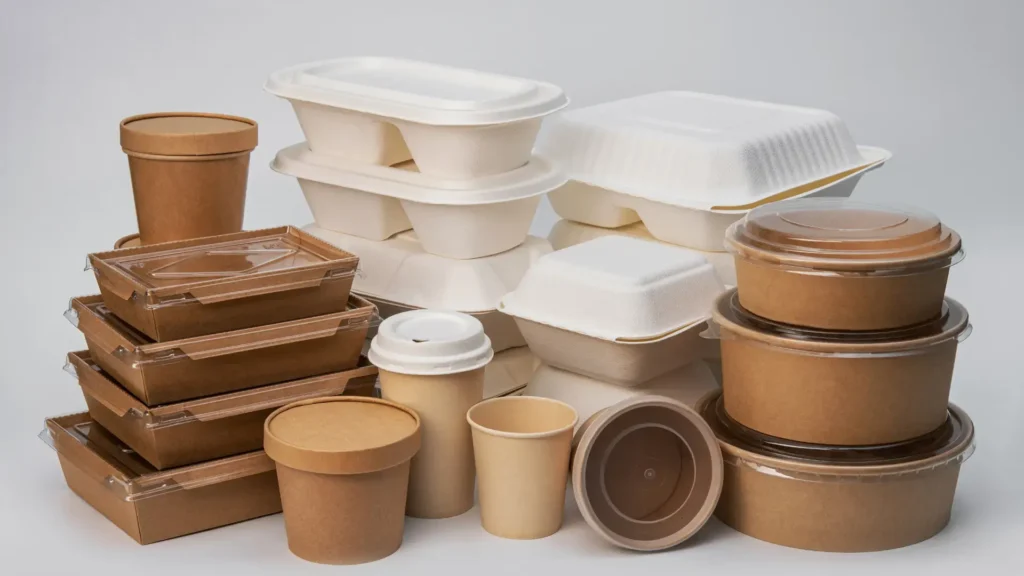
The box structure determines how well a package holds its contents, supports stacking and handles normal movement.
| Food type | Common packaging structure | Key design requirement |
|---|---|---|
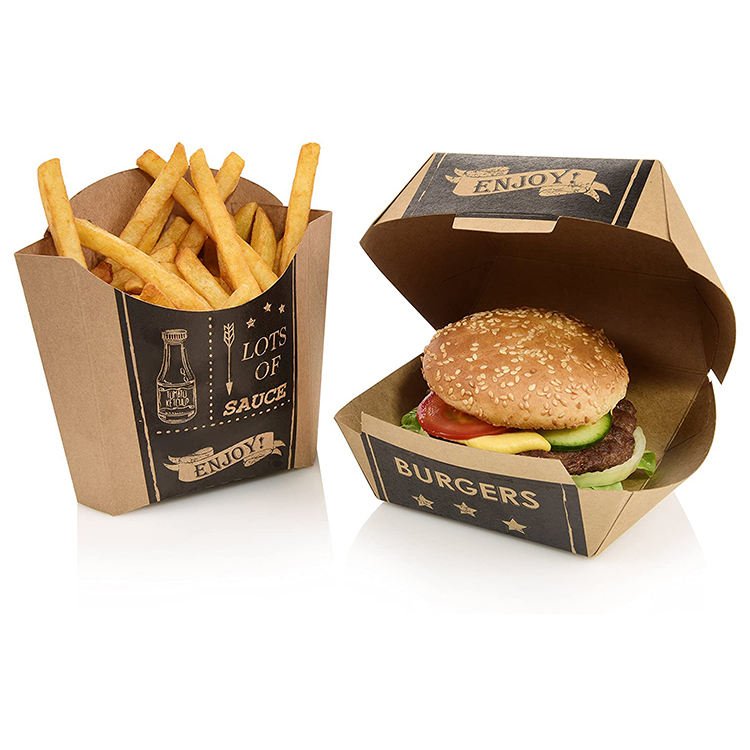
| Burgers and sandwiches | Folding carton or tuck-top food box | Keep the product in position without squeezing it |
| Fried chicken and snacks | Folding paperboard box with suitable ventilation | Balance moisture release with grease resistance |
| Pizza and flat baked goods | Flat corrugated or paperboard box | Support the base and maintain a stable shape |
| Rice and prepared meals | Food box with secure folding or locking closure | Keep the meal level and limit leakage from side dishes |
| Bakery products | Paper food box with a suitable lid or window | Protect the product from crushing while presenting it clearly |
| Salads and cold meals | Paper box with a suitable inner barrier or compatible container | Manage moisture and prevent dressing from soaking the package |
Consider the opening and closing method
A tuck-top structure can provide a convenient closure for many takeaway meals. Locking tabs can help keep the lid in place during carrying. A hinged lid can give customers easy access, while separate compartments can keep different foods apart.
For multi-item orders, internal dividers can reduce movement and prevent products from touching each other. However, dividers only work when they fit the food arrangement and leave enough room for the contents.
For food that needs a stronger outer structure, corrugated board may offer more support than lightweight paperboard. The right material depends on box dimensions, product weight, stacking requirements and handling conditions.
3. Control Grease and Moisture
Grease and moisture create two common problems for paper food packaging boxes. They can stain the exterior, weaken the paper and affect the customer’s experience.
Uncoated paperboard may not suit oily or wet foods. Depending on the product, the package may need a grease-resistant paper, a suitable coating, a liner or a separate food-contact container.
Grease resistance
Fried chicken, burgers, pastries and oily snacks can release grease during storage and transport. A suitable barrier helps reduce oil penetration through the paper.
When selecting a barrier, consider the actual food, contact duration, temperature and intended use. Do not assume that every coated paper provides the same level of resistance.
Moisture resistance
Sauces, wet ingredients and condensation can soften paperboard. A package that works well for dry bakery products may perform poorly with a meal that contains sauce or steam.
For products with high moisture content, consider an appropriate liner or compatible inner container. Test the complete package rather than evaluating the paper material alone.
Check the coating and food-contact suitability
A coating must do more than resist grease. Its composition and intended use must also meet the applicable food-contact requirements in the destination market.
The U.S. FDA explains that food-contact substances can include packaging components such as adhesives, colorants and substances applied to packaging surfaces. The European Commission also treats food packaging and containers used for transport as food-contact materials. Buyers should therefore request relevant material and compliance documentation for the intended application rather than relying on a general “food-grade” description. (FDA food packaging guidance; European Commission food-contact materials).
4. Balance Ventilation and Heat Retention
Hot food creates a design challenge: the package needs to protect the product while managing the steam that builds up inside.
A tightly closed box can trap moisture. For some fried foods, that trapped steam can soften the crust and reduce crispness. Ventilation openings can help release moisture, but they may also allow heat to escape.
The best solution depends on the menu.
For fried food: Consider ventilation that allows some steam to escape without creating large openings that compromise the structure or allow food to move.
For burgers and sandwiches: Avoid excessive internal pressure from an oversized or poorly designed box. The lid should close without crushing the food.
For hot rice and prepared meals: Focus on secure closure, stable compartments and suitable moisture control. The package should contain the meal without making the lid difficult to close.
For cold food: Consider condensation and moisture accumulation. A package that works for dry food may soften when cold ingredients release moisture or when temperature differences create condensation.
Ventilation does not replace temperature control or proper food handling. Businesses should follow the relevant food-safety procedures for preparing, holding and transporting meals.
5. Get the Dimensions and Internal Layout Right
An oversized package allows food to move. An undersized package can squeeze the contents, damage toppings or make the lid difficult to close.
When developing paper food boxes, start with the actual food portion rather than selecting a box based only on its external appearance.
Measure:
- Food length, width and height after preparation.
- Portion size and typical variations.
- Height of toppings or stacked ingredients.
- Space needed for sauces, utensils or side dishes.
- Whether staff will pack the food by hand or use a filling machine.
The internal dimensions matter more than the external dimensions when you evaluate product fit.
For combo meals, plan the complete layout before finalizing the box. A compartment for fries, a separate space for a burger and a sauce section may help organize the meal, but the dividers should not make the package unnecessarily large.
A practical sample test should use the real food or a representative product setup. Check whether staff can pack the meal quickly, close the box without force and carry it without shifting the contents.
6. Improve Stacking and Transport Performance
Food delivery often involves several packages inside one delivery bag. Staff may stack meal boxes during busy periods, and drivers may carry multiple orders at once.
A package needs enough structural support to maintain its shape under normal handling.
Consider the following design details:
Box geometry: A stable base and well-designed side panels can help prevent the box from collapsing or leaning.
Board specification: Larger boxes and heavier meals may need stronger paperboard or corrugated material. The required specification depends on the dimensions and load.
Closure strength: The lid should stay closed during carrying. Locking tabs and suitable folds can help reduce accidental opening.
Internal layout: Dividers and fitted compartments can limit product movement and separate different items.
Delivery bag compatibility: Check that the box fits the restaurant’s delivery bags and allows practical stacking. A package that performs well alone may cause problems when staff place several boxes together.
For longer delivery routes or more demanding handling conditions, test the complete packaging arrangement. The food box, delivery bag and any outer carrier work together, so testing only an empty box may not reveal every problem.
7. Select Printing and Materials Without Compromising Function
Food packaging also communicates the brand. Printing, colors and structural details can make a takeaway package easier to recognize and more consistent across a restaurant chain.
Common material and finishing choices include:
| Option | Typical purpose | Consideration |
|---|---|---|
| Kraft paper or board | Natural paper appearance | Confirm suitability for the food and required barrier |
| White paperboard | Clean background for brand graphics | Select a suitable board specification for the product |
| Corrugated board | Additional structural support | Consider board thickness and package dimensions |
| Full-color printing | Brand identity, product information and promotions | Check print quality and production consistency |
| Window design | Displays selected bakery or food products | Use a suitable window material and secure construction |
Keep the design practical. Large decorative elements, unnecessary layers or complicated assembly can increase cost without improving transport performance.
Also distinguish the food-contact surface from the printed exterior. A printed surface does not automatically qualify for direct food contact. Ask the supplier how the material structure, inks, coatings and adhesives suit the intended application.
8. How to Choose a Reliable Food Packaging Supplier
A suitable food packaging supplier should understand the relationship between food characteristics, paper materials, box structure and delivery conditions.
Before comparing quotations, prepare a clear project brief.
| Information to provide | Why it matters |
|---|---|
| Food type and portion size | Helps determine the box structure and internal dimensions |
| Food temperature at packing | Influences ventilation and moisture considerations |
| Grease and moisture level | Helps identify suitable barrier requirements |
| Product weight and dimensions | Guides board selection and box sizing |
| Delivery duration and handling | Helps define structural and transport requirements |
| Printing artwork | Allows the supplier to review graphics and print specifications |
| Estimated order quantity | Supports material planning and quotation |
| Destination market | Helps identify relevant food-contact requirements |
Ask the supplier whether they can provide material information, samples and relevant food-contact documentation. For a new design, test the box with the actual food under realistic packing and delivery conditions.
Do not compare prices on the basis of box size alone. Two boxes with the same dimensions may use different board grades, coatings, structures and printing processes. Compare the full specifications before choosing a supplier.
FAQ
The best option depends on the food. Fried food needs careful moisture management, while sauced meals need suitable barriers and secure closures. Burgers and sandwiches need a close fit that protects their shape. Choose the structure according to the food and delivery conditions.
Yes, when the material and structure suit the food’s temperature, moisture and grease levels. Some meals may need a liner or additional barrier. Test the complete package with the actual product before large-scale use.
A suitable box can help manage steam through carefully designed ventilation. The right balance depends on the food and delivery time. A completely sealed package may trap moisture, while excessive ventilation can reduce heat retention.
Choose paper or board with a suitable grease-resistant barrier for the intended food. For particularly oily products, consider a compatible liner or inner container. Ask the supplier for material details and relevant food-contact documentation.
Provide the food type, portion dimensions, weight, packing temperature, grease and moisture characteristics, preferred box style, printing artwork, estimated quantity and delivery destination. These details help the supplier assess the required material and structure.
Yes. Manufacturers can customize dimensions, box structures, printing and selected finishing options. You should confirm the food-contact suitability of all relevant materials and test the finished package with the intended food.
They can help contain and protect food, but performance depends on the box design, material, product and handling conditions. For longer routes, evaluate the complete delivery system, including the outer bag or carrier, temperature control and any additional protective packaging.