
Table of contents
If Stock Boxes Were Working for You, You Would Not Be Reading This
Here is a quick test.
Take your highest-volume product. Put it next to the box you ship it in. Snap a photo. Now ask yourself three questions: Does the product rattle around in there? Did you stuff the box with filler, or just slide in a single sheet? And when your customer opens the package—will they remember what the box looked like, or will they have already forgotten it by the time they pull the product out?
If those three questions make you squirm a little—stock boxes might be eating your margin. Not all at once. One shipment at a time. Month after month.
We have watched countless businesses walk the same path: start with Uline stock boxes, which work fine at low volume; hit seven or eight hundred shipments a month and notice the freight bill behaving strangely; cross two or three thousand a month and suddenly realize—they have been paying to ship air. After switching to custom packaging, logistics costs typically drop 12% to 18%, while the box itself costs barely more than stock.
This is not magic. This is precision.
What “Custom” Actually Customizes
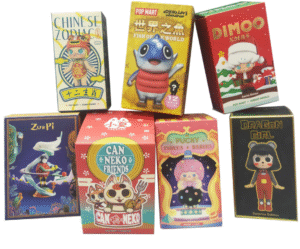
When most people hear “custom boxes,” the mental image is a lavish logo-printed luxury package. That is certainly one flavor of custom—but it is just the tip of the iceberg.
The core of custom packaging is not printing. It is dimensions, materials, and structure.
Custom dimensions are the most direct ROI lever. Stock box dimensions are predetermined by the supplier—10×8×6, 12×10×8, 18×12×12. Your product was not designed to those numbers. So you pick between the next size up—stuff it with filler, pay the freight penalty—or the next size down—cram it in, roll the dice on damage. Custom packaging removes that tradeoff entirely. The box is built to your product’s dimensions, cut to the millimeter.
Custom materials are the second lever. Stock boxes lock in whatever flute type and ECT rating the supplier decided to manufacture. Your product needs A-flute cushioning, but the shelf only has B-flute in your size—so either you compromise on protection, or you pick a worse-fitting box in the right flute. Custom packaging selects materials to match the product: A-flute with high cushioning for glassware; B-flute for puncture resistance with hardware; E-flute for cosmetics brands that want a smooth surface and crisp logo printing.
Custom structure is the dimension most people overlook. Auto-locking bottoms that save labor. Partitioned inserts that prevent collision. Display windows that catch eyes on a shelf. Easy-tear strips that make unboxing feel effortless. In the stock-box market, these are either unavailable or treated as “special orders” with a markup. In custom manufacturing, they are standard production-line configurations.
We once worked with a ceramic teaware brand—teapot, cups, fairness pitcher, all in one set. They had been using a stock box with three separate foam dividers. Assembly took 45 seconds per box. The foam cost nearly a dollar per set. We redesigned the structure: a single sheet of corrugated board, die-cut into shape, with built-in divider slots. Assembly dropped to 12 seconds. Material cost fell by 60%. The unboxing experience went from “defusing a foam bomb” to “opening a complete tea set in one clean gesture.”
The savings beyond the brand value are often larger than the brand value itself.
Choosing Materials: Thicker Is Not Always Better
Material selection is the easiest place to stumble in custom packaging. The instinct is to demand “the thickest” and “double-wall”—and suddenly your boxes are heavy, expensive, freight costs spike, and the actual protection might still be worse than a well-chosen mid-weight board.
The three mainstream box types and where they belong:
Corrugated Boxes: The workhorse of e-commerce shipping and warehouse rotation. Load capacity 10 to 80 pounds. Flute choice matters more than wall count—A-flute for cushioning, B-flute for puncture resistance, C-flute for balanced performance at the lowest cost (scale economies at work), E-flute for smooth, high-quality printing. BC double-wall handles heavy goods and long-haul logistics.
Folding Cartons: Retail-facing packaging. Shelf-ready boxes for cosmetics, supplements, food products. Single-layer paperboard, load limit 5 pounds. This category competes on design sense and print precision.
Rigid Setup Boxes: The premium play. Chipboard wrapped in specialty paper, non-folding, delivered fully formed. Jewelry, high-end electronics, corporate gifts—the unboxing moment is where the brand premium happens.
Our advice is usually straightforward: send us a sample of your product. Tell us whether it travels domestic ground or cross-border sea freight, how many layers your warehouse stacks, and whether it has any special protection requirements. “Most expensive” is not the answer. “Exactly right” is the cheapest option.
Printing and Finishing: Brand Equity on Cardboard
Get the size right. Get the material right. Then we can talk about how good it looks.
Custom printing breaks into a few tiers:
- Flexographic (Flexo) : The most common method for corrugated boxes. One to three colors, ideal for solid blocks and logos. Low cost, high speed. A single-color logo on your standard shipping box—this is the highest-ROI brand touch you can add.
- Offset / Litho-Lam: A finely printed sheet laminated onto corrugated board. Exceptional color accuracy, razor-sharp detail—magazine-grade. Cosmetics brands, premium food, consumer electronics—if the box is part of the brand experience, this is the answer.
- Digital Printing: No plates required. Suited for small runs or variable content—serial numbers, personalized messages. Higher per-unit cost than flexo, but zero plate setup fees.
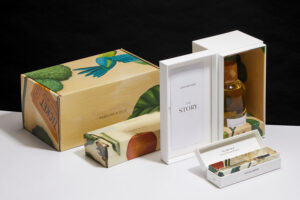
Then there is the surface finish menu: lamination (matte or gloss), foil stamping (gold, silver), spot UV, embossing and debossing, window cutouts with PVC film. Every process adds cost at a different rate. Together, they determine one thing: whether your customer opens the package and sees “industrial packaging,” or sees the beginning of a brand experience.
We regularly get requests like: “Make it look like this brand’s box.” The reference photo shows a full visual identity system, foil-stamped logo, embossed texture. By the end of the conversation, it is usually clear—the effect they want and the budget they have can only meet somewhere in the middle.
So here is an honest suggestion: set the budget range first, then browse the finish menu. One dollar per box will not buy a five-dollar box. But three dollars per box, in the hands of someone who knows the tradeoffs, can produce a box that looks like six. The difference lies in which surfaces earn the spend—logo area, front-facing panels—and which can stay understated—box bottom, sidewalls.
MOQ, Pricing, and the Math That “Does Not Add Up”
“Is custom packaging expensive?”—this question lands in every single client conversation.
The answer is: depends how you calculate.
Box-only unit price? Yes, custom costs more. A standard stock box runs $0.40 to $1.50. A same-size custom box with printing runs $0.80 to $3.00.
But fold in the freight differential, the void fill expense, the damage rate, and the assembly labor—and stock box total cost is almost always underestimated.
Minimum order quantities are not as high as most people assume. Domestic custom manufacturers typically start at 300 to 500 units—not three thousand, not thirty thousand. A small-batch sample run costs a few hundred to just over a thousand dollars—entirely manageable for testing a new design or validating a new dimension. China direct sourcing starts higher, usually 3,000-plus, but pushes unit price down to $0.15 to $0.60—ideal for stable, high-volume orders.
The threshold we give clients: if a SKU consumes more than 500 boxes a month, it is worth running a custom sample. The large majority, after seeing the comparison data, switch at least their core SKUs to custom—not because it is “premium,” but because the math closes.
FAQ
Box-only unit price: stock $0.40–$1.50, custom with printing $0.80–$3.00. But stock boxes, being “close enough” sizes, typically add $1–$4 per shipment in DIM freight and excess void fill. Factoring that in, for SKUs consuming 500-plus boxes a month, custom total cost usually drops below stock by month two or three—the freight and material savings outrun die amortization. Do not look at the box price alone. Look at total packaging cost per unit shipped.
Domestic factories typically start at 300–500 units. China direct usually requires 3,000-plus. For sampling and testing, we accept orders as small as a few dozen to a couple hundred—unit price runs higher, but it is enough to verify dimensions, materials, and print quality. Prototype first, confirm you are happy, then scale. That workflow dodges a lot of potholes.
Depends on complexity. Standard flexo-printed boxes—one or two colors, no special structures—typically 7 to 14 business days. Complex structures, multi-layer printing, foil stamping or special finishes—allow 3 to 5 weeks to be safe. China direct transit time is a separate 4 to 10 weeks on top. First-time samples usually add 3 to 5 days since the die and printing plates need to be made fresh.
Three signals: monthly shipments over 500 units, SKU dimensions that never quite fit stock sizes, and a brand that wants the packaging to be part of the customer experience. If two out of three apply, the economic and brand math is worth running. Oddly shaped products—musical instruments, for example—are especially strong candidates, since stock boxes essentially never fit them well.
Food-grade packaging requires attention to two things: whether the ink is food-safe (indirect food contact grade is usually sufficient), and whether the board passes relevant food safety certifications. Soups and sauces need grease and moisture resistance—either lamination or grease-resistant board. In our food packaging projects, most clients are well served by flexo printing with a grease-resistant interior coating, which keeps costs manageable.