
Table of contents
Anyone who has ordered delivery knows this moment: a $25 pasta arrives—sauce leaked through the bottom, noodles congealed into a block, plastic lid dented. The food itself is fine. But that first-second experience has already dropped the “was it worth it” score from an 8 to a 5.
Food industry competition has escalated to the point where packaging is no longer “a container that moves food from A to B.” It is your mobile storefront. Your only physical touchpoint. The last line of defense for brand memory.
Over the years we have spent manufacturing food packaging, we have watched too many restaurants make the same move: grab a bundle of generic containers from the restaurant supply wholesaler. Good enough. They work. But “work” is the floor. If your goal is repeat customers, your packaging should say three things: this dish is worth the price, this brand cares about the details, and order from here again next time.
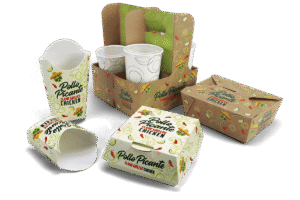
Your Dish Decides Your Box
Food delivery packaging is not one category. It is a dozen. Different foods demand radically different things from their containers.
Soups, sauces, braises—seal integrity is the line between life and death. Coated paper bowls, PP plastic bowls with snap lids, aluminum foil containers with paper lids. Leak testing does not mean “turn it upside down and see if anything drips.” It means “throw it in a delivery bag, let it bounce around on the back of a scooter for fifteen minutes, and then check.” When we run leak validation for clients, the simulation conditions are harsher than what any delivery rider actually does—because nobody holds your soup level while riding an e-bike.
Fried foods, barbecue, grilled items—ventilation matters more than a tight seal. A fully sealed box steams fried chicken into a layer of condensation, and the crunch is gone in ten minutes. Kraft paper boxes with vent holes, or window-cut designs that let steam escape—these are non-negotiable for this category.
Sushi, salads, cold dishes—visual appeal is appetite. Clear PET lids, window-cut paper boxes, black-and-white contrast trays. Cold food presentation counts for more than half the perceived quality. If the lid fogs up from condensation, even the freshest ingredients look like last night’s leftovers. Anti-fog treatment is not a gimmick—it is baseline configuration for cold food packaging.
Bento boxes, meal combos, multi-compartment sets—partitioning is the core. Rice touching salad dressing, vegetables soaking in meat juices—these things happen constantly during transit. Custom inserts or built-in divider boxes isolate those risks down to zero.
Baked goods, cakes, desserts—immobilization matters more than anything. A cake that slides two centimeters inside its box loses every buttercream flower. Custom sizing plus an internal cradle—molded pulp trays, corrugated divider racks—keeps the cake stationary through the entire delivery journey.
This is not to say you need a separate packaging SKU for every dish on the menu. But your containers should be grouped into three or four categories based on the physical properties of the food, each matched to the appropriate packaging solution. One box for everything is a detour.
Materials: It Is Not Just “Plastic vs. Paper”
Food packaging material selection has an extra dimension compared to regular boxes—it touches food directly.
Corrugated boxes: The workhorse for fried foods, barbecue, pizza. Good breathability, decent insulation, low cost. The weakness: not grease-resistant. Without a coating, oil seeps through to the bottom and greets the customer’s hands at unboxing. Grease-resistant board or an interior PE coating solves this.
Kraft paper bags and boxes: The “premium feel” option for baked goods, sandwiches, casual meals. Natural texture, good hand feel, photographs well. The tradeoff: structural integrity. It softens when wet. It tears under weight. A corrugated inner liner or higher-grammage kraft paper offsets both.
Bagasse / molded pulp: The sustainability star. Pressed from sugarcane fiber, bamboo fiber, or recycled pulp. Compostable, microwaveable, with an earthy, natural aesthetic. The tradeoffs: higher cost than corrugated, and mold tooling fees add a separate line item in custom orders.
PP / PET plastic containers: The backbone for soups, sauces, deli items. Excellent seal, high clarity, heat and cold tolerant. The tradeoff is obvious—environmental perception. More cities are passing single-use plastic restrictions. If your customer base is eco-conscious, plastic can be a brand-perception liability.
Aluminum foil containers: One of the most underrated food packaging materials. Excellent heat conduction for reheating, fully sealable, extremely low cost, recyclable. The single limitation: not microwave-safe. Whether “microwaveable” is actually a requirement for delivery containers depends entirely on your customer profile.
On material selection, our advice is pragmatic: first, define what your food needs from its packaging—grease resistance? ventilation? seal integrity? heat retention?—then pick the lowest-cost material that meets those requirements. This is not about cheap for cheap’s sake. It is about the fact that food packaging material costs can vary by a factor of two or three once “aesthetic” features enter the equation—and a lot of that “looks good” value can be delivered through printing and surface design without spending extra on the material itself.
Brand on a Box: Your Container Is Worth More Than Your Storefront Sign
This might sting a little, but for delivery-only or delivery-heavy restaurant brands: your customer will never walk into your restaurant. The only thing they will ever recognize is what your containers look like.
We ran a small experiment once. Three unlabeled delivery containers lined up—a white foam box, a brown kraft box, a custom box with a branded belly band. We asked 20 people: which one do you think is the most expensive meal? Nineteen picked the third. Same food. Same price range. The only difference was the packaging.
Branding food delivery packaging does not need to be elaborate:
- Logo printing—flexo, single color, printed on the lid or belly band. A few cents per unit.
- Brand color—do not custom-color the whole box. A single brand-color belly band or a brand-color sticker turns a generic white box into yours.
- A one-line message—”Best eaten hot.” “Microwave two minutes for magic.” “Post a photo, get 20% off next time.” Funny, warm, cheeky—one line turns packaging from “container” into “communication.”
- Stickers / seal labels—the smallest investment with the highest brand-perception leverage. A designed seal sticker both deters tampering and lets the customer know whose order this is before they even open it.
When we work on packaging design for restaurant clients, we ask one question: if your customer finishes the meal and leaves the container on the table—would someone walking past know which restaurant it came from? If the answer is no, your packaging has not finished its brand job.
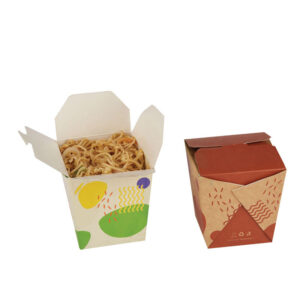
The Same Old Cost Question: How Much More Is Custom?
“Custom food packaging costs more than the wholesale supply store, right?”
Yes. If you only look at unit price.
But food packaging cost is not just the container—it is also spill rate, repeat order rate, and brand premium headroom.
Here is rough math: a generic container at $0.15. A custom-branded container with belly band at $0.35. Difference: $0.20. If your average order value is $20—one repeat customer driven by a positive packaging experience generates profit that is dozens of times that $0.20. If your spill rate drops by half thanks to a proper leak-resistant structure, a single prevented refund or compensation event covers the custom price premium across dozens of containers.
On minimum order quantities: corrugated food boxes typically start at 500–1,000 units for custom runs. Molded pulp usually starts higher because of mold tooling amortization. Belly bands, stickers, and seal labels—the companion materials—start far lower. You can order a few hundred stickers, and that alone gets you most of the way to a branded experience.
What we often tell restaurant clients: if the budget is tight, start with stickers and belly bands. Neither requires a custom box. Apply them to generic containers, and you have captured maybe 70% of the branding effect. Once monthly order volume stabilizes and the unit economics are proven, graduate to custom containers—by that point, the incremental profit is already covering the packaging budget.
FAQ
It depends on what you sell. Fried foods and barbecue want vented paper boxes. Soups and sauces want sealed PP bowls or aluminum foil containers. Cold dishes and salads want clear PET or window-cut paper boxes. If your brand positioning leans eco-conscious, molded bagasse pulp is a strong alternative. Do not try to switch every category at once—start with your top-selling dish and test from there.
Snap-lid PP bowls and aluminum foil containers are the most reliable leak-proof options. Paper bowls with an interior PE coating can also hold liquids, though the cost runs 30%–50% above uncoated paper. A very practical suggestion: deploy leak-proof containers for the spill-prone items on your menu—curries, noodle soups, stews—and skip them for the stable ones—fried chicken, pizza, rice balls. The money you save on the stable items funds the upgrade on the leak-prone ones.
Paper boxes start at 500–1,000 units. Molded pulp usually starts higher. But belly bands, stickers, and seal labels start at just a few dozen to a few hundred pieces—costing tens to a few hundred dollars, entirely within reach for small restaurants. Start branding with companion materials—that is the lowest-barrier, highest-perception-return entry point.
Indirect food-contact packaging—pizza boxes, fried chicken boxes, bread bags—generally requires food-grade ink and adhesive. Direct food-contact packaging—salad bowls, soup containers—requires the board or plastic to pass FDA food-contact material standards. Suppliers can usually provide the relevant certification documents. Request a copy before placing your order. It matters more than you think.
Standard food paper boxes—one or two colors, no special structures—run 7 to 14 business days. Molded pulp, since molds need to be fabricated, typically takes 3 to 5 weeks for the first batch. Aluminum foil containers are faster—5 to 10 business days. Peak season—before Mid-Autumn Festival, before Lunar New Year—adds roughly a week across the board. Ordering early does not cost you anything extra.