
Table of contents
Sustainable cosmetic packaging is a paperboard system built around responsibly sourced materials, recyclable coatings, and lightweight structures. Cosmetic packaging boxes carry the main role. They protect beauty products, support brand feel, and reduce environmental impact. These boxes serve two core functions. They meet protection and display needs through material, finish, and structure. They also help brands back up sustainability promises in a verifiable way. Whether you need custom cosmetic boxes or luxury cosmetic packaging, the right materials and finishes balance eco-value with a premium feel.
How to Choose Sustainable Materials
Material is the first step in sustainable cosmetic packaging. It decides recyclability, print quality, and whether the environmental claim can actually hold.
FSC-Certified and Recycled Paperboard
FSC-certified board suits cartons that need high-precision printing. It offers third-party audited sourcing proof with the same physical performance as conventional board. Recycled board fits inserts or shipping boxes, but its gray base is not ideal for large high-resolution print areas.
A hybrid structure, recycled core plus virgin face sheet, balances environmental value and print quality. It is a common approach for cosmetic packaging boxes.
Water-Based Coatings and No Plastic Lamination
Plastic lamination is a common non-recyclable part of cosmetic boxes. Water-based and bio-based coatings keep moisture and scratch resistance while the carton stays recyclable. For gift boxes that do not need high gloss, a matte water-based coating is enough.
When we replace plastic lamination, we run surface scratch and moisture tests first. A water-based coating suits daily use, but extreme humidity still needs confirmation.
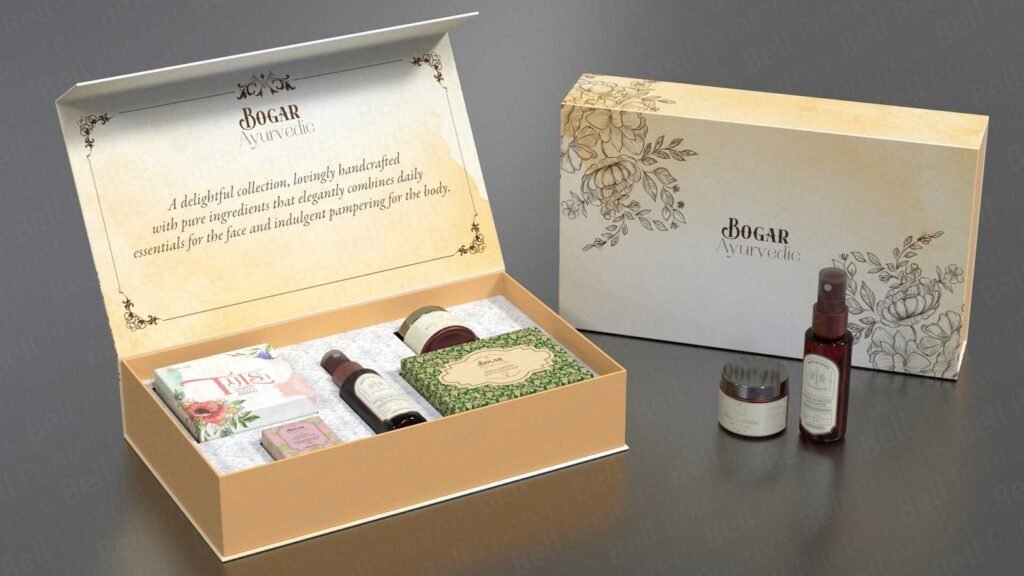
Finishes That Keep Eco-Value and Premium Feel
Eco-friendly does not mean losing the premium feel. The right finish creates a high-end look without turning the box into a non-recyclable composite.
Soft-Touch Lamination and Spot UV
Soft-touch lamination gives a velvet feel. Spot UV gives a high-gloss contrast. Together they create a premium visual while keeping the paperboard recyclable. Spot UV covers a small area, which is more restrained than full gloss.
We often suggest a large soft-touch base with a spot UV logo. This adds touch without overloading the finish.
Sustainable Use of Foil Stamping and Embossing
Foil stamping and embossing do not change the board’s recyclability by themselves. The problem usually comes from the paired lamination or coating. As long as plastic lamination is avoided, foil and embossing can stay part of sustainable packaging.
They cost more, so keep them on the logo and main visual. Local use is more eco-friendly and more refined than full coverage.
| Material or Finish | Environmental Value | Feel | Typical Use |
|---|---|---|---|
| FSC-certified paperboard | High (third-party certified) | Identical | High-precision carton |
| Recycled paperboard | High | Medium (gray base) | Inserts, shipping boxes |
| Hybrid structure | Medium-high | Medium-high | Folding cartons, gift boxes |
| Water-based coating | High (recyclable) | Medium-high | Moisture-resistant carton |
| Soft-touch + spot UV | Medium-high | High | Premium single units |
| Foil stamping / embossing | Medium-high | High | Logo, main visual |
Lightweighting Design Options
Lightweighting is the cheapest and fastest step in sustainable packaging. Its core is less material with the same protection.
Size and Structure Optimization
Many standard cosmetic boxes carry excess safety margin. Reducing wall thickness and improving insert positioning can cut material without hurting protection. The key is full-box drop testing at the sample stage.
When we optimize, we first remove excess insert material, then run a drop test. In most cases, the thinner design still passes and saves cost.

Window Boxes and Molded Pulp Inserts
A window box lets shoppers see the product, but a window reduces structural strength. If a window is needed, optimize placement and die-cutting, and use a PET clear window only as a small part. A molded pulp insert can hold jars and replace plastic trays.
A window is not decoration. It must be verified with the structure. Molded pulp cushioning depends on density and structure, not thickness alone.
Claim Boundaries
Environmental claims are the easiest place for a sustainable packaging project to go wrong. Say too little and you waste the effort. Say too much and you invite scrutiny.
Claims You Can Make
Marking a box as FSC-certified is safe, because a third party audits it. Saying recyclable is also safe, provided local facilities accept that board. Highlighting lightweighting is safe too, such as “this package uses 18% less material than our previous version.”
These claims are verifiable, specific in scope, and do not require a brand to prove perfection.
Claims to Avoid
“100% eco-friendly,” “fully sustainable,” and “zero burden on the planet” are unverifiable absolutes. Paperboard still consumes energy, water, and transport fuel no matter the material. Honest communication states specific improvements, not zero impact.
Biodegradable and home-compostable cannot be used interchangeably. A claim only holds with industrial-compost certification and clear disposal conditions.
Supplier Selection
Sustainable cosmetic packaging only works if the supplier can deliver it. Materials, finishes, and sampling all need real verification.
How to Screen a Cosmetic Packaging Supplier
Beyond price, screen a cosmetic packaging supplier on FSC certification ability, water-based coating experience, sampling speed, and batch consistency. Ask for a production sample that matches the final process to catch issues early.
A reliable supplier states its limits instead of promising everything. Clear communication about limits shows real understanding of sustainable materials.
FAQ
They can be more eco-friendly, but not “zero impact.” FSC-certified board, recycled paperboard, and recyclable coatings reduce footprint meaningfully. Paperboard production still uses energy, water, and transport fuel. The honest move is to state specific improvements, not promise perfection.
Yes, but position matters. Recycled board fits inserts or shipping boxes, because its gray base is not ideal for large high-resolution print areas. Use FSC-certified board or virgin coated board for the outer face. A hybrid structure balances both.
Usually not. A water-based coating is visually transparent and does not change the board color. It adds moisture and scratch protection while keeping the carton recyclable. Run surface scratch and moisture tests before switching.
Usually not. Foil stamping and embossing do not change the board’s recyclability by themselves. The issue usually comes from the paired plastic lamination. Avoid that lamination, and foil and embossing can stay part of sustainable packaging.
Some materials carry a premium, but lightweighting can offset part of it. FSC-certified board costs about 8% to 15% more, and water-based coatings may add cost. Optimizing the box and cutting excess inserts reduces material use. At small volume, keep finishes on key areas.
Look at FSC certification ability, water-based coating experience, sampling speed, and batch consistency. Ask for a production sample that matches the final process to catch color, registration, and feel issues. A reliable supplier states its limits.
Yes. FSC-certified board, soft-touch lamination, spot UV, foil stamping, and embossing can all create a premium feel while staying paper-based and recyclable. Eco-friendly does not mean plain. The key is choosing the right material and finish. Premium brands are moving toward more restrained sustainable packaging.