
Table of contents
- What should custom makeup packaging boxes achieve?
- Choosing the right box structure for makeup
- Material selection should follow the product
- Design the inside as carefully as the outside
- Finishing can change the perception of the same box
- Think about the retail shelf and the online screen
- Don’t forget regulatory and market requirements
- What makes luxury cosmetic packaging different?
- FAQ
A beauty product may be formulated, tested, and positioned as a premium product, but customers often encounter the packaging before they experience the formula. For a makeup brand, the box has to do several jobs at once: protect the product, present the brand clearly, provide required information, and fit the way the product is sold.
That is why packaging decisions should start with the product and sales channel rather than with a box style seen in a competitor’s campaign.
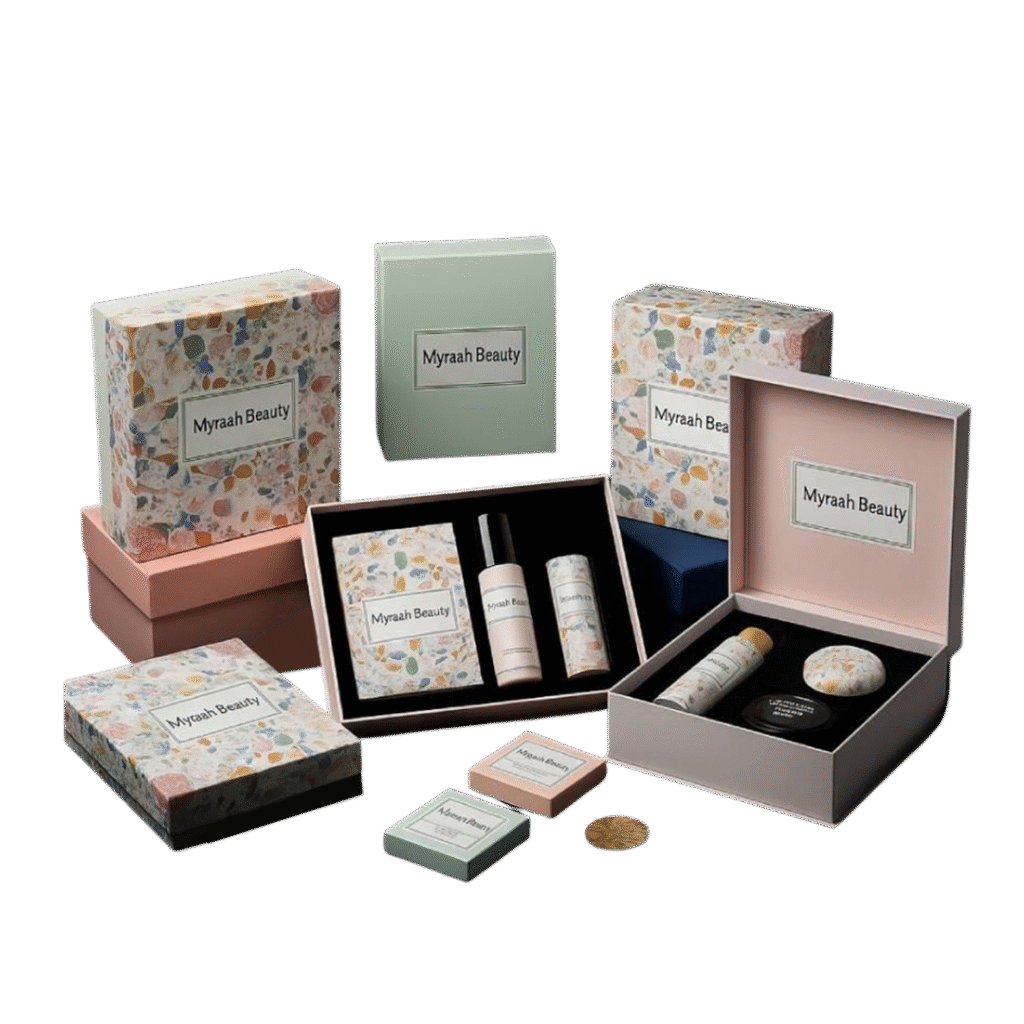
For a lipstick, foundation, eyeshadow palette, serum, or multi-piece beauty set, the appropriate structure can be very different. A compact product may need a simple folding carton, while a premium collection may justify a rigid setup box with a fitted insert. The right specification is the one that balances protection, presentation, production cost, and brand positioning.
What should custom makeup packaging boxes achieve?
For beauty brands, packaging is part of the product presentation. It creates the space where the logo, product name, shade information, ingredients, usage instructions, and other required information can be communicated.
In the United States, the FDA states that cosmetic labeling must comply with the Federal Food, Drug, and Cosmetic Act and the Fair Packaging and Labeling Act. Required information includes the product identity and net quantity on the principal display panel, while other information such as ingredients and the name and place of business must also be provided as required.
This matters during box design. A beautiful front panel is not enough if there is insufficient space for the information that needs to appear on the package.
For example, a foundation carton may need space for:
- Brand and product name
- Shade or color information
- Net quantity
- Ingredient information
- Directions or warnings where applicable
- Company or distributor information
- Barcode and batch information
The exact requirements depend on the market and product category, so packaging artwork should be checked against the regulations applicable to the destination market before mass production.
Choosing the right box structure for makeup
There is no universal cosmetic box that works for every beauty product.
Folding cartons for everyday retail products
Folding cartons are often the practical choice for lipstick, mascara, foundation, cream, serum, and other individual SKUs.
They are produced from paperboard, printed, die-cut, creased, and supplied flat. This makes them efficient to manufacture, store, and transport.
For brands with many SKUs, this can be particularly useful. Different shades or product variants can share the same basic structure while using different artwork.
A well-designed folding carton can also support premium finishes without requiring a rigid construction.
Rigid boxes for premium collections
Rigid packaging is more appropriate when the packaging itself needs to contribute strongly to the perceived value of the product.
Typical applications include:
- Makeup gift sets
- Limited-edition collections
- Product launch kits
- Influencer and PR boxes
- Premium skincare collections
A rigid structure can be combined with specialty paper, foil stamping, embossing, or a custom insert to create a more substantial unboxing experience.
However, a rigid box also requires more material, production work, storage space, and transportation volume. It should therefore be selected because it serves a clear commercial purpose, not simply because it looks more expensive.
Sleeve and tray structures
A sleeve and tray can provide a middle ground between a conventional folding carton and a fully rigid presentation box.
The sleeve creates an additional branding surface, while the tray provides a defined space for the product.
This structure works particularly well for gift sets and beauty collections where presentation matters but the brand does not necessarily need a complex magnetic or hinged box.
Material selection should follow the product
The material should be selected according to the product’s dimensions, weight, fragility, distribution method, and desired appearance.
Paperboard is commonly used for retail makeup cartons because it offers a good combination of printability, structural performance, and efficient production.
For premium structures, greyboard can provide the rigid base required for setup boxes.
Kraft and specialty papers can be considered when the visual identity calls for a natural or tactile appearance.
For brands targeting markets where responsible sourcing is important, FSC-certified paper and board can be specified where suitable. FSC explains that its chain-of-custody certification provides traceability for certified forest-based materials through the supply chain.
The important point is not simply to put an “eco” message on the box. The material specification and any environmental claims should be supportable.
Design the inside as carefully as the outside
One of the most common packaging mistakes is concentrating entirely on the exterior artwork.
Makeup products often have unusual shapes, delicate components, or several pieces in one set. A box that looks excellent externally but allows the contents to move excessively during transportation is not a successful packaging design.
Depending on the product, the interior may use:
- Die-cut paperboard inserts
- Cardboard dividers
- Paper-based trays
- EVA or other protective inserts when product requirements call for them
For example, a multi-piece makeup set may require individual positions for a palette, brushes, lipstick, and skincare sample. The insert should hold each component securely while allowing the customer to remove it without damaging the package.
This is where structural packaging design becomes more important than decoration.
Finishing can change the perception of the same box
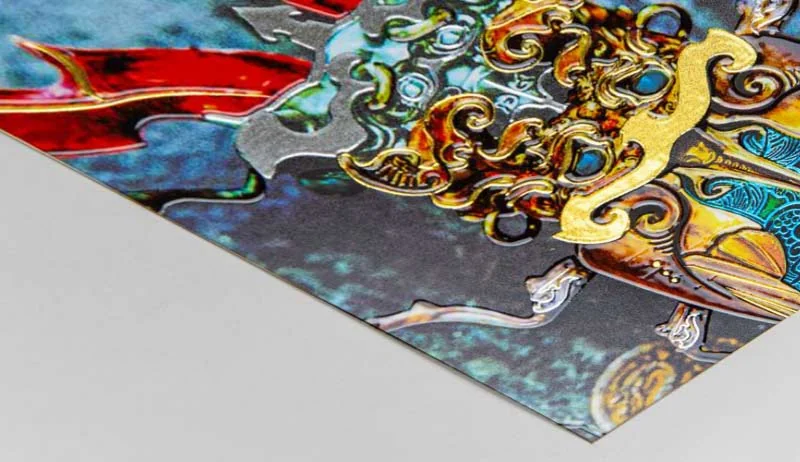
Two boxes made from the same paperboard can look completely different because of their finishing.
For beauty brands, common options include:
Matte or gloss lamination
Useful for controlling the overall surface appearance and creating different visual effects.
Soft-touch finishing
Creates a smoother tactile surface and is frequently used for premium beauty packaging.
Foil stamping
Suitable for logos, product names, borders, or selected decorative details.
Embossing and debossing
Adds physical dimension and can make a logo or pattern more noticeable without covering the entire package with decoration.
Spot UV
Adds contrast by applying a gloss effect to selected areas of an otherwise matte surface.
The best result usually comes from using finishing selectively. Adding every available effect can make the package look busy rather than luxurious.
Think about the retail shelf and the online screen
Beauty products are sold through more channels than ever, and the packaging has to work in different environments.
A retail carton may need to communicate its identity from several feet away on a crowded shelf.
An e-commerce product, meanwhile, may first be seen as a small image on a smartphone.
That changes the design priorities.
The brand name and product category should remain recognizable at a glance. Important visual differences between shades or product variants should also be easy to identify.
For a makeup line with ten foundation shades, for example, a consistent structural design combined with clear shade identification can make the range easier for customers and retailers to navigate.
Don’t forget regulatory and market requirements
Packaging artwork should be developed with the destination market in mind.
For U.S. cosmetics, FDA guidance states that ingredient declarations for retail cosmetics generally need to appear on an information panel and be presented clearly enough for consumers to read. The FDA also specifies minimum type-size requirements in certain circumstances, including a general 1/16-inch minimum for ingredient declarations, with an exception for packages having less than 12 square inches of available labeling surface.
European-market products are subject to Regulation (EC) No. 1223/2009, which includes requirements concerning the responsible person, product information, ingredients, and packaging information.
These details have a direct packaging implication: reserve sufficient space for mandatory information before finalizing the decorative layout.
A packaging manufacturer can help with dimensions, structure, materials, printing, and production, but the brand remains responsible for ensuring its product labeling complies with the laws applicable to its market.
What makes luxury cosmetic packaging different?
Luxury does not necessarily mean using the heaviest board or the most complicated structure.
Luxury cosmetic packaging is usually the result of several details working together:
- Accurate color reproduction
- Appropriate material selection
- Clean structural design
- Consistent finishing
- Precise assembly
- Well-fitted inserts
- Controlled typography and artwork
For a premium skincare collection, for example, a rigid box wrapped in textured specialty paper with restrained foil stamping may communicate more effectively than a carton covered with multiple decorative effects.
The same principle applies to makeup packaging. A strong brand identity should remain visible rather than being buried beneath decoration.
FAQ
Folding cartons are commonly suitable for individual products such as lipstick, mascara, foundation, creams, and serums. Rigid boxes are more appropriate for premium gift sets, limited editions, launch kits, and products where the unboxing experience is an important part of the brand strategy.
Start with the product’s weight, dimensions, fragility, sales channel, and required presentation level. Paperboard is often suitable for retail cartons, while greyboard is commonly used for rigid structures. Specialty and kraft papers can be selected when the visual identity requires a particular texture or appearance.
Yes. Foil stamping, embossing, debossing, spot UV, matte or gloss lamination, and soft-touch finishes can all be used on suitable paper packaging. The specific combination should be tested during sampling because different materials and finishes produce different visual and tactile results.
The requirements depend on the destination market and the product. For the U.S. market, cosmetic packaging may need product identity, net quantity, ingredient information, company details, and applicable warnings or other information. FDA requirements should be reviewed before artwork approval.
It can be. FSC-certified paper or board can be specified when responsible forest sourcing is part of a brand’s packaging requirements. FSC certification provides supply-chain traceability for certified forest-based materials.
The decision should be based on the product’s price positioning, sales channel, protection requirements, quantity, and customer experience. Folding cartons are generally more efficient for individual retail SKUs and larger production volumes, while rigid boxes can make more sense for premium collections and gift-oriented products.
A useful packaging brief should include the product dimensions, preferred box structure, quantity, material preference if known, printing requirements, finishing requirements, insert requirements, destination market, and artwork status. Product photos or a physical sample can also help the packaging supplier understand the application.