
Table of contents
- Why Sustainable Packaging Matters More Than Ever
- Understanding What “Sustainable Packaging” Really Means
- Kraft Paper: The Most Recognized Eco-Friendly Option
- FSC-Certified Paperboard: The Industry Standard for Responsible Packaging
- Corrugated Board: Sustainable Strength for Shipping
- Greyboard: Sustainable Base for Luxury Packaging
- Why Material Choice Affects Brand Positioning
- The Trade-Off Between Sustainability and Luxury Look
- How to Choose the Right Sustainable Material for Your Product
- The Future of Sustainable Packaging
- Working with a Sustainable Packaging Manufacturer
- FAQ
Sustainable packaging has shifted from being a marketing advantage to a business requirement.
In almost every industry we serve—cosmetics, jewelry, food, and luxury goods—brands are now actively asking for packaging solutions that reduce environmental impact without sacrificing product presentation.
But here is something many brands quickly realize during sourcing:
There is no single “best” sustainable material.
The right choice depends on your product type, brand positioning, and target market.

Why Sustainable Packaging Matters More Than Ever
Over the past few years, we have seen a clear shift in buyer expectations.
Retailers are requesting more eco-friendly packaging options, while end consumers are increasingly aware of material sourcing and recyclability.
According to the Forest Stewardship Council (FSC), demand for responsibly sourced paper products continues to grow globally as sustainability becomes part of purchasing decisions, not just brand messaging.
For many companies, packaging is now directly tied to brand credibility.
A product may be high quality, but if its packaging feels wasteful or non-recyclable, it can negatively affect perception—especially in European and North American markets.
Understanding What “Sustainable Packaging” Really Means
One common misunderstanding is that sustainable packaging simply means “recyclable.”
In reality, it includes several factors:
- Material sourcing
- Recyclability
- Production waste reduction
- Reusability
- Carbon footprint during manufacturing
In packaging production, we often remind clients:
Sustainability is not just the material itself, but the entire lifecycle of the packaging.
Kraft Paper: The Most Recognized Eco-Friendly Option
Kraft paper is one of the most widely used materials in sustainable packaging.
It is made from unbleached wood pulp, which gives it a natural brown appearance.
From a branding perspective, kraft paper communicates:
- Natural product positioning
- Organic or handmade identity
- Eco-conscious brand values
We often recommend kraft packaging for:
- Natural cosmetics
- Organic food products
- Small gift items
- Eco-friendly retail brands
However, kraft paper has limitations in premium luxury applications where high-gloss or metallic finishes are required.
FSC-Certified Paperboard: The Industry Standard for Responsible Packaging
FSC-certified paperboard has become one of the most important materials in modern packaging supply chains.
Unlike standard paperboard, FSC-certified materials are sourced from responsibly managed forests.
This allows brands to maintain:
- Strong structural performance
- High-quality printing results
- Environmental compliance
without compromising packaging design.
In our experience, FSC-certified folding cartons are now the default requirement for many European cosmetic brands.
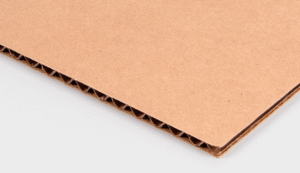
Corrugated Board: Sustainable Strength for Shipping
Corrugated board plays a key role in sustainable packaging, especially for e-commerce.
Its structure provides excellent protection while remaining fully recyclable.
It is commonly used for:
- Shipping boxes
- Subscription packaging
- E-commerce fulfillment
- Bulk outer cartons
One of its biggest advantages is efficiency. It reduces product damage during transportation, which also indirectly reduces waste.
Greyboard: Sustainable Base for Luxury Packaging
Greyboard is often misunderstood in sustainability discussions.
While it is commonly used in luxury rigid boxes, it is also highly recyclable depending on coating and lamination choices.
It provides:
- Strong structural integrity
- Premium rigidity
- Long product lifespan (reusable boxes)
This makes it suitable for:
- Luxury gift boxes
- Jewelry packaging
- Perfume packaging
- High-end cosmetic boxes
Many premium brands now choose greyboard-based rigid boxes with recyclable paper wraps instead of plastic-heavy alternatives.
Why Material Choice Affects Brand Positioning
Choosing sustainable packaging is not only an environmental decision—it is also a branding decision.
For example:
A luxury skincare brand using FSC-certified rigid boxes immediately communicates responsibility and premium positioning.
Meanwhile, a natural food brand using kraft packaging reinforces its organic identity.
We often advise clients that packaging material should support the brand story, not contradict it.
The Trade-Off Between Sustainability and Luxury Look
One challenge many brands face is balancing sustainability with visual appeal.
In traditional packaging, high gloss coatings and heavy plastic laminations were used to create a luxury feel.
However, modern sustainable packaging uses alternative methods such as:
- Soft-touch water-based coatings
- Soy-based inks
- Minimalist printing designs
- Paper-based decorative elements
Interestingly, many luxury brands are now moving toward simpler designs rather than more complex ones.
This shift has made sustainable packaging not just acceptable, but desirable.
How to Choose the Right Sustainable Material for Your Product
From our manufacturing experience, the selection process usually depends on three factors:
Product Type
Fragile or premium products may require rigid structures, while lightweight products can use folding cartons or kraft boxes.
Brand Positioning
Luxury brands often prefer FSC-certified rigid boxes, while eco-focused brands lean toward kraft packaging.
Sales Channel
Retail packaging requires stronger visual impact, while e-commerce packaging prioritizes durability and cost efficiency.
The Future of Sustainable Packaging
The packaging industry is moving toward a more standardized sustainable model.
We are seeing increased demand for:
- Plastic-free packaging structures
- Fully recyclable inserts
- Reduced material usage designs
- Mono-material packaging solutions
According to market research from Smithers, sustainable packaging demand is expected to continue growing across all major consumer product categories over the next decade.
For packaging manufacturers, this is no longer a trend—it is a long-term structural shift.
Working with a Sustainable Packaging Manufacturer
At Hongjia Packaging Technology (Shenzhen) Co., Ltd., we help brands develop packaging solutions that balance sustainability, cost efficiency, and visual presentation.
Our capabilities include:
- Kraft packaging boxes
- FSC-certified folding cartons
- Luxury rigid boxes
- Cosmetic packaging
- Jewelry packaging
- Eco-friendly gift boxes
We support both OEM and ODM projects for global clients.
For inquiries, contact:
Sustainable packaging is no longer about choosing the “greenest” option. It is about choosing the right material that supports both your product and your brand identity.
FAQ
Sustainable packaging refers to packaging designed to reduce environmental impact through responsible materials, recyclability, and reduced waste.
Kraft paper, FSC-certified paperboard, corrugated board, and recyclable greyboard are commonly used.
Yes, kraft paper is widely considered eco-friendly due to its recyclable and biodegradable nature.
FSC-certified packaging uses materials sourced from responsibly managed forests.
Yes, many luxury brands now use FSC-certified rigid boxes and recyclable materials without losing premium appearance.
Not always. Many sustainable materials are cost-competitive, especially in large production runs.
Cosmetics, food, jewelry, fashion, and e-commerce industries all increasingly use sustainable packaging.